The Art of Beads, Yoruba, Igbo, and Nupe Beadwork Traditions in Nigeria
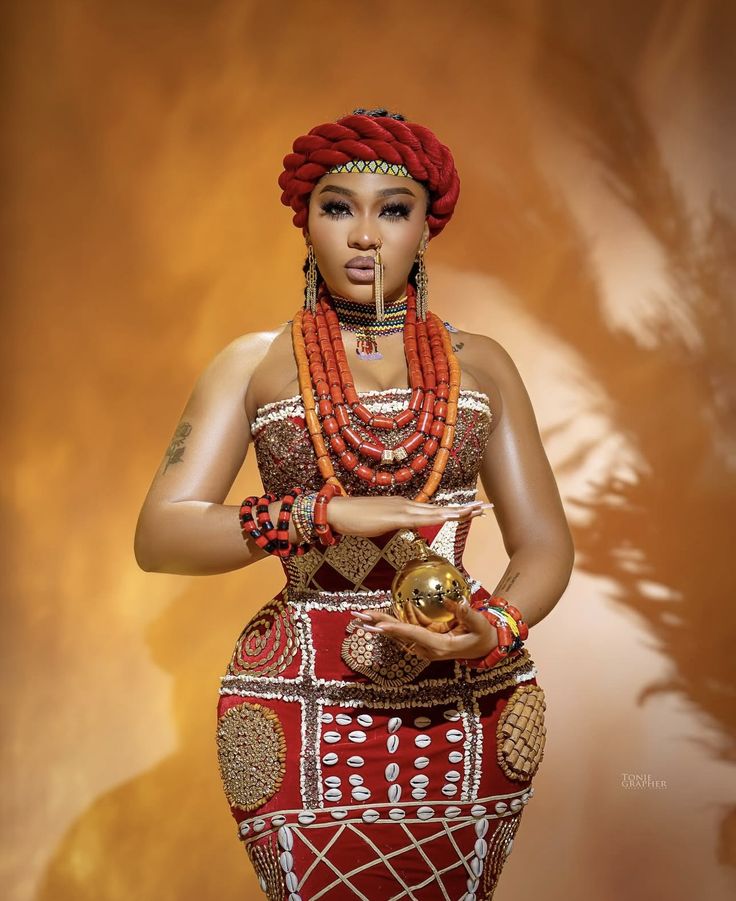
In Nigeria, beads are far more than decorative trinkets; they are encapsulated history, potent symbols, and a vibrant language woven into the very fabric of identity and belief. From the elaborate regalia of kings to the everyday adornment of individuals, beadwork traditions across the nation, particularly among the Yoruba, Igbo, and Nupe peoples, represent an extraordinary testament to artistic precision, spiritual depth, and cultural continuity. Each bead, painstakingly crafted or acquired, contributes to a rich narrative, transforming simple materials into objects of immense cultural, social, and spiritual significance.
I. The Yoruba: Beads of Royalty, Divinities, and Identity
Among the Yoruba, beads (ileke or igbá for beaded objects) are perhaps the most significant form of adornment, deeply intertwined with kingship, religion, and social status. Their beadwork is characterized by its profusion, vibrant colors, and meticulous arrangement.
Royal and Divine Adornment:
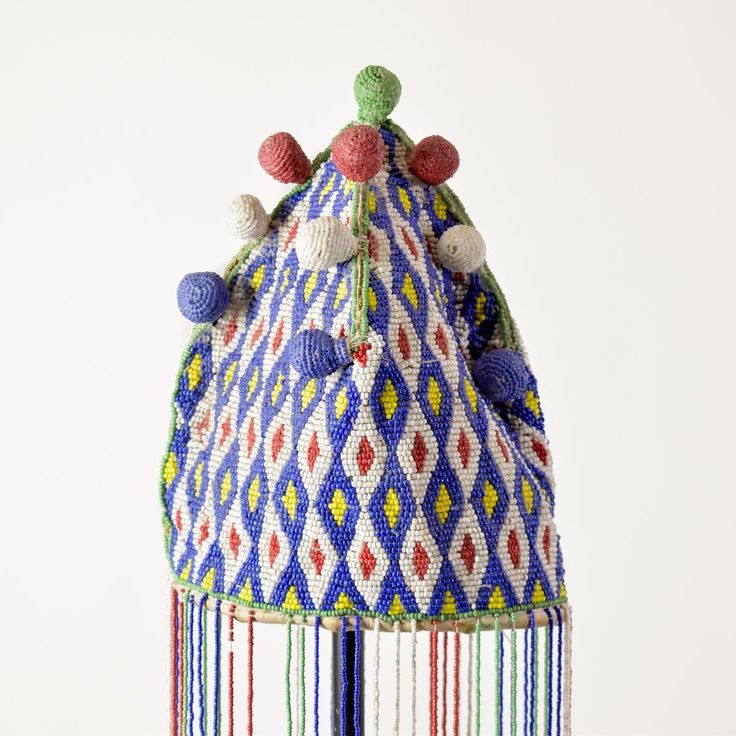
Crowns (Ade): The quintessential symbol of Yoruba kingship is the beaded crown, often conical with a veiled fringe of beads (ileke bibo) that obscures the king’s face, transforming him into a divine presence. These crowns are densely covered in blue, white, and red beads (colors associated with royalty and sacredness), often featuring birds (symbolizing wisdom and spiritual power) or faces (representing ancestral connection). Each crown is unique to its king and lineage, an object of immense spiritual and political power.
Regalia: Kings and chiefs wear elaborate beaded collars, vests, staffs, shoes, and whisk handles, transforming their entire person into a walking tableau of spiritual and political authority.
Orisha Adornment: Beads are fundamental to the worship of the Orisha (deities of the Yoruba pantheon). Each Orisha has specific colors and bead combinations that represent their essence, powers, and narratives. For example:
Obatala: White beads (purity, creation).
Shango: Red and white beads (thunder, passion, justice).
Oshun: Yellow and gold beads (beauty, love, fertility).
Ogun: Green and black beads (iron, warfare, creativity).
These specific bead patterns are worn by devotees and adorn shrines, acting as direct conduits to the divine.
Social and Personal Adornment:
Necklaces, Bracelets, Waist Beads: Worn by individuals for beauty, to mark life stages (initiation, marriage), or for personal spiritual protection. Waist beads, in particular, are often worn by women for sensuality, to monitor body changes, and for protection.
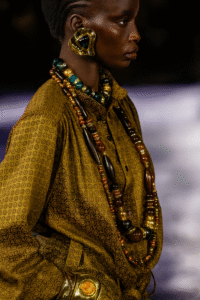
Materials: While glass beads (including historical European trade beads like Venetian Murano and Bohemian beads) are predominant, traditional materials like coral, cowrie shells, and local seeds were also widely used. The quality and rarity of the beads often indicated wealth and status.
Techniques: Yoruba beadwork is predominantly stringing and netting (for crowns and large objects) to create dense, shimmering surfaces. The skill lies in the precise arrangement of colors and the intricate integration of motifs.
II. The Igbo: Beads of Wealth, Status, and Ritual Identity
Among the Igbo people of southeastern Nigeria, beads, while perhaps not as centrally tied to kingship as among the Yoruba (given the more egalitarian nature of many traditional Igbo societies), are nevertheless powerful markers of wealth, status, and ritual roles.
Chieftaincy and Title-Taking:
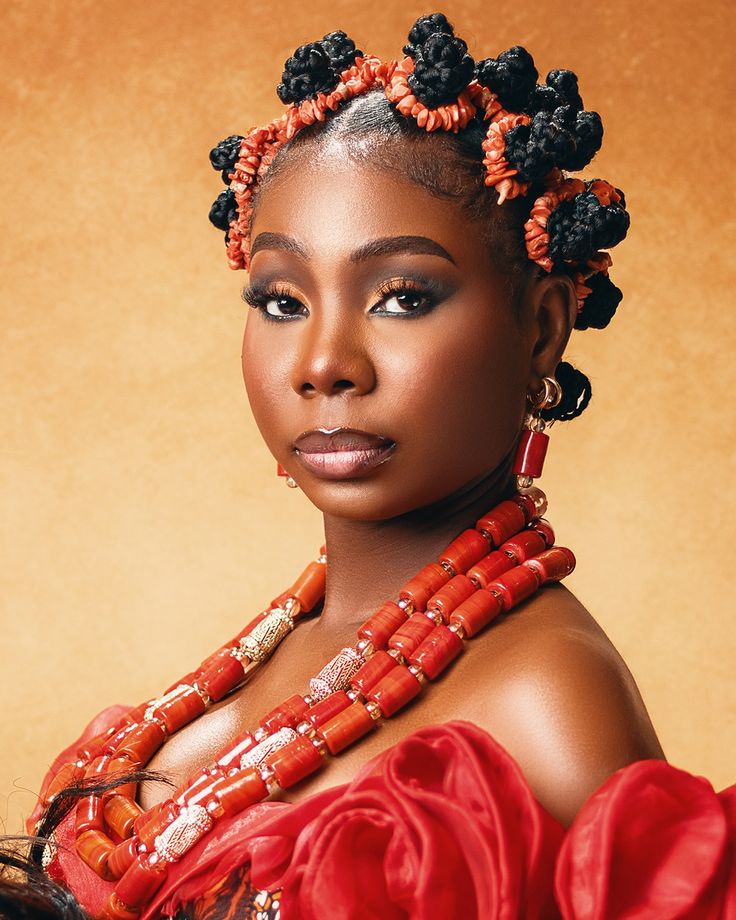
In societies where men achieve status through title-taking (Ozo title), specific types of beads are crucial markers. Highly valued coral beads (aka-eze), sometimes mixed with traditional red jasper or agate, are worn as necklaces, bracelets, and anklets by titled men, signifying their earned wealth, influence, and moral authority.
Elephant tusk armlets (odu aka) are also often worn with beads, further emphasizing status.
Women’s Adornment:
Igbo women historically wore elaborate waist beads and anklets, often made from smaller, colorful glass beads, for beauty and as a sign of femininity and maturity.
Clay and Stone Beads: Traditional Igbo beadwork also utilized locally sourced clay beads and polished stones, demonstrating indigenous craftsmanship before widespread trade.
Ritual and Masquerade:
Beads are incorporated into the costumes and adornment of Igbo masquerades, which are central to religious and social life. The specific colors and patterns on masks and regalia often reflect the character of the spirit being depicted and its role in the community.

III. The Nupe: Beads of Intricacy, Craftsmanship, and Trade
The Nupe people of central Nigeria, particularly renowned for their metalwork, weaving, and glass bead production, have a distinct and historically significant beadwork tradition.
Indigenous Glass Bead Production:
Unlike many other groups who relied solely on imported beads, the Nupe were historically skilled in indigenous glass bead making, particularly in areas like Bida. They produced unique, often translucent or opaque, glass beads through intricate processes, which they then used themselves and traded. This mastery of material creation sets them apart.
Bida Glass: The famous Bida glass beads are characterized by their distinctive colors, internal patterns, and sometimes faceted surfaces.
Diverse Usage:
Nupe beads are used in necklaces, bracelets, anklets, and incorporated into clothing. They are often combined with other materials like metalwork (reflecting Nupe’s smithing traditions) and textiles.
Symbolism: While specific symbolic meanings of color and pattern may be localized, the beads generally convey wealth, status, and aesthetic appreciation.
Influence of Trade: The Nupe’s central location and trade networks meant their beadwork also incorporated and influenced other regional styles, creating a rich cross-cultural exchange of bead types and techniques.
IV. Other Significant Nigerian Beadwork Traditions
While Yoruba, Igbo, and Nupe traditions are prominent, beadwork flourishes across numerous other Nigerian ethnic groups:
Hausa and Fulani: Often incorporate highly valued amber beads, glass, and metal beads into elaborate necklaces, hair ornaments, and belts, signifying wealth and prestige, particularly in northern Nigeria.
Kanuri: Known for their use of various beads in conjunction with silver and gold jewelry, often for elaborate bridal and ceremonial wear.
Edo (Benin): While extensively covered in the previous article, the use of coral beads by the Oba and his court is the most iconic example of beadwork as supreme royal regalia in Nigeria.
Beads as the Threads of Nigerian Culture
The beadwork traditions of Nigeria, exemplified by the Yoruba, Igbo, and Nupe peoples, represent an extraordinary tapestry of cultural expression, technical mastery, and profound meaning. Far from being simple decorations, beads in Nigeria are the threads that weave together ancient kingship, divine worship, social hierarchies, and personal identities. Each strand, each color, and each pattern tells a story—a testament to the enduring ingenuity of Nigerian artisans and the universal human desire to adorn oneself with beauty, power, and meaning. This rich heritage continues to inspire contemporary designers and collectors, cementing beads as one of Nigeria’s most significant and globally celebrated art forms.