Adire’s Comeback

Adire, the majestic resist-dyed textile indigenous to the Yoruba people of Southwestern Nigeria, is not just experiencing a moment of popularity; it’s undergoing a profound and celebrated comeback. Its story is woven into the very fabric of Yoruba history, a testament to centuries of artistic tradition, communal resilience, and an unwavering connection to nature. For generations, Adire has been more than clothing; it’s a visual language, a repository of narratives, and a symbol of identity, status, and celebration.
The creation of Adire is a meticulous art, traditionally mastered by women. It involves a “resist” dyeing technique, preventing dye from reaching certain parts of the fabric to create intricate patterns. The most common methods are Adire Eleko, which uses a paste resist made from cassava starch, and Adire Oniko, a tie-dye method where raffia is used to bind and tie fabric, creating circles and patterns. Another less common method, Adire Alabere, involves stitching patterns with thread before dyeing. The deep, rich indigo dye, traditionally sourced from local indigo plants like Elu, lends Adire its characteristic blue hues, with patterns often inspired by flora, fauna, and elements of daily life or folklore. Each motif carries specific meanings, telling stories of proverbs, historical events, or personal aspirations.

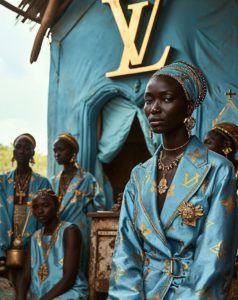
In recent decades, amidst the rise of mass-produced textiles, the art of traditional Adire faced challenges. However, a powerful shift is now underway. Contemporary African designers, alongside international fashion houses, are recognizing the unparalleled beauty and sustainability inherent in Adire. They are not merely copying patterns but respectfully reinterpreting this ancient art form, breathing new life into it through modern silhouettes and innovative applications. From bespoke tailored blazers and flowing evening gowns to avant-garde ready-to-wear collections and luxury accessories, Adire is gracing runways in Lagos, Paris, and Milan, captivating a global audience with its unique aesthetic and compelling backstory.
This revival is multi-faceted. It’s a conscious effort to preserve indigenous craft, ensuring that the skills and knowledge passed down through generations do not fade. It empowers local artisans, particularly women, by creating sustainable livelihoods and fostering economic independence. Furthermore, Adire’s traditional production methods align perfectly with the growing demand for sustainable and ethical fashion. Its natural dyes and handcrafted nature make it a far more eco-friendly alternative to many industrial textiles.

For the modern wardrobe, integrating Adire offers boundless possibilities. For those new to the print, start with accessories a vibrant Adire scarf, a unique handbag, or statement jewelry can add a sophisticated touch. A single, well-chosen Adire piece, such as a structured jacket worn over a plain dress or a flowing skirt paired with a simple top, can become the focal point of an outfit, allowing the fabric’s artistry to truly shine. For the bold fashion enthusiast, a full Adire ensemble, perhaps a matching top and trousers or a full-length dress, makes an unforgettable statement, especially when balanced with minimalist footwear and understated accessories to avoid overwhelming the look. Embrace the beautiful irregularities and unique variations that are inherent in hand-dyed Adire; these are not flaws but signatures of its authentic, artisanal creation.

The comeback of Adire transcends mere fleeting trends. It represents a powerful reclamation and celebration of African identity, innovation, and sustainability. It’s a testament to the enduring beauty of traditional African art forms, demonstrating their timeless relevance and their capacity to inspire and shape the future of global fashion. As Adire continues its journey from ancestral villages to international catwalks, it carries with it the spirit of a people, dyed in resilience and woven with stories. It’s a cultural masterpiece, inviting the world to appreciate the depth and beauty of African heritage.