They call her a witch. But this Nigerian Orisha priestess refuses to disappear
Nigeria promises freedom of worship, but for followers of Esu and Ifa, deities at the core of Yoruba spirituality, that freedom remains out of reach.
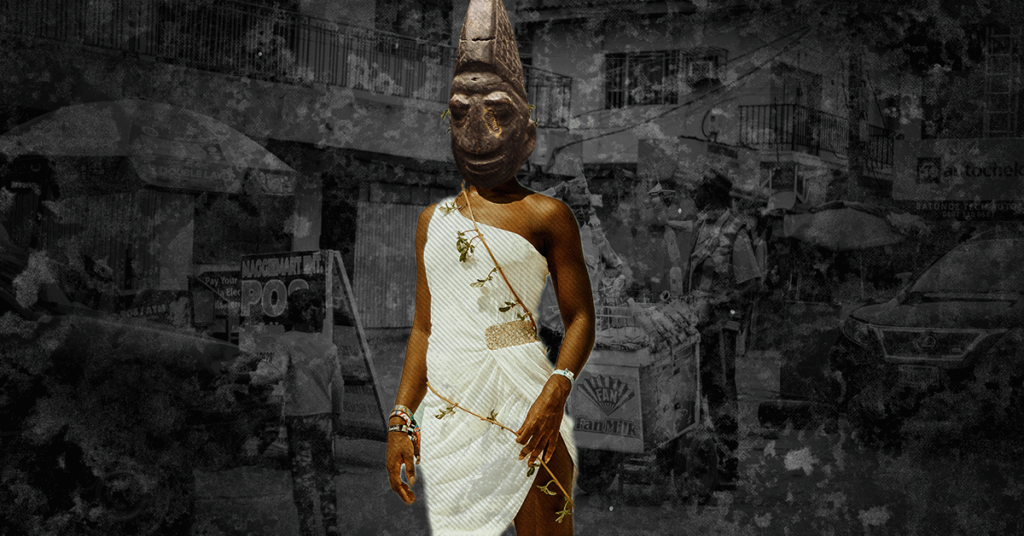
Cars, buses, and trucks jostle for space, horns blaring—a gridlock—a familiar scene on the ever-busy Ajah axis of Lagos. As the traffic worsens, hawkers weave through the chaos with their wares, while pedestrians dart across a flyover. Amid it all, a bus pulls over and Oreoluwa Adedoyin steps down, drawing stares from onlookers.
Adorned in a flowing white garment, with pristine beads of white and green swaying gently around her neck—a striking symbol of her devotion to Esu and Ifa, deities at the heart of Yoruba spirituality—she walks with quiet confidence. Conversations falter. Eyes widen. Hushed murmurs ripple through the crowd. Some step aside as if she carries an unseen force; others glare, their disapproval barely concealed. Everything about her presence challenges the norm.
Adedoyin is used to the scrutiny. Though she still feels the weight of judgment, she refuses to let it define her.
“I used to feel uncomfortable, sometimes taking less crowded routes just to avoid the attention,” she says. “But now, I’m used to it. I don’t let their stares define my mood. Everyone is entitled to their opinion.”
Adedoyin leads two distinct lives. Some days, she is a filmmaker, coordinating shoots on set. Other days, she retreats into quiet devotion as an Orisha priestess. The former, she shares openly; the latter, she guards fiercely. In Nigeria, where traditionalists are often met with scorn and hostility, practising her faith means treading a delicate line between secrecy and self-expression.
Esu, the deity she reveres, occupies a pivotal role in Yoruba cosmology. As the divine messenger, Esu bridges the human and the spiritual realms, translating the language of nature into human understanding and vice versa. But generations of Western influence have cast a dark shadow over his name, wrongly equating him with the Christian devil.
Born into a family with strong traditional roots, Adedoyin initially embraced Christianity. But after her father’s passing, the solace and sense of belonging she found in traditional rituals soothed a grief that Christianity could not. As she delved deeper, she began to question the Christian faith she’d grown up with and eventually chose to reconnect with her roots. For her, the journey was about finding a spiritual path that resonated—one that helped her make sense of the world around her. But that choice came at a cost.
“In this part of the world, traditionalists are seen as fetish and demonic. People don’t want to associate with us,” she says. “I have had moments where I questioned whether I could keep going. But like I said, I won’t let anyone’s opinion shake my faith.”
Though her mother and siblings offered support, practising openly drew swift condemnation from her extended relatives and friends. Despite being born into a family steeped in ancestral worship, her wider family had embraced Christianity and often derided traditional practices as primitive or pagan.
“It got so bad that I had to block my own family members on social media,” she admits. “They’d watch my posts and flood my DMs with hateful messages, calling me names, condemning my faith. It started affecting me, so I chose my peace. If I can’t freely express myself in public, at the very least, I should have the freedom to post about my beliefs online.”
This created a jarring dissonance, caught between the beliefs of her immediate family and the disapproval of her extended relatives. The backlash wasn’t confined to the family. Friends she once considered lifelong companions slowly distanced themselves. One particularly painful moment came when an argument over her beliefs led her elder brother’s friend to call her a witch. The dispute almost escalated into a fistfight between the men—proof of how deeply entrenched the prejudice runs.
“I used to believe friendships and family ties could withstand differences in faith, but when my brother had to fight to defend me, I saw the reality. The hate is real,” she says
Following repeated backlash, Adedoyin resolved to hide her faith from colleagues. For a while, she succeeded. But eventually, the burden became too heavy, and she let some people in.
“I thought filmmakers would be more open-minded because, as artists, we tell stories from all perspectives. But I was wrong. Some people decided I was no longer worth calling for projects.”
A particularly traumatising experience came when she joined a film crew on a shoot in Kano, a predominantly Muslim state in northern Nigeria. Aware of the religious tensions in the region, she was overwhelmed with fear.
“I couldn’t wear my beads or practice openly,” she says. “Even Christians face persecution there. If they saw a woman with unusual beads, praying in an unfamiliar way, it could have been dangerous for me and the entire production team. I had to be extremely cautious to make sure no one suspected my faith.”
In that moment, a bitter truth crystallised: she had no freedom to express her spirituality—neither at work nor at home. “In this country, Christians and Muslims can pray openly. But the moment I bring out my beads, people react as if I’m summoning demons.”
The stigma extends beyond work and family. Her love life has suffered as well. Potential partners have pulled away, afraid of her devotion to Esu.
“At first, men find me intriguing. They like the idea of an independent, spiritual woman,” she says. “But once they realise my spirituality doesn’t align with what they consider acceptable, their interest turns into fear.”
One particularly painful breakup stands out in her memory.
“We had been dating for a while, and he even talked about marriage. Then, I asked if his family knew about my beliefs. That was when the distance began. Eventually, he told me he couldn’t marry me because of what his family would think.” She pauses. “I’ve learned that, for some people, the fear of judgment is stronger than love.”
But perhaps the most crushing moment came in 2024, when her neighbours tried to have her evicted.
“They told my landlord I was doing ‘fetish things’ in the compound,” she recalls. “One day, I got an eviction letter. Thankfully, my landlord dismissed their complaints after we spoke. But if they had their way, I’d have been homeless.”
Nigeria’s constitution guarantees freedom of religion, yet in practice, traditionalists like Adedoyin remain on the margins of acceptance. Christianity and Islam dominate the public sphere, leaving indigenous spirituality stigmatised and marginalised.
A recent attack in Osun State, where six Isese worshippers were injured during the Obatala festival, reflects the persistent hostility traditionalists face.
Professor Bolaji Olatunji, a scholar of Yoruba religion at the University of Ibadan, attributes this deep-rooted bias to colonial and missionary influence.
“Westernisation has painted indigenous religions as demonic,” he explains. “Esu, in particular, has been misrepresented for centuries. But in Yoruba cosmology, he is not evil; he is a divine messenger, a symbol of balance.”
Still, there are signs of change. Former President Olusegun Obasanjo once admitted that, despite being a Christian, he believes in Ifa. Former Osun State governor Rauf Aregbesola went a step further when he declared August 20th as Isese Day—a public holiday for traditional worshippers.
Building on that momentum, the current governor, Ademola Adeleke, has proposed the Yoruba Cultural Heritage Week. This global event aims to highlight Yoruba landmarks and attract international recognition.
But for Adedoyin, government gestures are not enough.
“If Esu is worshipped freely in Brazil, Portugal and other European countries, why must we hide in Nigeria?” she asks.
Yet, despite the discrimination, she refuses to shrink. Through her worship, her filmmaking, and her advocacy, she is carving a path for others seeking to reconnect with their ancestral faith.
“In the past, we were made to believe our gods were evil,” she says. “But more young people are questioning that narrative.”
Social media has become a battleground where traditionalists challenge misconceptions and reclaim their stories. Adedoyin is among those using the digital platforms to educate and share her journey. The hate messages persist, but she remains undeterred.
“This is my path,” she declares, “and I will walk it with pride.”
As she disappears into the Lagos crowd, her beads swaying with each step, she knows her struggle is not hers alone. It is for every silent devotee, still afraid to be seen.
This story was first published on Minority Africa and appears with permission in this publication.
Byline: Victor Eyike
Published on: 25/07/2025
Edited/Reviewed by Samuel Banjoko, PK Cross, Caleb Okereke, Awom Kenneth, and Uzoma Ihejirika
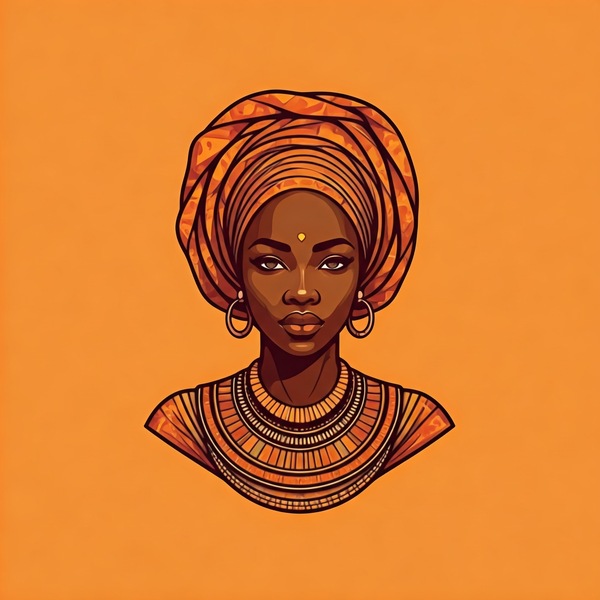
Illustrated by Rex Opara.