Lesbianism in Africa: History, Silence, and Resilience
lesbianism has often been invisible in African societies. This is partly because women’s sexuality has historically been policed or dismissed. While men’s same-sex relationships drew legal and public scrutiny, women’s intimacy was often ignored, seen as harmless or non-threatening.
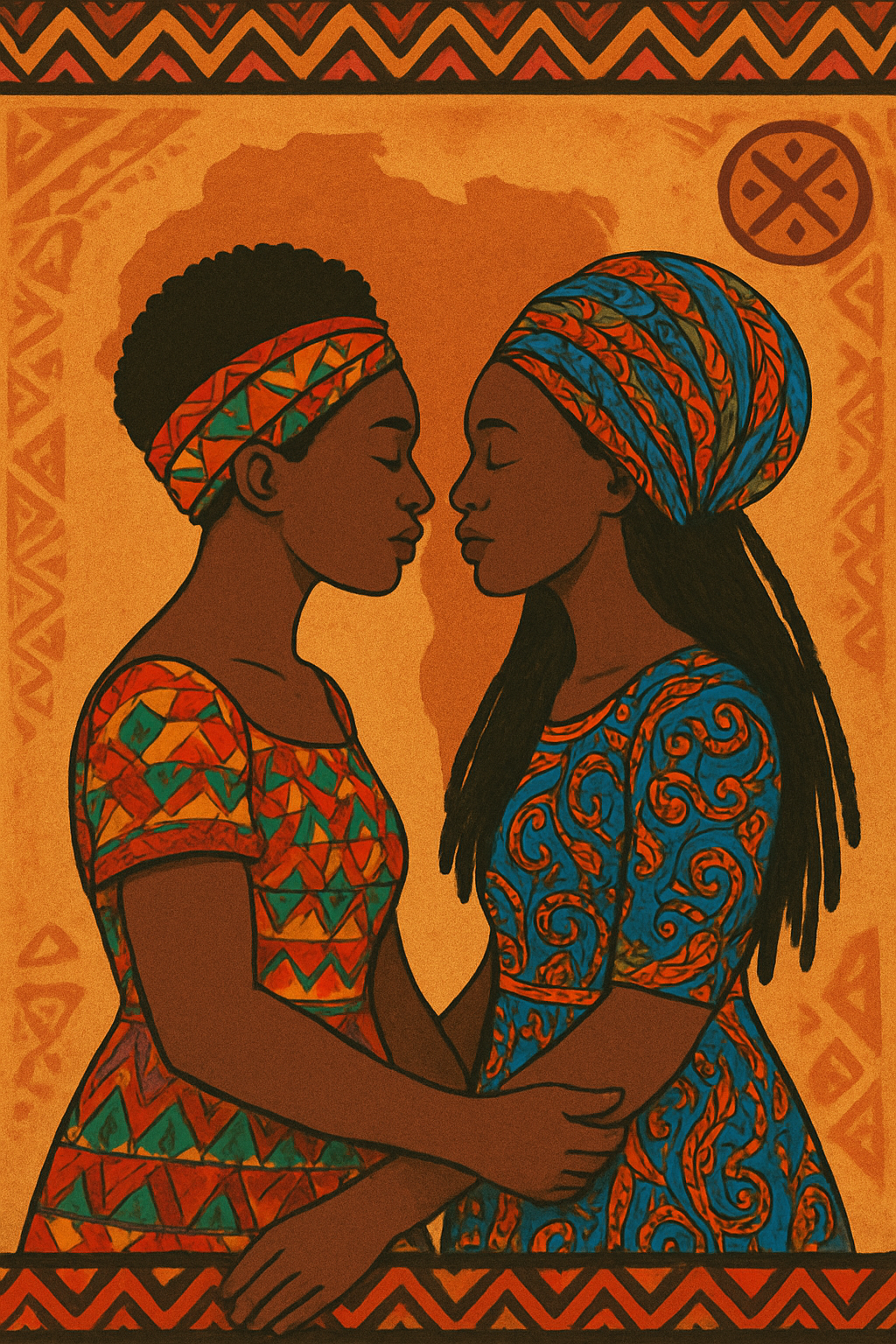
In many African societies today, lesbianism is a subject clouded by stigma, silence, or outright denial. Politicians and cultural leaders often describe it as “un-African” or a Western import. Yet, history tells a different story. Across the continent, records reveal that relationships between women have existed for centuries, often taking unique cultural forms. Understanding lesbianism in Africa means peeling back layers of colonial influence, religion, and silence to rediscover a heritage that has been overlooked.
Pre-Colonial Realities: Women Loving Women
Historical evidence challenges the claim that same-sex love among women is foreign to Africa.
Igbo of Nigeria → Scholars like Ifi Amadiume (in Male Daughters, Female Husbands) documented women marrying women in Igbo societies. These unions often secured lineage rights and property, but oral traditions suggest some included emotional and sexual intimacy.
Kenya and Sudan → Among the Nandi of Kenya and the Nuer of Sudan, women-to-women marriages were also recognized. Often, barren women could marry other women to bear children on their behalf. While rooted in lineage, these practices created spaces where women’s bonds transcended conventional heterosexual unions.
Lesotho → In the 20th century, anthropologists noted widespread intimate same-sex relationships between women, particularly in all-female settings like schools or agricultural groups. These relationships, sometimes called mummy-baby relationships, were affectionate and often sexual.
These examples show that African societies had diverse understandings of gender and sexuality, even if they did not fit Western labels like “lesbian.”
The Colonial Disruption
European colonial rule drastically reshaped African attitudes toward sexuality.
Legal systems → The British introduced sodomy laws that criminalized same-sex intimacy. Though these laws targeted men explicitly, the moral codes extended to women, creating an environment of suspicion and repression.
Missionary influence → Christian missionaries condemned same-sex intimacy, labeling it sinful and unnatural. This moral framework seeped deeply into African societies, merging with existing patriarchal structures.
Erasure of history → Colonial narratives painted Africa as “innocent” and “pure” until corrupted by Western deviance, erasing indigenous practices of same-sex relationships.
Today, many African leaders ironically use colonial-era laws and rhetoric to insist that lesbianism is foreign — when in truth, it is the criminalization that is foreign.
The Silence Around Lesbianism
Compared to male homosexuality, lesbianism has often been invisible in African societies. This is partly because women’s sexuality has historically been policed or dismissed. While men’s same-sex relationships drew legal and public scrutiny, women’s intimacy was often ignored, seen as harmless or non-threatening.
Yet this invisibility carries danger. In many African countries today, lesbians face double marginalization: as women in patriarchal societies and as queer individuals in homophobic cultures. Violence, “corrective rape,” and family rejection are harsh realities many endure in silence.
Contemporary Realities: Resilience and Activism
Despite the hostility, African lesbians are reclaiming space:
South Africa → The first African country to legalize same-sex marriage (2006). Yet, Black lesbians in townships still face violence. Groups like the Forum for the Empowerment of Women (FEW) fight for protection and visibility.
Nigeria → The Same-Sex Marriage Prohibition Act (2014) criminalized same-sex unions and gatherings. Still, organizations like TIERS and Women’s Health and Equal Rights Initiative (WHER) provide support for lesbians.
Kenya & Uganda → Lesbian activists, filmmakers, and writers are using art and storytelling to break silence. The 2018 Kenyan film Rafiki, about two young women in love, sparked international attention despite a local ban.
These movements show that lesbianism in Africa is not a Western invention but a lived African reality one demanding recognition.
Figures and Data
A 2019 Pew Research Center survey found that acceptance of homosexuality in Africa remains low: only 7% in Nigeria and 14% in Kenya said it should be accepted, compared to 54% in South Africa.
According to OutRight Action International, lesbians in Africa are disproportionately targeted for violence, with South Africa recording dozens of cases of “corrective rape” annually.
Despite this, online communities and diaspora networks are growing, creating safer spaces for African lesbians to connect and organize.
Lesbianism in Africa is not a foreign import but part of the continent’s hidden history. From Igbo female husbands to Lesotho’s intimate friendships, women’s same-sex bonds have always existed. What is foreign are the colonial laws and religious doctrines that criminalized and silenced them.
Today, African lesbians continue to face oppression, but they are also carving out spaces of resilience, art, and activism. To say lesbianism is “un-African” is to erase Africa’s own past and deny the humanity of women living boldly in the present.
The question for Africa is not whether lesbianism exists, it always has. The question is whether the continent is ready to embrace the fullness of its own history and the dignity of all its people.