Earth’s Embrace

The story of African pottery is as old as civilization itself, a testament to humanity’s earliest ingenuity and artistic expression. From the humble beginnings of shaping clay by hand, African potters pioneered techniques that spread across the continent, laying the foundation for complex societies and sophisticated art forms. This journey into Earth’s embrace reveals how the manipulation of clay provided not just functional vessels but also critical insights into ancient cultures, their daily lives, and their spiritual worlds, especially in regions like Nigeria where some of the earliest evidence is found.
Archaeological discoveries across Africa confirm that pottery emerged independently and very early on the continent, sometimes even predating its widespread use in the Near East. Sites in the Sahara, like Tenerian culture in Niger, show evidence of pottery production dating back as far as 9,400 BC. This early innovation highlights indigenous resourcefulness, as communities learned to exploit local clay deposits to create essential tools for survival and development.
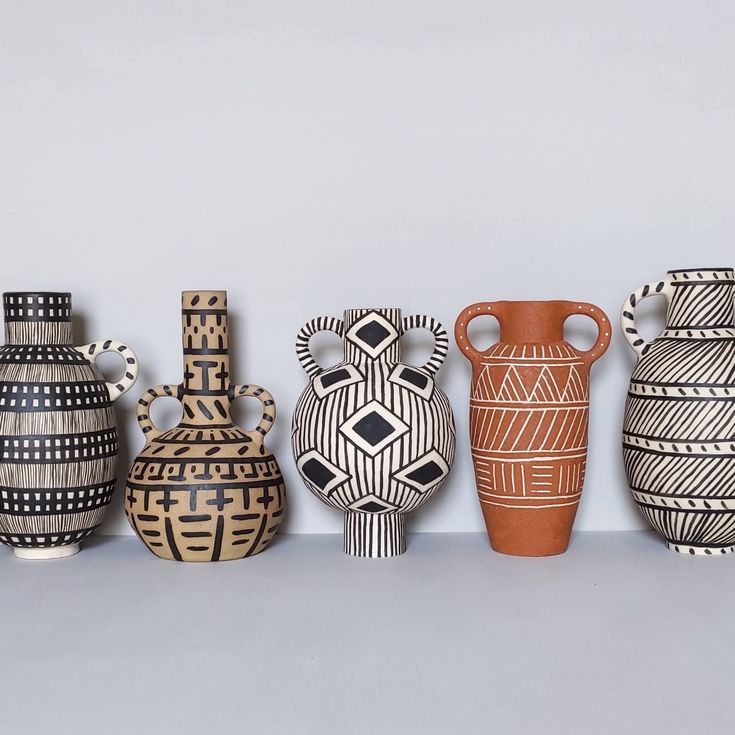
The earliest forms of African pottery were typically utilitarian – pots for cooking, storing water and grains, and preparing food. However, even these functional pieces were often imbued with artistic touches, featuring simple decorative patterns created by pinching, incising, or rolling tools over the wet clay. This demonstrated an innate aesthetic sensibility alongside practical needs. The technology was remarkably consistent across vast distances for millennia, relying primarily on coiling (building up the pot from coils of clay), pinching, and slab construction, followed by low-temperature firing in open bonfires or shallow pits. This simplicity of method belies the incredible skill required to create strong, durable, and symmetrical vessels.
One of the most significant early pottery traditions relevant to our current location is that of the Nok culture in central Nigeria, dating from around 1500 BC to 500 AD. While famous for their large, sophisticated terracotta sculptures (often human heads), the Nok also produced a wide range of pottery for domestic and ritual use. Their existence demonstrates a complex society with specialized artisans capable of intricate clay work, suggesting a long lineage of pottery expertise in the region. The Nok terracotta pieces are considered some of the earliest and most advanced examples of sculptural art in sub-Saharan Africa.
Beyond Nigeria, other ancient traditions flourished. In the Mali region, along the Niger River, archaeological sites have revealed ancient pottery traditions with unique forms and decorative styles, reflecting the diverse cultural groups that inhabited these areas. Similarly, early evidence of pottery is found across East and Southern Africa, each region developing distinct techniques and aesthetics adapted to local clay types and cultural needs.
The enduring story of African pottery’s ancient origins is a testament to the transformative power of a simple material. From the earth, early African potters fashioned tools that supported daily life, enabled settled communities, and laid the groundwork for the rich artistic traditions that continue to thrive today. These early vessels are not just artifacts; they are silent witnesses to the birth of human creativity and the deep historical roots of African craftsmanship, proving that the continent was a cradle of pottery innovation.