Bride Price: Empowerment or Exploitation?
Traditionally, bride price was not about “buying a woman.” It was about creating ties between families, showing gratitude, and ensuring that the marriage had community support.
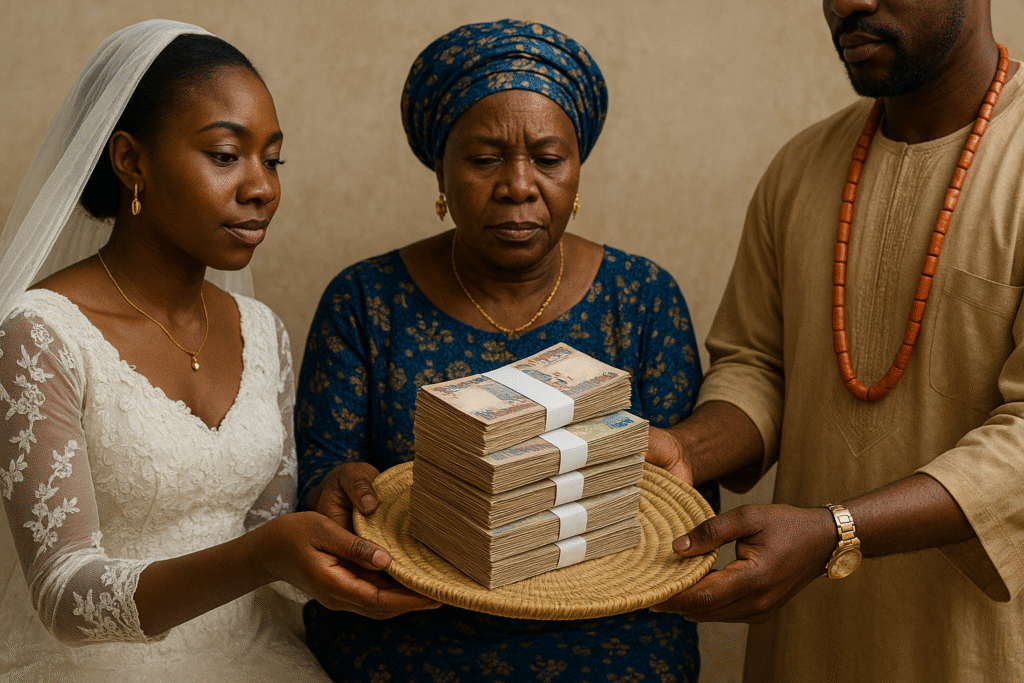
For generations across Africa, bride price has been more than a transaction it is a symbolic gesture of respect, family union, and cultural tradition. In communities from Nigeria to Uganda, Zimbabwe to Kenya, the groom’s family presents gifts, livestock, or money to the bride’s family as part of the marriage process. In its purest sense, it is meant to honor the woman, recognize her family’s role in raising her, and bind two families together.
But in modern Africa, this practice has become one of the most controversial cultural debates: is bride price still an empowering tradition, or has it become a form of exploitation?
The Cultural Meaning of Bride Price
Traditionally, bride price was not about “buying a woman.” It was about creating ties between families, showing gratitude, and ensuring that the marriage had community support. In rural communities, a groom’s ability to provide livestock or labor was proof of his capacity to care for a wife and children. Elders often stress that bride price is a form of respect, not commerce.
Even today, many African women express pride in the tradition, seeing it as a marker of their worth and as a way to ensure their families are respected. Some argue that removing bride price erases part of Africa’s heritage and dilutes cultural identity.
When Bride Price Becomes a Burden
However, the reality is often far from the symbolic ideal. In many cases, bride price has become heavily commercialized, with families demanding exorbitant sums of money, cars, and luxury goods. For some men, this turns marriage into a financial transaction, delaying or even preventing young people from marrying.
For women, it can create an unspoken sense of ownership. Some men feel entitled to control their wives, reasoning: “I paid for you.” This mindset has been linked to gender-based violence, marital abuse, and a lack of agency for women.
The Clash of Tradition and Modernity
Urbanization, globalization, and changing gender roles are reshaping how Africans view bride price. Educated and financially independent women question why their value should be determined by a payment. Feminists argue that bride price reinforces patriarchy, making women appear as commodities.
On the other hand, defenders say that abandoning bride price altogether is a betrayal of culture. They suggest reinterpreting it keeping the symbolic aspect but removing exploitative practices. For example, some families now accept symbolic gifts like books, fabric, or token amounts of money, honoring tradition without financial burden.
The Voices of Women
Perhaps the most important perspectives are those of African women themselves. Some proudly embrace the practice, seeing it as an affirmation of their worth and family’s honor. Others resent it deeply, feeling it reduces them to property.
One Nigerian woman shared: “My husband’s family paid my bride price, but I never felt bought. It was symbolic. My parents returned most of it the same day, to show that their daughter was not for sale.”
Another said: “The amount demanded was so high that my fiancé took a loan. When we had problems later, he would throw it in my face — ‘I paid for you.’ That is not love.”
Finding a Middle Ground
The real question may not be whether bride price should exist, but how it should evolve. Culture is not static; it grows with society. Bride price can remain an honorable tradition if redefined kept as a gesture of respect but stripped of exploitation.
African societies must ask themselves: is the purpose of marriage unity, or transaction? If bride price strengthens families and communities, it is worth preserving. But if it continues to reduce women to objects and trap men in financial hardship, it may be time to rethink it.
Bride price is both a source of pride and a point of pain in Africa. For some, it is a symbol of identity; for others, a tool of oppression. The truth lies in how it is practiced and interpreted.
Culture is powerful, but it is not beyond critique. If bride price is to survive as an African tradition, it must serve empowerment, not exploitation. It must unite families, not commodify women. It must reflect love, not ownership.
And perhaps the ultimate question is this: Can Africa hold onto the soul of its traditions while shedding the shadows they sometimes cast?