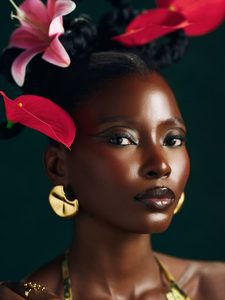
The Male Skirt — Redefining African Masculinity Through Fashion,When Men Wore Skirts Before Europe Did
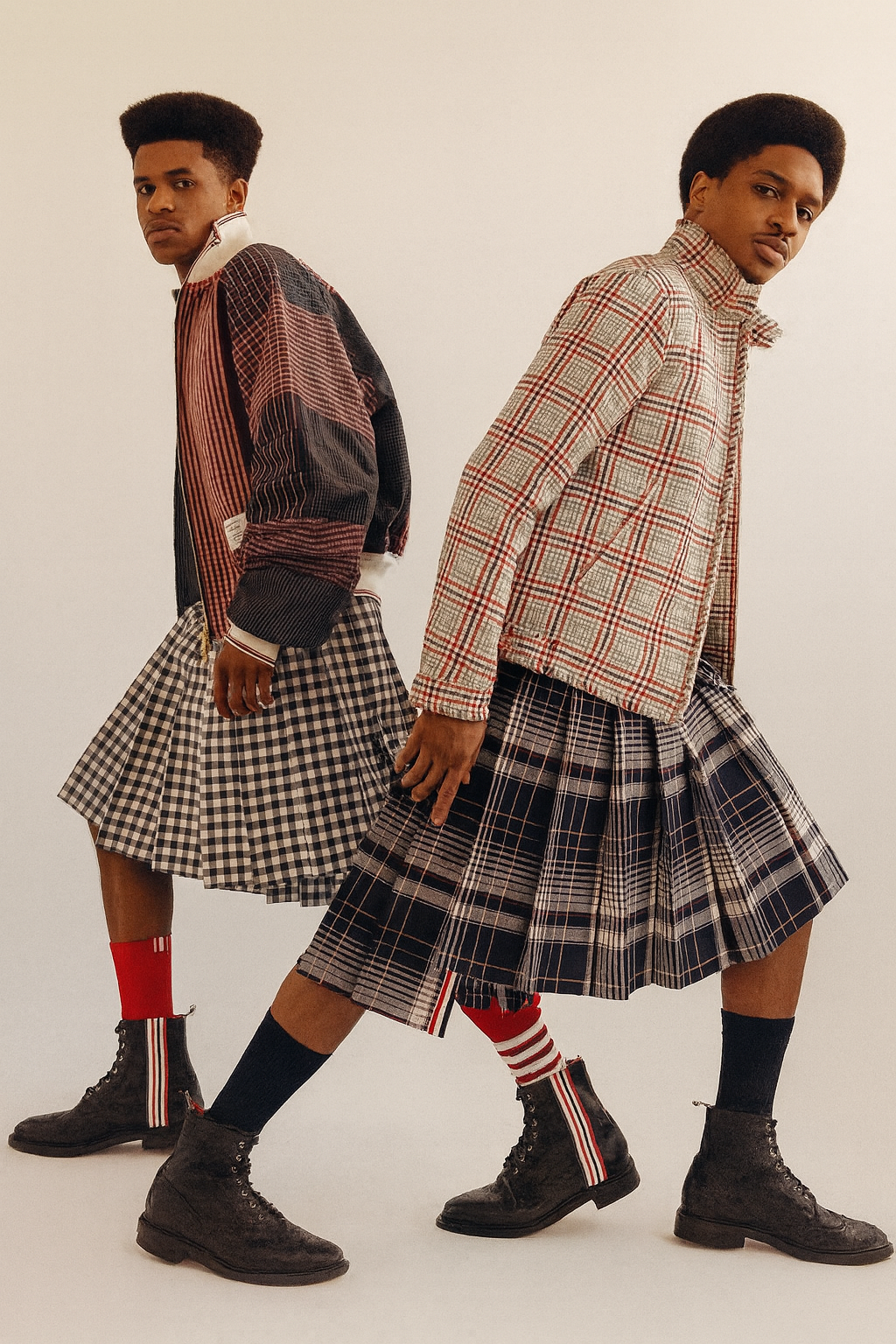
Long before the world began debating “men in skirts,” African men wore them proudly. From the Maasai shuka in Kenya to the Igbo wrappa, the Ghanaian kente kilt, and the Yoruba agbada with its flowing form, traditional African male attire has always embraced fluidity, color, and movement.
Yet, in today’s pop culture conversations, the sight of a man wearing a skirt sparks outrage and confusion particularly in societies that have adopted Western standards of masculinity.
The irony? Our ancestors wore what we now call “skirts” centuries before colonial influence introduced trousers as the symbol of manhood.
So when Nigerian designers like Ugo Monye, Tokyo James, or Orange Culture send men down the runway in skirt-inspired silhouettes, they’re not being radical they’re returning home.
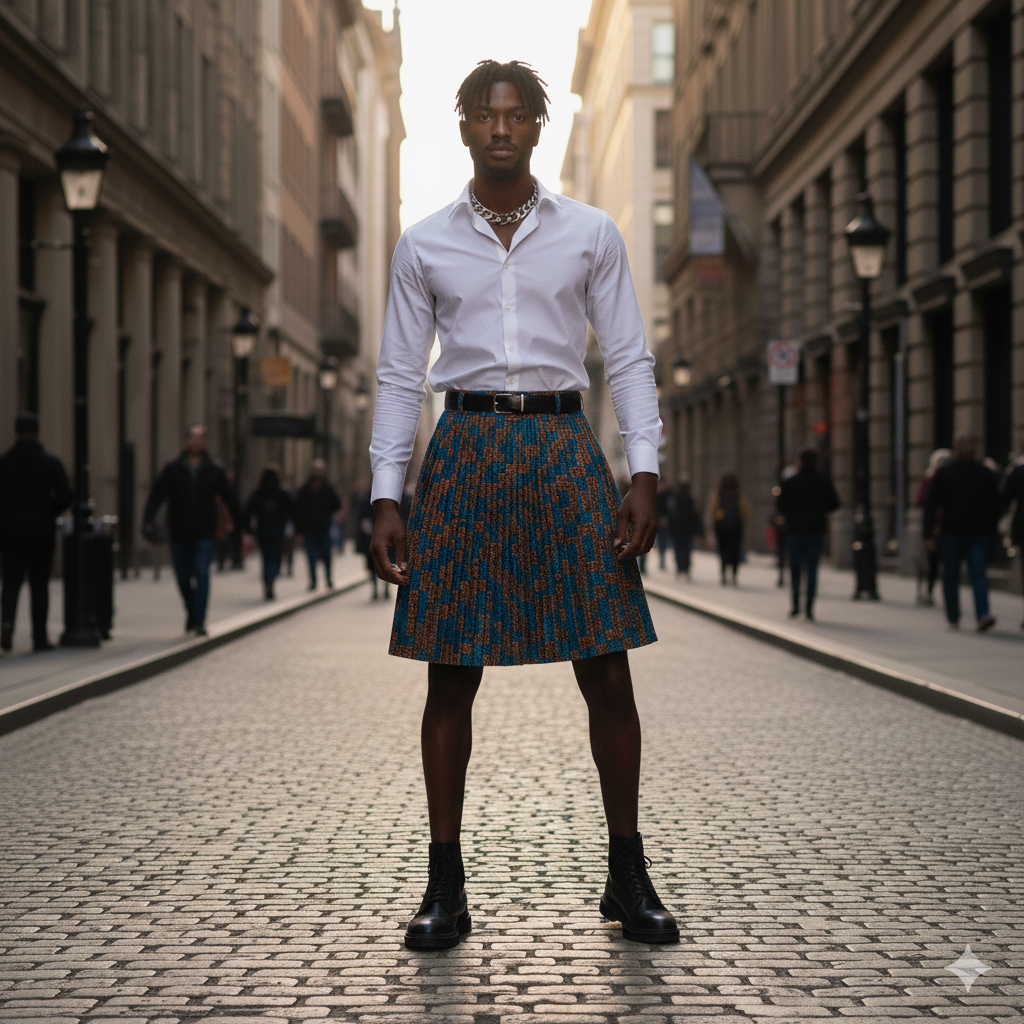
A Colonial Inheritance — How Trousers Became Masculine
To understand why a skirt on a man provokes discomfort, we must revisit history. European colonization did not only redraw Africa’s borders; it rewrote its gender aesthetics.
Western missionaries and administrators introduced strict gender binaries trousers for men, dresses for women erasing centuries of indigenous dress diversity. In traditional African societies, attire was tied to status, not gender. Warriors, chiefs, and dancers wore cloths draped around their waists, beaded skirts, or wrappers without question.
But colonial schooling and Christian morality condemned “feminine” clothing on men as improper. Over time, these imported values hardened into cultural expectations. By independence, the African man had become inseparable from his trousers a visible symbol of civilization and control.
Today’s return to the male skirt is therefore more than a fashion statement. It’s an act of decolonization a sartorial rebellion against norms that were never ours to begin with.
Designers Leading the Redefinition
Across the continent, a new generation of designers is reimagining masculinity through fabric.
Adebayo Oke-Lawal of Orange Culture has long challenged gender conformity in Nigerian fashion. His designs feature fluid cuts, pastel tones, and yes — skirts. He describes his brand as “for men who are not afraid of their emotions.”
Ugo Monye, known for his innovative Agbada 2.0, blends cultural pride with modern tailoring, sometimes styling men in long, draped garments that blur the line between wrapper and kilt.
In Ghana, Maxwell Owusu’s Brommon line celebrates traditional kente-inspired wraps as menswear elegance, not eccentricity.
These designers are reshaping the narrative: masculinity need not mean monotony.
When artists like Burna Boy or Denola Grey wear skirts, it makes headlines. But it also opens conversations about comfort, confidence, and cultural authenticity.
The Psychology of Fabric — What We Fear in the Skirt
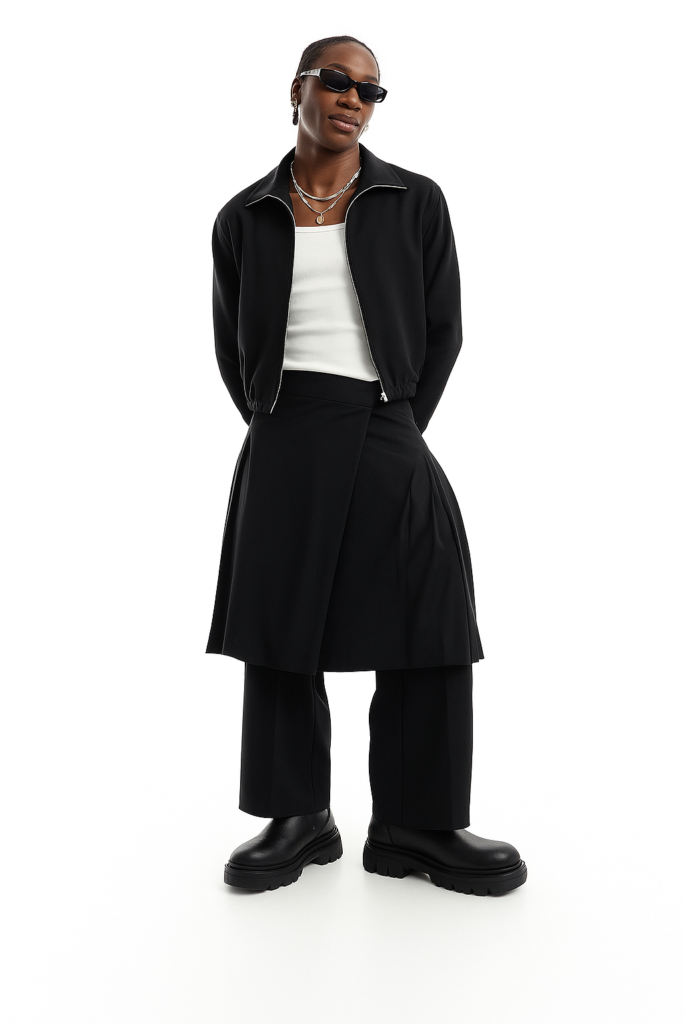
Why does a skirt unsettle people? Because it questions control.
For generations, masculinity in Africa was equated with strength, dominance, and suppression of vulnerability a colonial inheritance mixed with patriarchal tradition. A man in a skirt disrupts that narrative. He embraces softness, movement, and the freedom to exist beyond rigid codes.
Critics claim it “feminizes” men, but that claim reveals a deeper bias that femininity itself is weakness. The true issue is not the fabric; it’s our fear of fluidity.
As Nigerian writer Oyinkan Braithwaite once observed, “What we call strength is often just fear in disguise.”
Perhaps the male skirt frightens people because it symbolizes liberation and liberation demands honesty.
Cultural Parallels — From Warriors to Runways
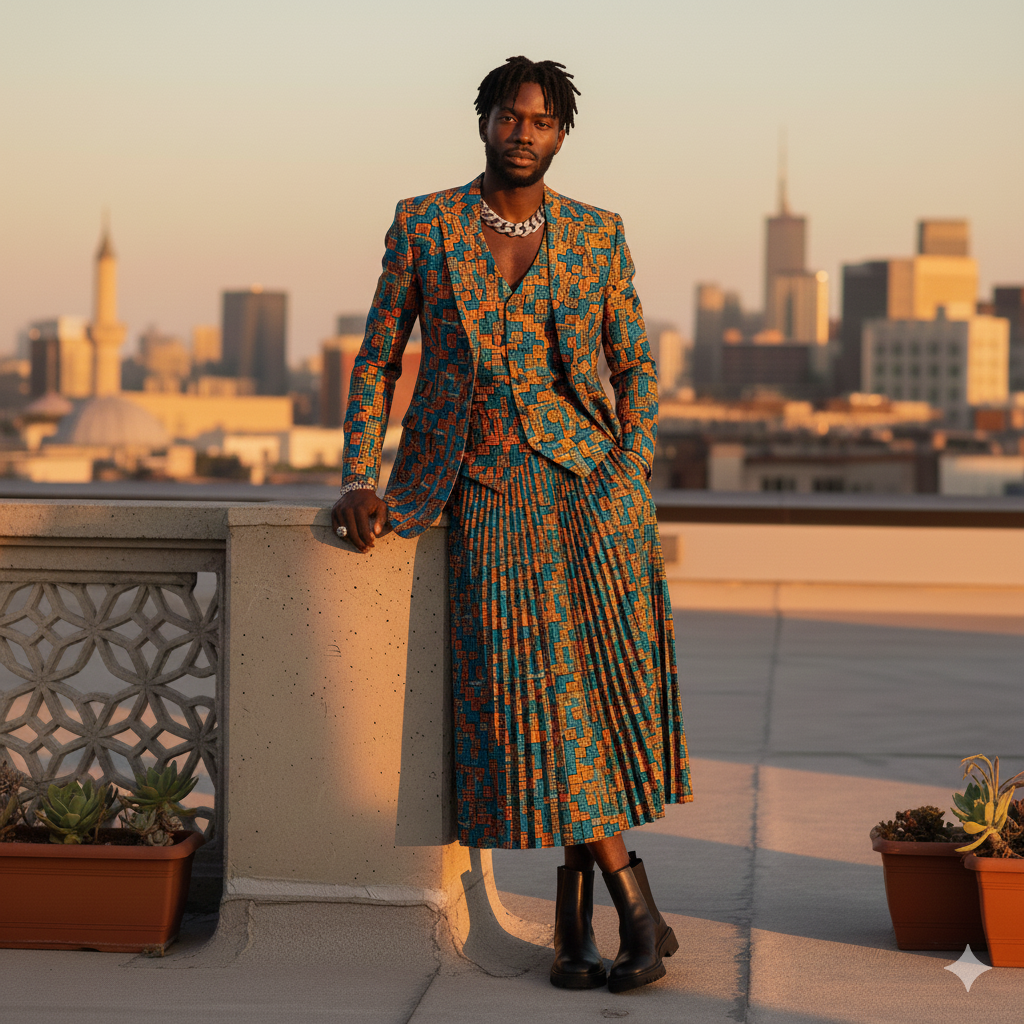
If we look closer, we’ll see that men’s skirts are not foreign to African masculinity.
The Maasai wear red plaid shukas, tied at the waist like kilts, symbolizing courage and strength.
The Igbo use the George wrapper, often tied by titled men during ceremonies.
The Zulu wear the isidwaba and amashoba short leather skirts that mark status and warriorhood.
Even the Scottish kilt, now seen as masculine pride, mirrors what African men wore centuries earlier.
So when African designers revive these silhouettes, they are restoring memory reminding us that masculinity was once vibrant, not confined.
Fashion as Protest and Healing
The re-emergence of skirts in menswear is also political. It challenges toxic masculinity, the policing of gender, and the rigid codes that harm both men and women.
In Lagos and Accra, young stylists are using fashion to heal. Men are learning that wearing color, softness, or drape does not make them less it makes them whole.
As one Ghanaian stylist said: “When I wear a skirt, I feel closer to my roots. It’s not rebellion; it’s remembrance.”
This reclamation has global echoes. From Billy Porter to Nigerian influencers, Black men are reclaiming visibility through aesthetics that honor fluidity rather than fear it.
The Digital Influence — Social Media and the Skirted Man
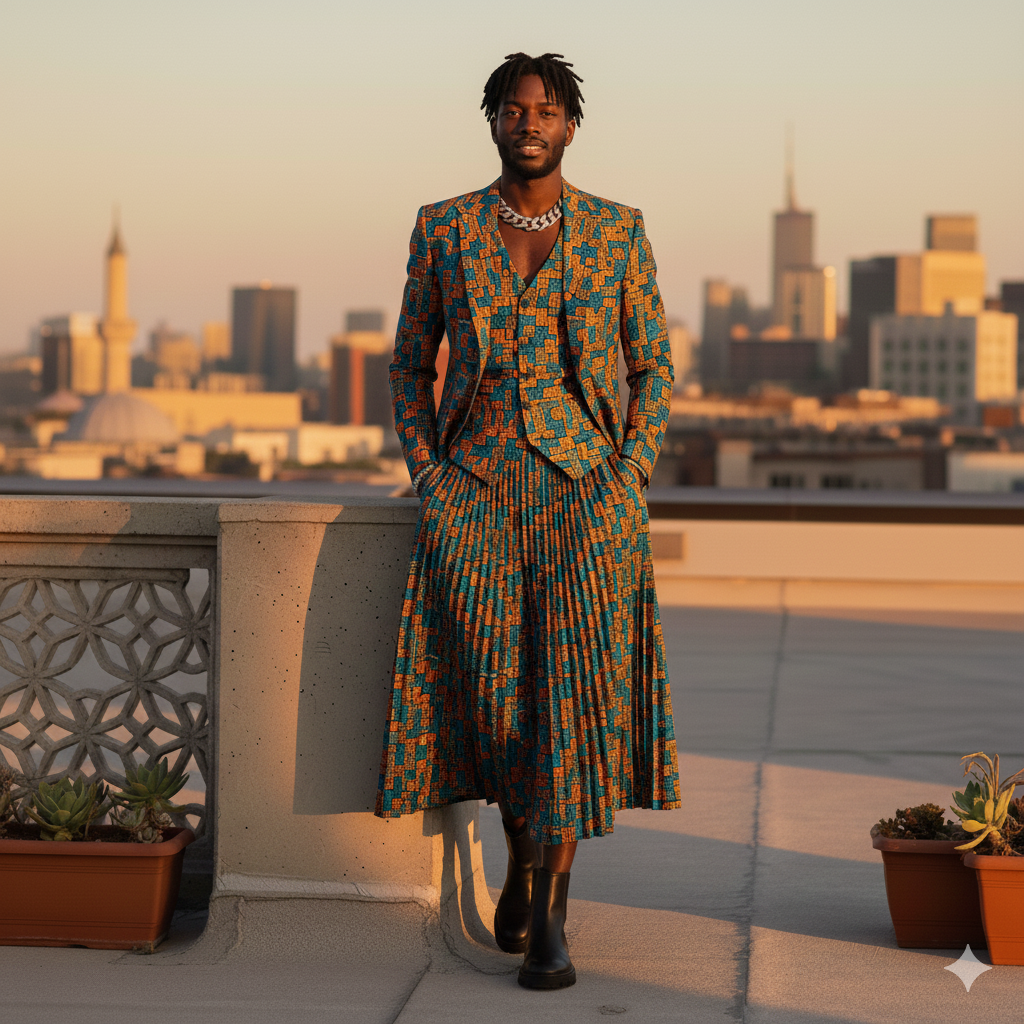
Instagram and TikTok have amplified the conversation. Photos of men in flowing skirts or Ankara wraps draw thousands of comments some praising, others mocking. But the visibility matters.
Each post, each fashion shoot, chips away at old narratives. It tells African boys: there’s more than one way to be a man.
It tells designers: creativity is not weakness.
And it tells society: freedom of expression is not a threat.
This digital visibility is rewriting masculinity for a new generation — one that values authenticity over approval.
Beyond Gender, Beyond Fabric
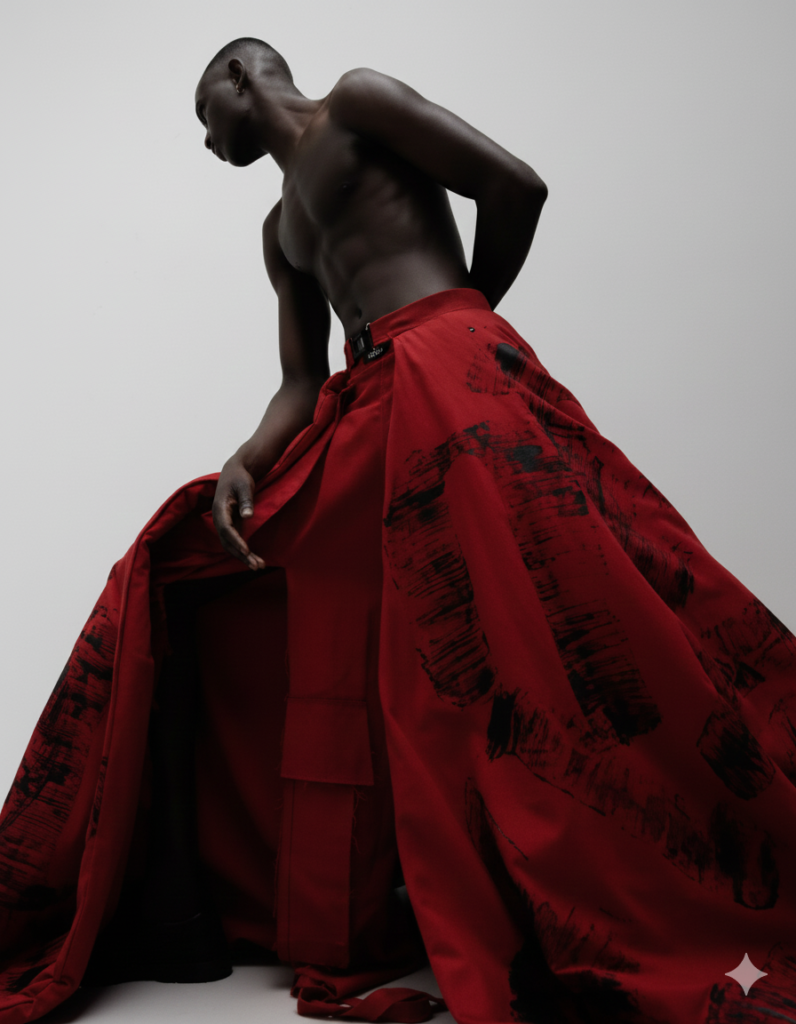
The male skirt in African fashion is not an invitation to controversy; it is an invitation to memory.
It reminds us that before the world told us who we were supposed to be, we already were expressive, bold, fluid, and free.
The return of the male skirt is a cultural correction. A celebration of balance of strength with softness, power with grace.
And perhaps, as Nigerian designer Tokyo James once said, “The future of African fashion isn’t about gender it’s about truth.”
In embracing that truth, African men are not becoming less masculine. They are simply becoming more human.