Vibrant Hues and Earthy Tones Color Palettes in African Interiors
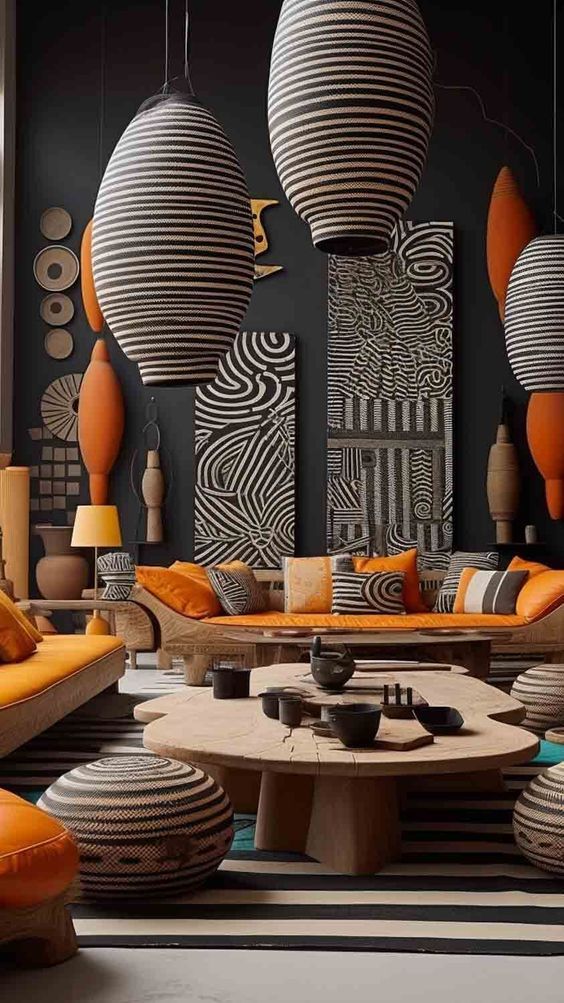
The color palettes of African interiors are a captivating interplay of “vibrant hues and earthy tones,” reflecting the continent’s diverse landscapes, rich cultural expressions, and an innate understanding of how color impacts mood and space. Far from being merely decorative, colors in African homes often carry deep symbolic meanings, reflecting identity, spiritual beliefs, and the celebration of life. This exploration reveals how African decor masterfully blends the boldness of nature with the warmth of tradition.
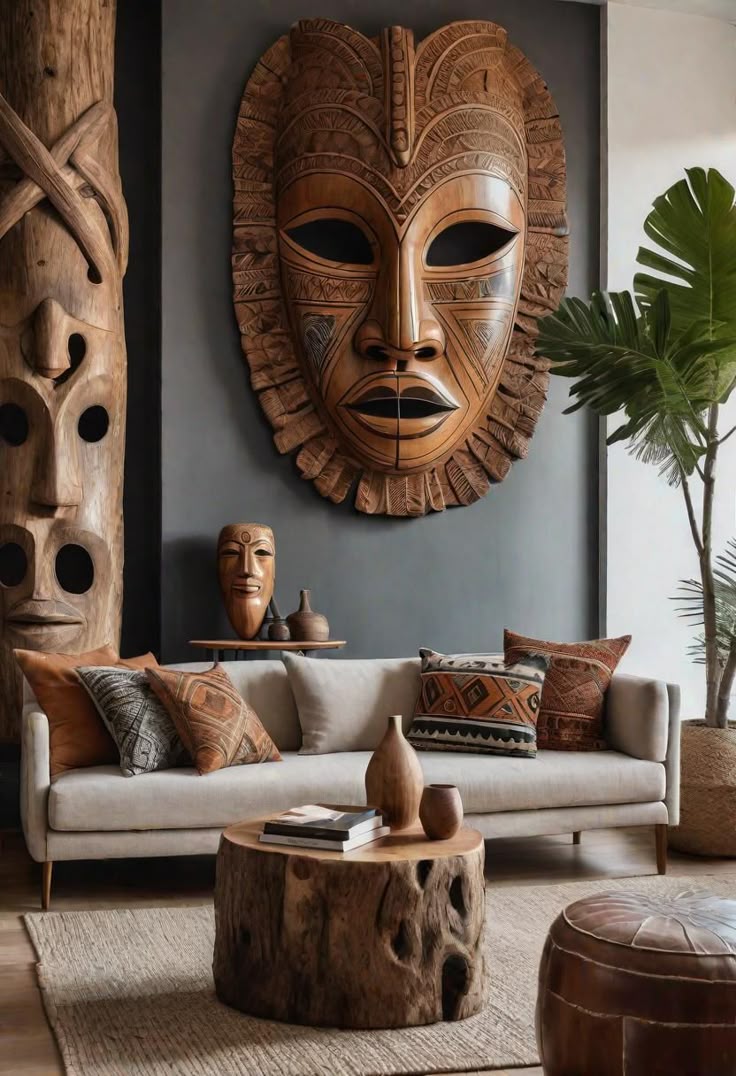
Earthy Tones form the foundational palette, mirroring the natural environment. The widespread use of mud (clay) for walls, floors, and traditional pottery naturally introduces shades of terracotta, ochre, brown, and warm beige. These tones create a sense of groundedness, warmth, and harmony with the surroundings. They also provide a perfect natural backdrop against which more vibrant colors can truly pop. The use of natural pigments derived from minerals and plants further enhances these organic base colors, which subtly change with the shifting sunlight.
Against this earthy canvas, vibrant hues explode, injecting energy, life, and cultural storytelling into the interior. These bold colors are typically found in textiles, artwork, and smaller decorative objects:
Rich Reds: Symbolic of life, vitality, passion, and sometimes blood or sacrifice. Reds, often derived from natural dyes or later from wax prints, are prominently featured in traditional clothing, woven mats, and accent pieces.
Deep Blues: Representing peace, harmony, spirituality, and the sky or water. Indigo, a traditional dye, produces stunning shades of blue seen in textiles like Adire cloth from the Yoruba of Nigeria or mud-dyed fabrics from Mali.
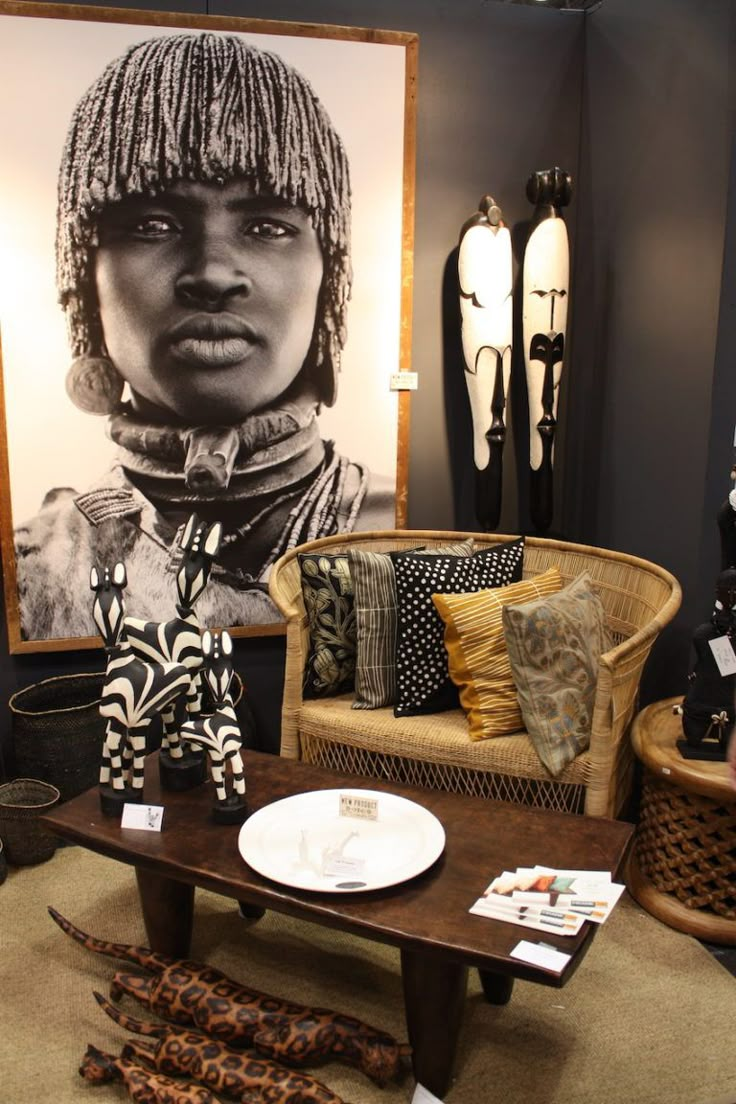
Sunshine Yellows and Oranges: Evoking warmth, happiness, prosperity, and the abundant African sun. These bright colors are found in beadwork, painted patterns, and fabrics, bringing a joyful radiance to interiors.
Lush Greens: Symbolizing growth, fertility, nature, and rejuvenation. Greens from various plant dyes add a refreshing touch, connecting the interior to the lush landscapes outside.
Black: Represents power, mystery, maturity, and sometimes the earth itself. Black is often used for outlining patterns, in carved wood, or in smoked pottery, providing depth and contrast.
The application of these colors is often strategic. Large surfaces might maintain earthy tones, while textiles (like throw pillows, wall hangings, and rugs), pottery, and carved wooden objects introduce bursts of intense color. This creates a balanced yet dynamic visual experience. The layering of different textures – smooth mud walls, rough woven baskets, soft cotton fabrics, and polished wood – adds further depth and dimension to the color scheme.
In contemporary African homes, this appreciation for vibrant color continues, often blended with modern design sensibilities. While some may opt for more muted base tones, pops of Ankara fabric, colorful African art, or brightly painted furniture maintain a distinct African aesthetic. Designers often draw inspiration from traditional textiles, reinterpreting their color combinations and patterns for modern living spaces.
The color palettes in African interiors are a testament to a rich visual heritage. They are not merely about decorating a space; they are about imbuing it with cultural meaning, evoking emotion, and celebrating the vibrant spirit of Africa, creating homes that are both beautiful and deeply resonant.