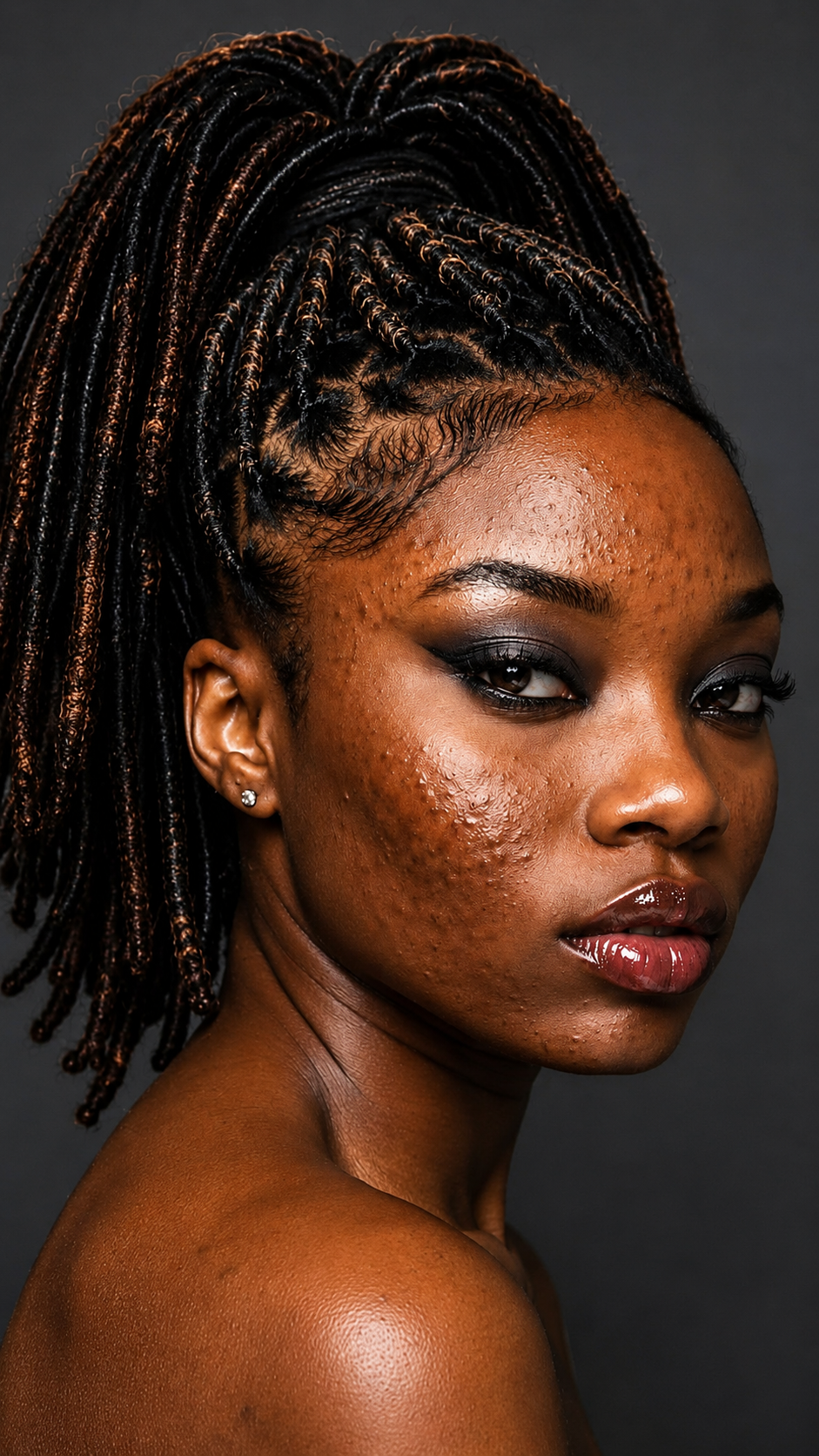
Acne on dark skin is often misunderstood, misdiagnosed, and mistreated. Many global skincare recommendations are created for lighter skin tones, leaving people with melanin-rich skin to navigate breakouts with little guidance tailored to their specific needs. Yet acne behaves differently on dark skin, and the aftermath, especially hyperpigmentation can be far more frustrating than the pimples themselves. Understanding these unique factors is the first step toward healing, prevention, and long-term skin confidence.
The biology of melanin plays a major role in how acne shows up on African skin. While melanin offers natural protection against some environmental stressors, it also means the skin is more reactive to inflammation. A tiny pimple on lighter skin may disappear without a trace, but on darker skin, even minor irritation can trigger the overproduction of melanin, leading to dark spots, shadows, or uneven texture long after the breakout has healed. This makes acne not just a temporary skin concern but an issue with long-lasting effects. The challenge is not simply preventing pimples; it is preventing the marks they leave behind.
Another unique element is the type of acne commonly seen on African skin. Many people experience a combination of oily skin and dehydration, which creates a cycle where the skin produces excess sebum to compensate for a weak moisture barrier. This results in clogged pores, congestion around the cheeks and jawline, and deeper, more stubborn bumps known as papules or nodules. In some cases, hair texture also plays a role. Coarse or curly hair can curl back into the skin, causing razor bumps or folliculitis that mimic acne but require different treatment. Unfortunately, because many clinicians are unfamiliar with how acne presents on darker skin, this inflammation is often treated incorrectly, making it worse.
The biggest mistake people with dark skin make is copying routines designed for lighter skin. Harsh scrubs, astringent toners, overly strong acids, and aggressive exfoliation can all trigger more inflammation, leading to darker spots and worsening breakouts. The goal for melanin-rich skin is not to “strip” acne away but to calm, balance, and protect the skin while gently treating the root causes. Healing starts with understanding what to avoid: no physical scrubs, no lemon juice remedies, no toothpaste hacks, no bleaching agents, no overuse of salicylic acid, and absolutely no popping pimples. Each of these worsens inflammation, and inflammation is the true enemy.
Effective acne care for African skin relies on choosing targeted, science-backed ingredients that work gently but powerfully. Niacinamide helps regulate oil production and strengthen the moisture barrier. Salicylic acid works well when used in moderation because it penetrates pores without scrubbing. Azelaic acid is a hero ingredient for dark skin because it treats both acne and post-inflammatory hyperpigmentation at the same time. Retinoids when introduced slowly help unclog pores and improve texture. And moisturizers are non-negotiable; they keep the skin barrier intact, reducing the risk of irritation and dark marks. Contrary to popular belief, oily skin still needs moisture, just not heavy or pore-clogging formulas.
Another critical part of acne management is lifestyle. Climate, stress, diet, hormones, and even hair products can influence breakouts. In hot and humid environments, sweat and excess oil can cause clogged pores, especially around the forehead and hairline an area commonly affected by hair gels, oils, and edge control products. In harmattan or dry climates, the skin compensates for dehydration by producing more oil, triggering breakouts in unexpected places. A good routine considers weather, habits, and the unique environmental conditions of Africa.
What makes acne particularly stressful on dark skin is the emotional toll. Many people feel discouraged when the pimples fade but the dark spots remain for months. This is where patience and gentle consistency become essential. Treating acne and treating hyperpigmentation are two different journeys, but they can happen together when the right products are used in the right way. Sunscreen is also crucial even for dark skin because UV exposure deepens dark spots, slows healing, and triggers new pigmentation. A broad-spectrum, non-greasy SPF is one of the most powerful tools for achieving an even-toned complexion.
The good news is that with the right approach, acne on African skin is completely manageable. The global beauty industry is slowly acknowledging that melanin-rich skin requires its own research, formulations, and clinical testing. African dermatologists, estheticians, and skincare founders are leading this shift by creating solutions rooted in an intimate understanding of dark skin biology. Their innovations are empowering a new generation to treat acne with confidence and clarity.
Acne does not define African skin; it is simply a chapter in the story of skin that is strong, resilient, and beautifully rich in melanin. With informed care, gentle routines, and a deeper knowledge of how acne behaves on dark skin, healing is not only possible, it is inevitable.