Is Bill Gates Trying to “Own All African Seeds”? The GMO Debate, African Seed Banks, and the Battle for Food Sovereignty
From GMO policies to patented seeds, Africa’s food future is at the center of a heated debate. Are biotech investments helping solve hunger and climate challenges, or threatening indigenous seed sovereignty and farmer independence? As African seed banks fight to preserve biodiversity, questions around power, ownership, and food security continue to grow.
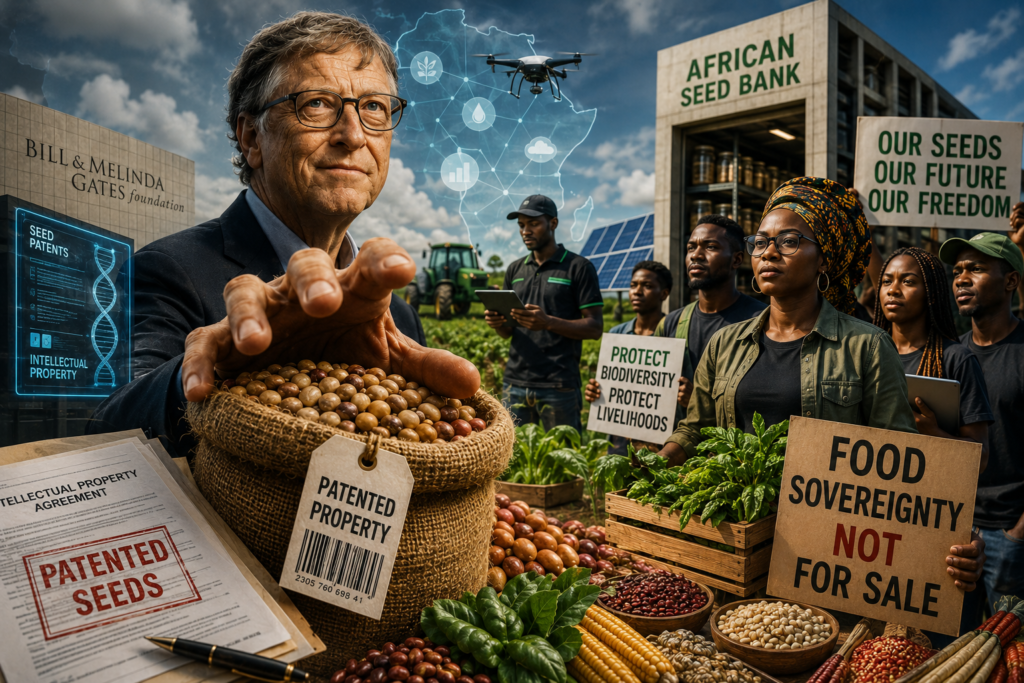
Understanding the Controversy Around Bill Gates, Agriculture, and Africa’s Food Future
Across Africa and social media worldwide, one question continues to spark heated debate: “Is Bill Gates trying to own African seeds?” The question has become part of a much larger conversation about genetically modified crops (GMOs), food sovereignty, agricultural funding, seed ownership, and the future of farming on the African continent.
To supporters, investments linked to the Bill & Melinda Gates Foundation represent an attempt to reduce hunger, modernize agriculture, and help African farmers survive climate change. To critics, however, these initiatives raise fears about corporate control, dependency on patented seeds, and the erosion of indigenous African farming systems. The truth is more complex than many online narratives suggest. There is no verified evidence that Bill Gates personally seeks to “own all African seeds.” However, the controversy surrounding his agricultural investments reflects deeper anxieties about power, colonial history, global influence, and who controls Africa’s food systems. The debate is ultimately about far more than one billionaire. It is about land, survival, economics, science, and sovereignty.
Why Bill Gates Is Connected to African Agriculture
The Bill & Melinda Gates Foundation has invested heavily in agriculture and food security initiatives globally, including across Africa.
These investments include support for: agricultural research, improved seed development, climate-resilient farming, biotechnology, fertilizer access, digital farming tools and smallholder farming initiatives
The foundation has also partnered with: research institutions, African governments,
International agricultural organizations and development agencies
One of the most discussed partnerships has been with organizations involved in advancing agricultural modernization across Africa.
Supporters argue these investments are necessary because Africa faces serious agricultural challenges: climate change, drought, soil degradation, crop disease, rapid population growth and food insecurity. From this perspective, agricultural innovation is seen as essential for survival.
The Origin of the “Seed Ownership” Fear, the controversy largely centers on modern commercial seed systems and genetically modified crops. Traditionally, African farmers have: saved seeds from previous harvests, exchanged seeds within communities, preserved indigenous crop varieties and relied on ancestral farming knowledge. This system has existed for generations and is deeply tied to African culture, biodiversity, and local food systems. However, many commercial agricultural models operate differently. Some modern seeds, especially genetically modified or hybrid seeds are protected by patents or intellectual property laws.
This can require farmers to: purchase new seeds each season, rely on commercial suppliers, use specific fertilizers or chemicals and follow licensing agreements
Critics fear this creates dependency on multinational seed corporations and weakens traditional seed sovereignty.
Because Bill Gates has funded agricultural programs connected to modern seed systems, some activists associate him with these concerns. Is There Evidence Bill Gates Wants to “Own All African Seeds”?
No verified evidence shows that Bill Gates is attempting to personally own all African seeds or take direct control of African agriculture. Many online claims exaggerate or oversimplify the situation. However, the fears themselves are rooted in real global concerns about: corporate concentration in agriculture, intellectual property rights, seed patents and the growing influence of powerful institutions over food systems, the controversy is less about literal ownership of every seed and more about influence over agricultural systems and policy directions. This growing middle-ground perspective argues Africa should not reject science but should control how it is implemented. The Bill Gates controversy ultimately reflects a much larger question: Who should shape Africa’s agricultural future? Should it be: multinational corporations? Governments? Local farmers? Philanthropists?
African scientists? Global development organizations?