Beyond the Labels: Abiodun Marixbell Osifeso on Feminism, Freedom and Finding Her Voice
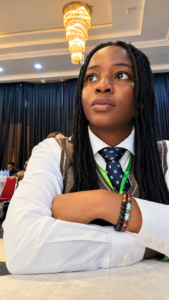
Meet Abiodun Marixbell Osifeso, a paralegal, media officer, poet and writer whose perspectives on feminism, personal freedom and identity invite deeper conversations. In this Ajoke Brown Media feature, we explore her convictions, creative expression and views on women’s rights and the courage to find one’s voice in contemporary Nigeria.
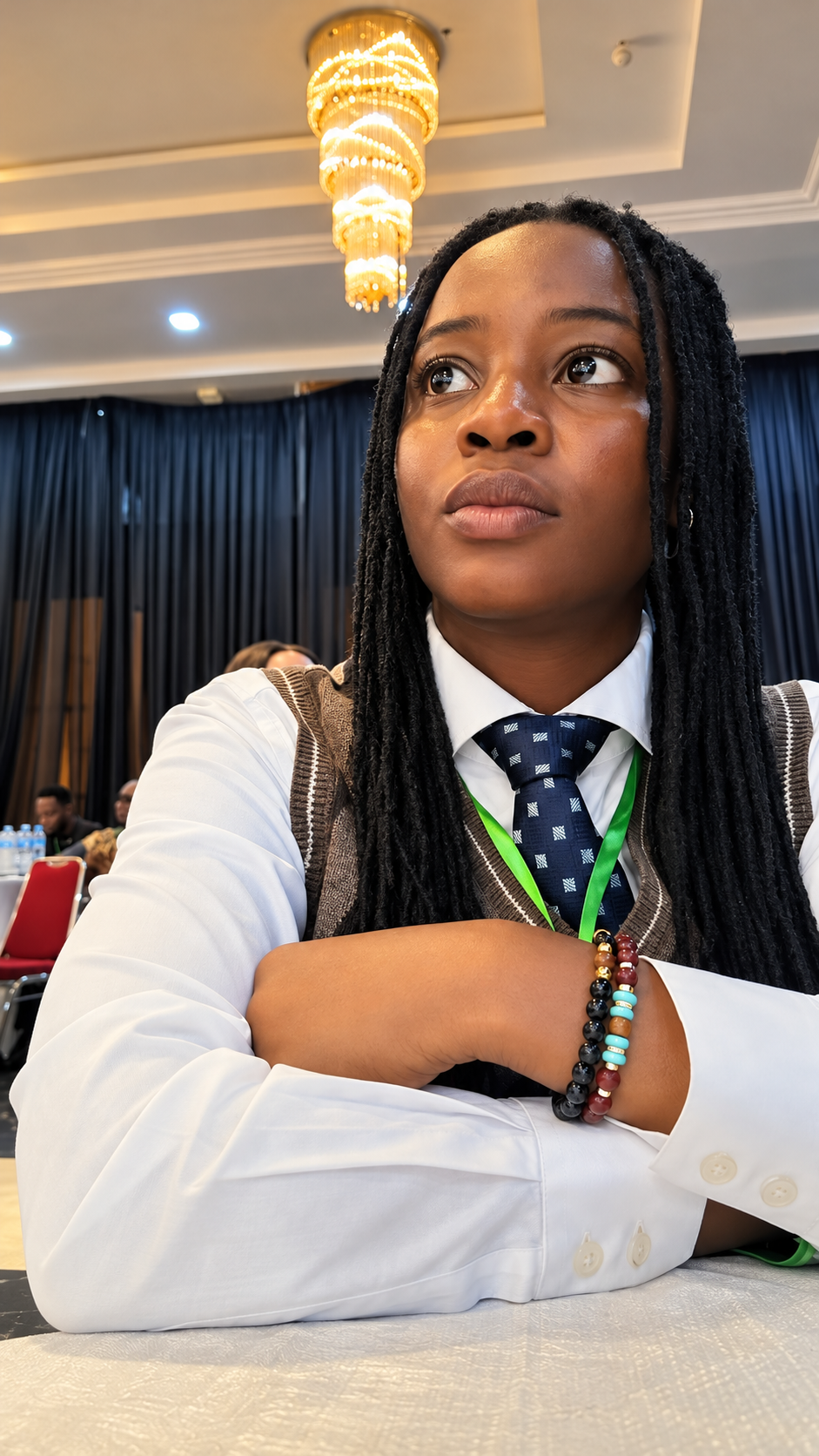
Who gets to define a woman and what happens when she chooses to define herself?
For Abiodun Marixbell Osifeso, identity encompasses many dimensions. A paralegal, media officer, poet and writer, she also identifies as an atheist, feminist and pro-choice advocate.
Her profile reflects a willingness to engage with questions of belief, gender, personal freedom and the right to express one’s convictions. In a society where conversations about feminism, women’s rights and individual autonomy can invite strong opinions, making space for diverse perspectives is essential. Through her professional pursuits and creative expression, Abiodun offers an opportunity to explore the experiences, ideas and convictions behind the labels we often use to describe people.
In this edition of Ajoke Brown Media , we explore her understanding of feminism, the relationship between law and women’s rights, the role of writing in expressing personal truths, and the challenges of holding and communicating one’s beliefs in contemporary Nigeria.

Beyond the titles and affiliations, this is a conversation about identity, self-expression and the freedom to find one’s voice.
Your profile describes you as an atheist, feminist, pro-choice advocate, paralegal, media officer, poet and writer. How have these different parts of your identity shaped the woman you are today?
These different parts of my identity have taught me to think critically, speak up, and stand for equality and justice. Feminism and my pro-choice advocacy have strengthened my commitment to women’s rights, while my work as a paralegal and media officer has shown me the power of advocacy and information. As a poet and writer, I use my voice to express experiences and inspire change. Together, they have made me more compassionate, courageous, and intentional about creating impact.
What first drew you to feminism, and how has your understanding of feminism evolved since you began identifying with it?
Before I knew the word feminism, I was already standing against injustice. It started in childhood, when I saw things that made me question, “Why are women treated this way? Why are women seen as second-class?” I didn’t just question it; I acted against what I felt was wrong.
I discovered the word feminism in my early 20s, and when I did, I held onto it because I realized it described what I had been fighting for all along. I had no reason to be ashamed of it. Over time, my understanding of feminism has grown, but at its core, I believe in equality for everyone, regardless of gender, status, race, religion, or sexuality. I am not trying to redefine feminism; I simply want to uphold its commitment to equality and make that part of my everyday life.
As someone working in the legal space, what are some misconceptions Nigerians have about women & laws rights and the laws that protect women?
One misconception I often hear is that women have an easier time getting justice than men, especially because there are more men in prison than women. From my experience, I don’t think the number of women in court or prison tells the full story.
Before becoming a paralegal, I worked in a legal environment where I reviewed client documents and assisted with basic legal work. Although I was not practising law, I had the opportunity to see some of the barriers women face within the justice system. I later trained as a paralegal working mainly with marginalised groups, especially queer women, and this made the issue even clearer to me.
Many women do not take cases to court because they already feel that nobody will listen to them, believe them, or take them seriously, sometimes even the lawyers representing them. Women have also been taught to endure and let things go, particularly when it comes to gender-based violence. They learn to be careful about every step they take, almost as if they are walking through life trying not to step on a mine.
So, fewer women in court does not necessarily mean women are receiving more justice. Sometimes, it means many women have already decided that seeking justice is not worth the pain, cost, stigma, or disappointment. This is why I believe legal awareness and accessible support are so important. Women need to know their rights, but they also need to feel that when they speak, someone will listen and take them seriously.
You describe yourself as pro-choice. What does reproductive choice mean to you, particularly within the Nigerian social and cultural context?
I am pro-choice, although my personal views on having children can lean towards antinatalism. But I believe strongly that my personal beliefs should not determine what another woman chooses for her own life.
To me, reproductive choice means that women should have the freedom to make decisions about their bodies and reproductive lives. That decision may not always make everyone around them comfortable, but it is not a woman’s responsibility to make other people feel comfortable with a decision that belongs to her.
In the Nigerian context, where family, culture, religion, and social expectations can strongly influence women’s reproductive choices, I believe women deserve accurate information, support, and the freedom to decide for themselves. Their bodies belong to them, and they should have a voice in what happens to them.
You are also a poet and writer. What stories, emotions or experiences most often find their way into your writing?
I am a very emotional person. You don’t always have to say anything to me; sometimes your body language or simply seeing someone go through something can make me cry. That is how deeply I feel things.
When I started writing, it wasn’t because I loved writing. I wrote because of loneliness, isolation, trauma, and pain. Somehow, when I was sad, I produced some of my best writing. That was how writing found me.
Poetry especially came to me; I didn’t go looking for it. I never planned to become a poet, and honestly, I didn’t even like reading poetry. But when I was in SS2, I came across a poem called The Boy in the Swing, and it made me cry so much. Something about it stayed with me.
I started writing poetry about seven years ago. I was not very good at it then, but even in those early poems, you could see the message I was trying to pass across. I didn’t feel the need to sound grammatical like the poets I admired or to follow every rhythm and structure. I was simply trying to put my feelings somewhere.
Over time, I started investing more in poetry. Now, I only write when I feel like I have something to say. I don’t write because I feel obligated to. For me, poetry is simple: you feel something, and you write it. It doesn’t always have to be perfect. Sometimes, it just has to be honest.
How does your work in media influence the way you communicate about feminism,human rights, gender and other socially sensitive issues?
My work in media has changed the way I communicate about feminism, human rights, gender, and other sensitive issues. There was a time when I thought I had all the answers. I believed I knew what was right and that my way was the right way, without fully considering that people come from different backgrounds, experiences, and realities.
Working in media and advocacy has taught me to listen more and assume less. I have learned that the way I communicate an issue matters because people may experience the same problem differently. So now, I try to communicate in a way that is clear, relatable, and sensitive to the people whose stories I am telling.
For me, media is not just about passing information. It is about creating understanding, challenging harmful narratives, and making people feel seen without speaking over their experiences.
7. Nigeria can be a challenging environment for women who openly express unconventional opinions. Have you ever faced backlash for your views, and how did you navigate it?
I experience backlash almost every day, even with the relatively small level of exposure I have. I have come to realise that backlash is not necessarily about your status or how much influence you have. Even some of the most powerful and wealthy women in the world face criticism for expressing their opinions, although it may come in different forms.
For me, navigating backlash has meant learning not to take every reaction personally. I listen when there is something worth learning from, but I also understand that I cannot make everyone comfortable with my views. I have learned to stand by what I believe while remaining open to learning and questioning myself.
Being outspoken comes with its own challenges, especially as a woman, but I don’t think silence is the answer. I would rather be thoughtful about what I say, understand the consequences, and continue to use my voice.

What role do you believe young Nigerian women can play in challenging harmful stereotypes and creating a more equitable society?
I believe advocacy can start anywhere. It can start in your home, among your friends, with your colleagues, or even from your social media page. You don’t have to be a public figure; you can be anonymous or faceless and still create impact.
I also believe in learning. Today, we have access to so much information, including through AI, so you don’t always have to start by reading a book. But if you choose to read one, don’t just read it to say you have read it; understand and digest it. Some of the knowledge that has historically been used to limit or oppress women exists in books and institutions, so why shouldn’t women become equally knowledgeable and good at understanding those spaces?
Being a woman should never be a limitation to knowledge. A good book can mentor you, reshape how you see the world, and open doors you didn’t know existed. The more we learn, the broader and stronger our advocacy becomes.
If you could change one thing about the way Nigerian society discusses feminism, women and laws rights and personal freedom, what would it be—and why?
If I could change one thing, it would be the belief that society has the right to decide how a woman should live her life simply because she is a woman.
The more reason I speak openly and advocate for women is because I want to see a society where, one day, a woman can simply be free from the expectations placed on her because she is a woman. She should be able to make decisions about her life, her body, her career, her relationships, and her future without constantly having to seek society’s approval.
I want us to get to a point where a woman can simply be a woman who makes decisions for herself and lives with the consequences of those decisions. Her freedom should not have to be negotiated with society.
Beyond the titles and labels, who is Abiodun Marixbell Osifeso? What do you hope people remember about your work, your writing and the impact you are trying to make?
Beyond the titles and labels, I am someone who feels deeply, questions things, and has always been drawn to what feels unjust. I am curious, emotional, creative, and sometimes still figuring myself out. I don’t think I have all the answers, and one of the things life has taught me is to listen, learn, and understand that people experience the world differently.
A lot of my work comes from wanting people to have the freedom to exist without constantly having to explain or defend themselves. Whether I am writing, doing advocacy, working in media, or supporting someone through my paralegal work, I am interested in people and their stories.
I hope people remember my work as something that made them think, question what they had accepted, or see themselves differently. I want my writing to make someone feel something, and I want my advocacy to remind people that their voices and choices matter.
More than anything, I hope I am remembered as someone who cared enough to speak, to learn, and to leave something meaningful behind, not because I had all the answers, but because I was willing to keep asking the questions.