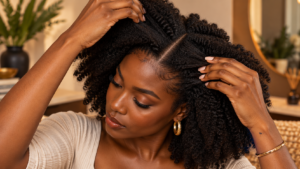
Embarking on a loc journey is far more than a simple shift in your physical appearance. For centuries, across various continental African cultures and global Diasporas, locking one’s hair has been revered as a profound spiritual, mental, and lifestyle transformation. It is a conscious decision to step away from traditional combing rituals, release the anxieties of daily heat styling or product manipulation, and allow your hair to grow exactly as nature intended, freely, organically, and majestically.

However, making the decision to start locs is only the first step, the moment you decide to take the plunge, you are faced with a flood of terminology, installation methods, and contrasting advice that can feel incredibly overwhelming for a beginner.
At Ajoke Brown Media, we believe that every major shift in your personal style framework should be rooted in absolute clarity. This comprehensive beginner’s guide strips away the confusion, breaking down the four primary starter loc installation methods, normalizing the early transformation phases, and outlining the essential rules to ensure your journey starts on a healthy foundation.
4 Ways to Start- Choosing Your Installation Method
The foundation of your entire loc journey is dictated by how you choose to install your “starter locs.” Each method yields a different aesthetic timeline, maintenance routine, and price point. Consider these four primary options to find the perfect fit for your lifestyle.
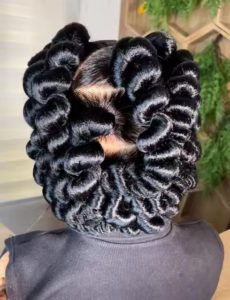
1. Comb Coils (The Classic, Clean Start)
This is one of the most popular methods for short to medium-length natural hair. A loctician uses a small metal comb and a lightweight locking gel or wax to twist small, uniform sections of hair from root to tip into neat, hollow tubes.
The Vibe- It offers a highly uniform, clean, and symmetrical look from day one.
The Reality- Because they are hollow, comb coils are highly fragile in the first few months. They are easily prone to unraveling when exposed to water or vigorous washing.
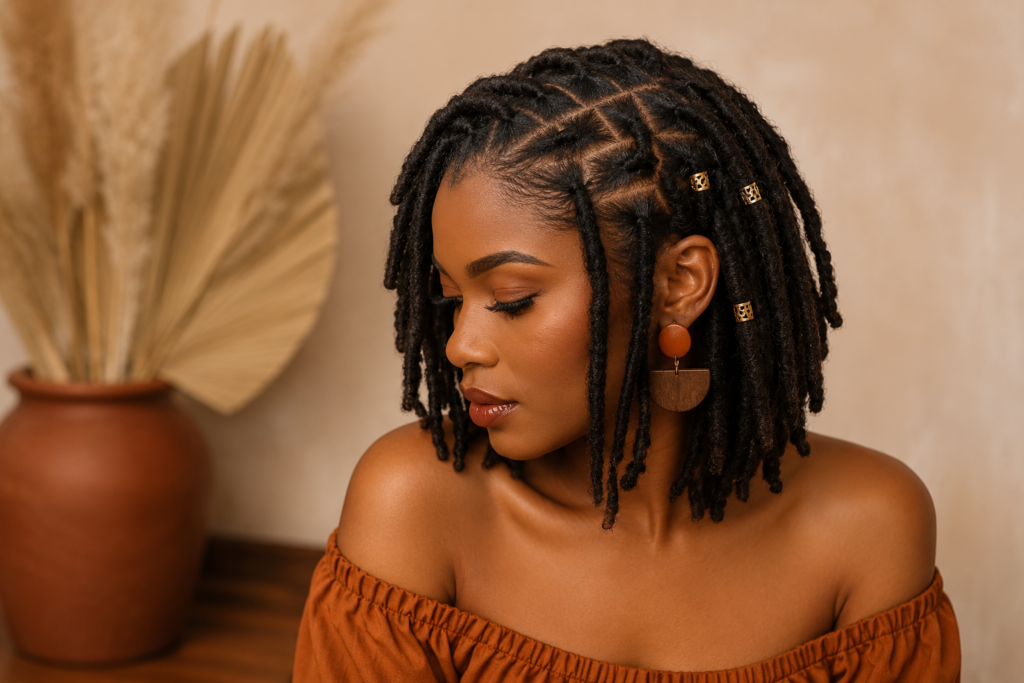
2. Two-Strand Twists (The Low-Maintenance Favorite)
Ideal for medium to long hair lengths, this method involves dividing your hair into a grid pattern and simply creating traditional two-strand twists down the shaft.
The Vibe- Twists are incredibly resilient, they do not easily unravel during your initial washes, making them an excellent choice for active individuals or fitness enthusiasts.
The Reality- Your hair will display a visible “twist pattern” for the first 6 to 12 months. The hair must swell and knot internally before the lines of the twist fade into a solid, mature loc.
3. Interlocking (The Instant Security Method)
Interlocking utilizes a specialized crochet tool to pull the ends of a hair section through its own root in a continuous, multi-directional looping pattern, creating a tiny, tightly woven internal braid.
The Vibe- It offers immediate structural security. Interlocked starter locs will not unravel in the shower, making it perfect for fine textures or those with highly active lifestyles.
The Reality-Interlocked locs tend to look significantly thinner and tighter initially, and they take longer to swell into thick, fluffy locs compared to twisted methods.
4. Sisterlocks- (The Luxury Micro Option)
Sisterlocks are a trademarked, high-end micro-loc technique installed by certified consultants. Using a precise, grid-like configuration and a specialized interlocking tool, hundreds of tiny micro-locs are woven into your crown.
The Vibe- Unmatched styling versatility, because the locs are microscopic, you can style, curl, part, and braid them just like loose hair.
The Reality- It requires a major financial investment.The initial installation can take anywhere from 15 to 30 hours over multiple days, and re-tightening sessions must be done strictly by a certified professional every 4 to 6 weeks.
Normalizing the “Ugly Duckling” Phase- Trusting the Process
The most critical mental hurdle every beginner must overcome is navigating the early stages of locking, traditionally referred to in the community as the starter and budding phases (spanning months 1 to 6).
During this time, your hair undergoes intense changes, As the strands shed and tangle inside the matrix of the locs, your hair will swell up to twice its original size. It will look incredibly frizzy, fuzzy, and untamed. Your clean parts may seem to disappear overnight.
Many beginners panic during this stage, believing their locs look “messy” or “unprofessional,” often over-manipulating their hair or quitting altogether out of frustration. We need to shatter this stigma, this phase is not “ugly” it is a beautiful, necessary process of biological transformation,your hair is actively shedding its old straight definitions and learning how to knot together into a unified team. Embrace the frizz, wear headscarves with pride on high-humidity days, and remember that patience is the ultimate product for a successful loc journey.
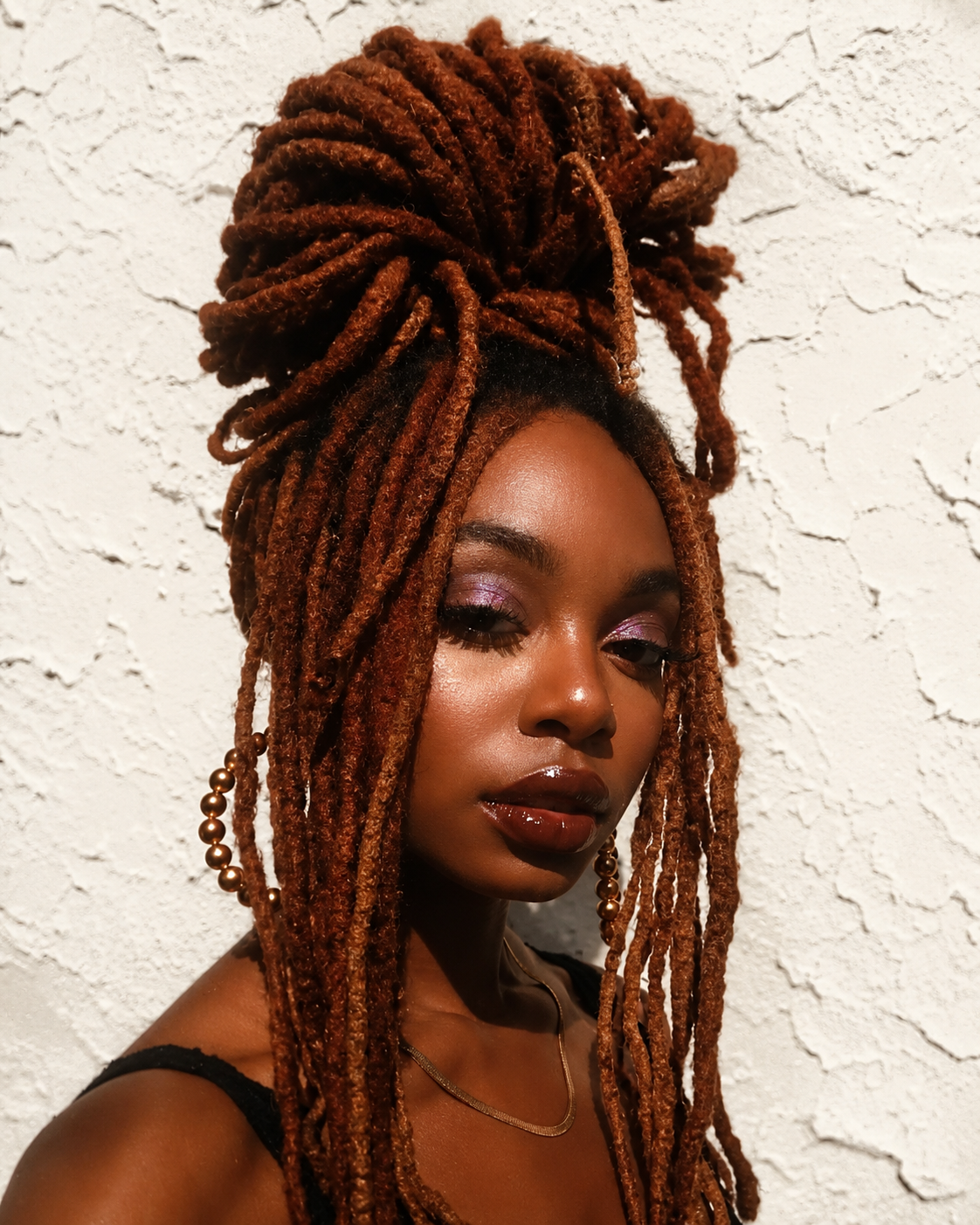
3 Essential Rules for Beginner Loc Maintenance
To ensure your starter locs mature into thick, strong, and lint-free crowns, implement these three golden rules from day one.
Ditch the Heavy Products- Traditional hair care relies on thick cream leave-ins, heavy raw shea butters, and solid pomades to control frizz. Never put these on locs, because locs are dense networks of hair, heavy creams will become permanently trapped inside the core, creating a grey, sticky mold buildup that is nearly impossible to wash out. Stick to lightweight, water-based rosewater mists and clear botanical oils like jojoba or moringa.
Never Skip Your Night Wrap- Lint is the ultimate enemy of a mature loc. Floating fibers from cotton blankets, sweaters, and towels wrap themselves inside your budding locs, turning them grey over time. Always sleep in a secure, satin bonnet or scarf to shield your developing crown from fabric friction.
Do Not Over-Twist Your Roots- Trying to maintain perfectly sleek parts by retwisting or palm-rolling your roots every week will lead to catastrophic thinning. Over-twisting puts extreme mechanical tension on your hair follicles, slowly causing traction hair loss. Limit your root maintenance to once every 4 to 6 weeks to let your hair breathe and grow thick.
A Journey of Self-Discovery
Your loc journey is a beautiful mirror of life, It cannot be rushed by high-tech short cuts, and it demands that you fall in love with your hair at every single stage of its transformation. By choosing the right installation method for your lifestyle and protecting your roots with minimalist, clean maintenance, you pave the way for a majestic, lifetime crown of cultural pride.
Are you ready to take the first step toward freedom? Stay connected with the Ajoke Brown Media Crown Care as we continue to launch our upcoming digital lookbooks, feature interviews with master locticians, and spotlight inspiring loc stories from across our global community of conscious style creators.