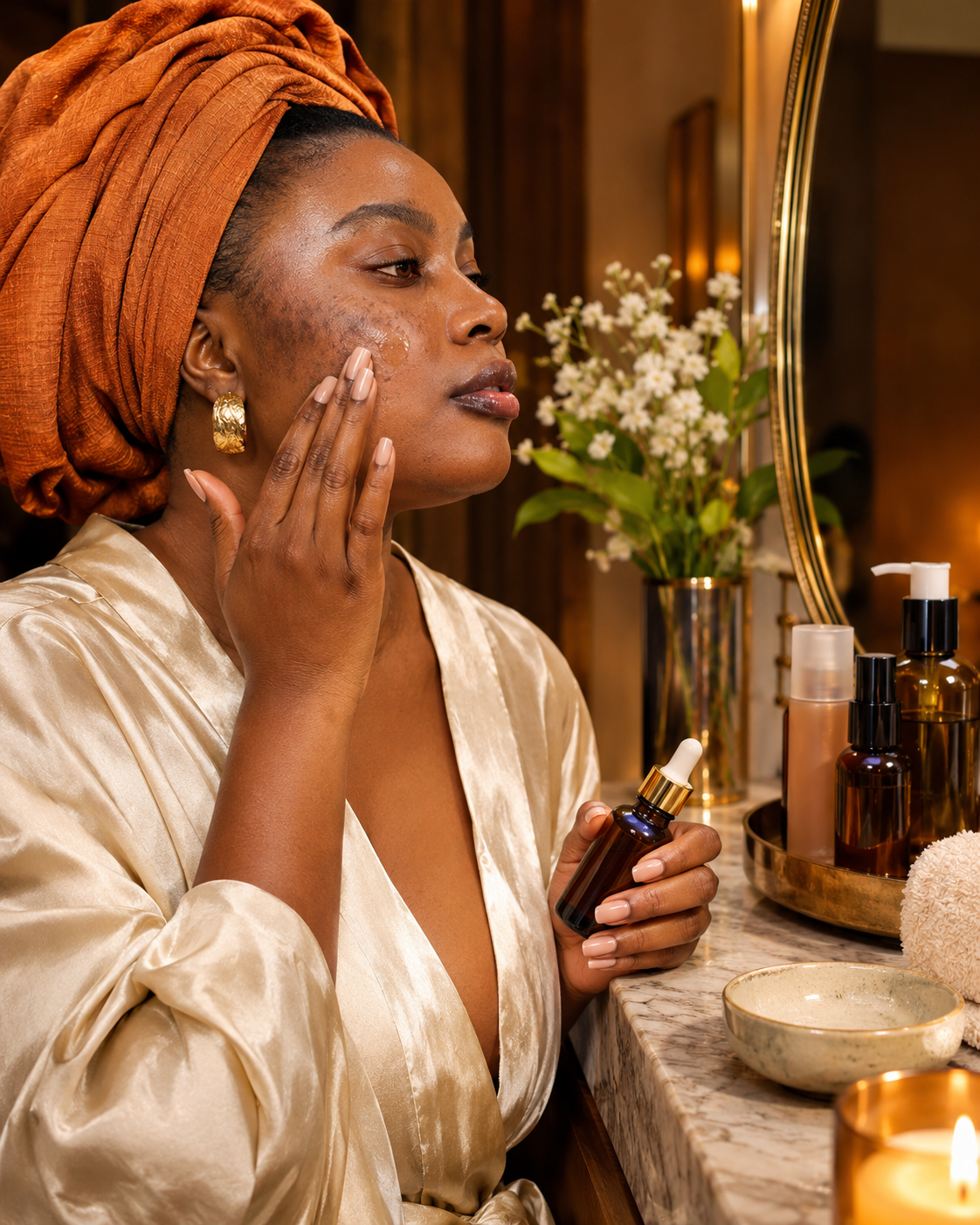
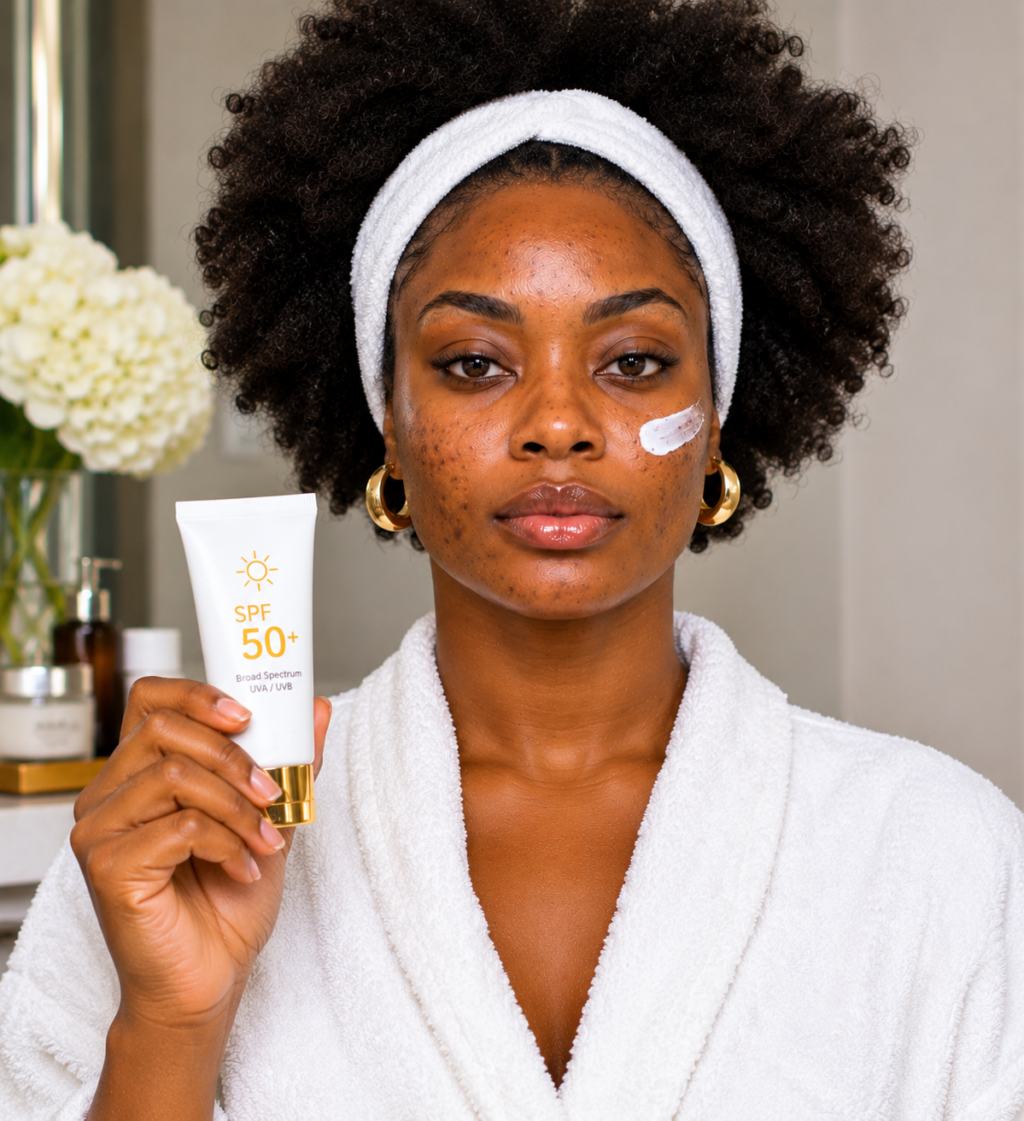
For individuals with dark, rich complexions, the journey to clear skin is often complicated by a single, stubborn adversary “hyperpigmentation”. Whether it appears as deep brown spots left behind by a temporary acne breakout, dark patches triggered by sun exposure, or melasma brought on by hormonal fluctuations, an uneven skin tone can be incredibly frustrating.
In the global beauty market, consumers are frequently bombarded with aggressive marketing for synthetic skin-bleaching creams and harsh chemical peels that promise to erase dark spots overnight. However, many of these rapid-fix commercial lighteners contain dangerous, unregulated levels of hydroquinone, steroids, or mercury. Instead of curing the issue, these harsh chemicals cause severe cellular trauma, thinning the skin epidermis, triggering permanent ochronosis (bluish-black discoloration), and throwing the skin’s natural melanin production into complete chaos.
At Ajoke Brown Media, we believe that correcting your complexion should never come at the expense of your skin’s health. This comprehensive guide breaks down the unique science of melanated skin, exposes the dangers of aggressive bleaching treatments, and outlines a gentle, holistic roadmap to achieving an even, radiant complexion safely.
The Melanin Blueprint: Why Dark Skin is Prone to Dark Spots
To heal hyperpigmentation permanently, you must understand how your skin operates on a biological level. Dark skin contains highly active cells called melanocytes, which produce melanin, the beautiful pigment responsible for your rich skin tone. Melanin is actually your body’s built-in defense mechanism, designed to protect your DNA from ultraviolet radiation.
Whenever your skin experiences any form of trauma, such as an inflamed pimple, a scratch, or a harsh chemical burn, your melanocytes go into overdrive.
As a healing response, these cells flood the injured area with a massive burst of melanin. This biological reaction is known as Post-Inflammatory Hyperpigmentation (PIH). Because melanated skin has highly reactive pigment cells, the slightest irritation can leave a dark spot that lingers for months. Aggressive, burning skincare treatments only trigger more inflammation, creating a vicious, never-ending cycle of hyperpigmentation.

The Holistic Alternative- 3 Indigenous Botanical Brighteners
Instead of attacking your skin with harsh chemical bleaching agents, the holistic approach focuses on gently calming your melanocytes while accelerating cellular turnover using natural, plant-based alternatives:
Licorice Root Extract (The Natural Tyrosinase Inhibitor)
To stop a dark spot from forming, you must interrupt the enzyme responsible for creating pigment, known as tyrosinase, Licorice root contains a powerful active compound called glabridin, Glabridin naturally puts overactive melanocytes to sleep without destroying the cell or bleaching the surrounding healthy skin, ensuring a perfectly uniform complexion.
Papaya and Pineapple Enzymes (The Gentle Exfoliators)
Fading existing hyperpigmentation requires gently removing the dead, highly pigmented cells resting on the surface of your skin. Rather than using scratchy scrubs that tear the skin barrier, turn to fruit enzymes like papain (from papaya) and bromelain (from pineapple). These natural alpha-hydroxy acids smoothly dissolve the cellular glue holding dead skin cells together, revealing fresh, evenly toned skin underneath.
Cold-Pressed Rosehip Seed Oil (The Vitamin A Powerhouse)
Often referred to as nature’s retinol, unrefined rosehip oil is packed with natural trans-retinoic acid and vitamin C. It safely penetrates deep into the epidermis to boost collagen production and accelerate cell regeneration, helping fade stubborn dark patches while deeply nourishing your moisture barrier.
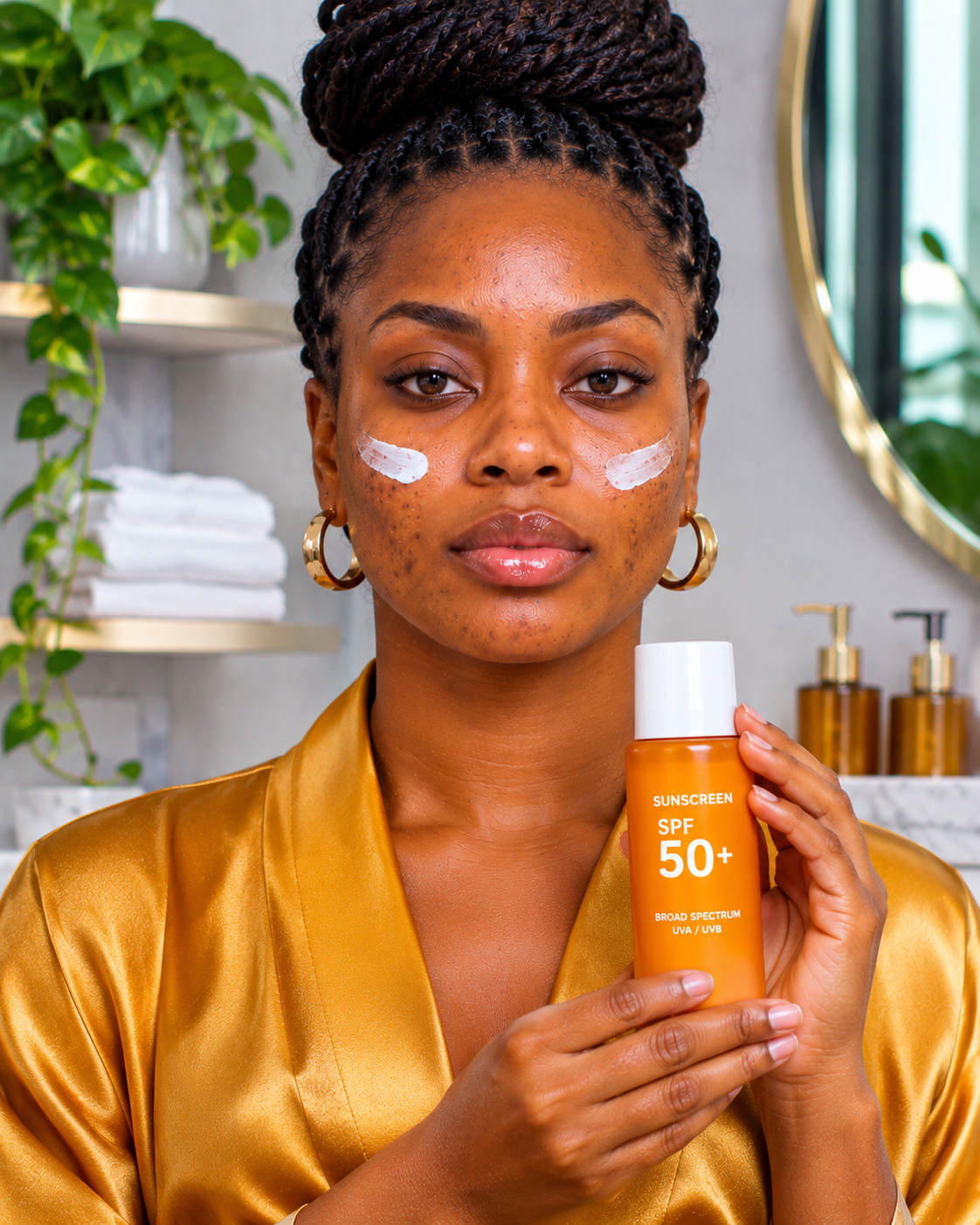
The Non-Negotiable Shield-Debunking the Dark Skin Sunscreen Myth
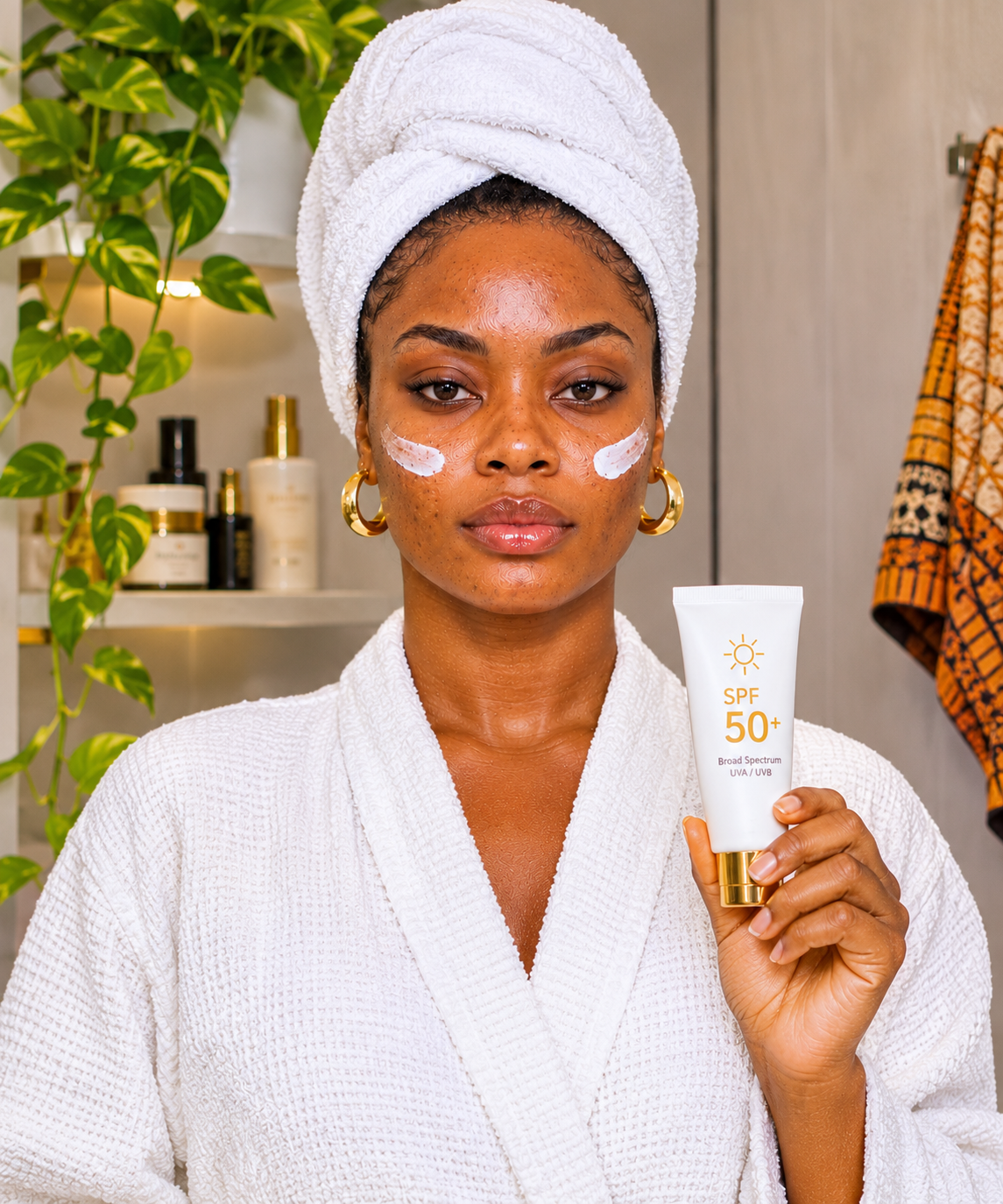
You can use the most expensive, organic botanical brighteners in the world, but your hyperpigmentation will never fade if you skip a vital step daily sunscreen.
There is a long-standing, dangerous myth that because dark skin has natural melanin protection, it doesn’t need sunscreen, this is completely false. While melanin does offer a slight natural buffer against sunburn, it does not stop UV rays from stimulating your melanocytes.
When unprotected dark spots are exposed to daylight, the UV radiation darkens the existing pigment, setting back your progress by weeks. Always apply a broad-spectrum, SPF 30 or higher sunscreen as the absolute final step of your morning skincare routine. Look for modern, lightweight chemical or micronized mineral formulas that dry completely clear with zero chalky white residue.
Embrace Patience Over Traumatic Quick Fixes
Healing hyperpigmentation in rich, melanated skin requires a shift in mindset. Your pigment cells are not your enemy; they are a delicate protective system that responds beautifully to kindness, hydration, and patience. By walking away from aggressive chemical lighteners, leaning on indigenous botanical brighteners, and shielding your skin with daily sunscreen, you can unlock a flawlessly even, healthy, and authentic global glow.
Ready to completely transform your evening skincare ritual? Stay connected with Ajoke Brown Media Radiant Hues as we continue to track clean beauty breakthroughs and profile the ethical, black-owned brands formulating gentle, hyperpigmentation-safe botanical elixirs for your radiant crown.