Hyperpigmentation is one of the most common skincare concerns for African and melanin-rich skin. From acne marks to sun-induced spots, hormonal patches to uneven tone, African skin is more prone to developing pigmentation because melanocytes (pigment-producing cells) are more active.
But hyperpigmentation is not permanent.
It is treatable.
It simply requires the right science, the right routine, and the right ingredients, tailored specifically to dark skin.
This article breaks down exactly what works, what to avoid, and how to build an effective brightening routine without damaging your skin barrier.
Why Hyperpigmentation Is More Common in African Skin
Melanin is a strength, but it is also sensitive. African skin produces more pigment and it produces it faster when triggered.
Common triggers include:
Acne and pimples
Picking or squeezing the skin
Sun exposure
Harsh products
Burns or cuts
Eczema flare-ups
Hormonal changes
Heat
Allergic reactions
Because melanocytes are highly responsive, even small inflammation can lead to dark marks, patches, or discoloration that linger for months.
This is why hyperpigmentation treatment for African skin must be gentle, targeted, and consistent.
The Types of Hyperpigmentation You Should Know
1. Post-Inflammatory Hyperpigmentation (PIH)
These dark marks appear after acne, rashes, burns, or irritation.
They are very common and respond well to brightening ingredients.
2. Sun-Induced Hyperpigmentation
Dark patches caused by UV exposure.
They often appear on cheeks, forehead, neck, and chest.
3. Melasma-
Hormonal pigmentation often triggered by pregnancy, birth control, or genetics.
It is stubborn and requires long-term management.
4. Scarring-Related Pigmentation
After wounds or deep skin trauma, African skin can form darker patches while healing.
Understanding the type helps you choose the right treatment.
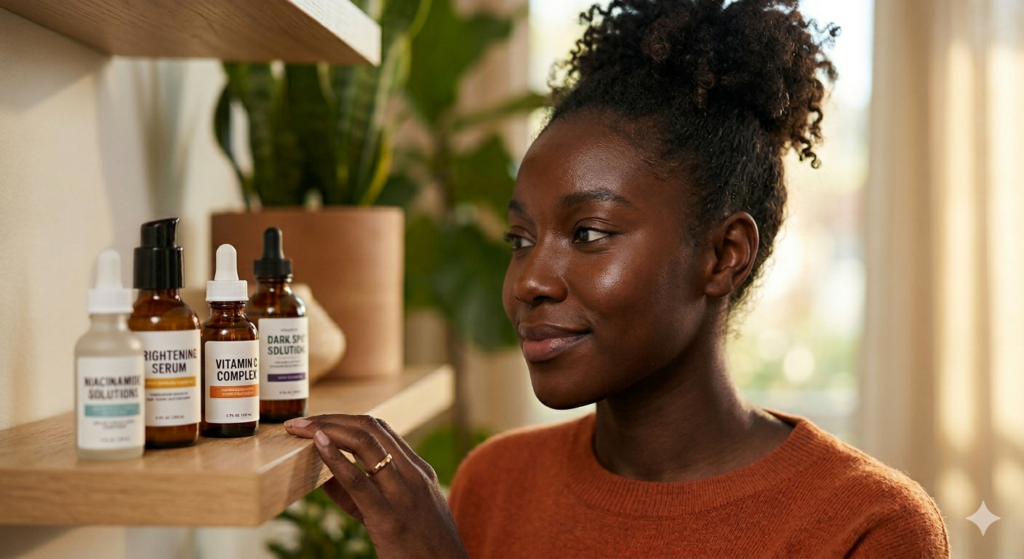
Ingredients That ACTUALLY Work for Dark Skin
African skin needs melanin-safe, scientifically backed brighteners that fade dark spots without bleaching the skin.
Here are the top ingredients to look for:
1. Alpha Arbutin
Reduces pigment production gently and effectively.
Excellent for PIH and uneven tone.
2. Vitamin C (Ascorbic Acid & Derivatives)
Brightens, evens tone, reduces sun-induced spots, and boosts glow.
3. Kojic Acid
Targets stubborn pigmentation.
Best used in low concentrations (1%) to avoid irritation.
4. Azelaic Acid
Anti-inflammatory, brightening, acne-friendly, and perfect for sensitive skin.
5. Niacinamide
Strengthens the barrier, reduces pigmentation, and improves texture.
6. Retinol
Speeds cell turnover, reduces dark spots, fades acne marks.
7. Lactic Acid
A gentle exfoliant suitable for darker skin tones to lift dullness and fade marks.
8. Tranexamic Acid
Highly effective for melasma and stubborn pigmentation.
These ingredients work without compromising your natural complexion.