Mubarak Bala Speaks: Freedom of Belief, Human Rights, and the Cost of Conscience in Nigeria
In societies where belief is inherited long before it is examined, choosing to question can become an act of defiance.
Mubarak Bala is a Nigerian humanist whose life has unfolded at the intersection of conscience, culture, and power. Born and raised in Northern Nigeria, where faith is deeply woven into identity and social order, Bala’s decision to publicly reject religion placed him in direct confrontation with forces that many consider unquestionable, Bala’s public rejection of faith placed him at the center of one of Nigeria’s most consequential human rights debates in recent history.
His imprisonment drew international attention, not because of spectacle, but because it exposed a difficult truth: that freedom of belief remains fragile where tradition, law, and authority collide. Beyond the headlines and legal proceedings lies a profoundly human story, one shaped by isolation, resilience, and the quiet courage required to insist on autonomy of thought.
At its core, Bala’s journey is not about disbelief, it is about autonomy. It raises urgent questions for Nigeria and the world: Who owns belief? Who decides acceptable thought? And what happens when an individual insists on the right to reason freely?
Your story sits at the intersection of belief, freedom, and identity.
Can you take us back to the moment you realized your personal convictions would place you at odds with society and what that realization cost you emotionally?
Thank you for having me,I think since my young years I have always had these doubts, but one would think, no I can’t be right, there’s more to learn, more to understand, one cannot know better than his people and elders, and so, one keeps asking and researching, thinking and questioning. I think when I reached the conclusion was during my hajj and immediately after, that I thought this can’t be right, it is all a ruse, but then realizing, comes with a cost, firstly, emotional, where you realize, that so it’s all a lie, a waste of lifetime, and a blackmail. Then seeing how resources and a whole bunch of nations are wasting their lives and resources to someone’s lies and delusion. I think I was angry by the lies, but calm that it could mean loss of contacts and family, or even life. But I could not contain my anger, when the war manifested at home with Boko Haram.
Being a northerner in Nigeria carries deep cultural and religious expectations.
How did your background shape both your questioning of faith and the backlash that followed?
As a northerner, yes you have deep roots to culture and heritage, ultimately, it is about them, you want to save them. Then you start with family, close friends, and the wider society, you fail at every turn, and lose friends, family, and community. They then become hostile. This is first dumping me in a psychiatric hospital, then secondly, death threats by almost all Muslims in the region, followed immediately by the leader of Boko Haram. Culminating in students and lawyers suing and advocating that I must be punished for continuing publicly to express confrontational views against religion and Islam in particular. They won, I was abducted and rendition to Kano, my home state, for trial.
You have described your journey as one of reason and conscience.
What does humanism mean to you in an African context that is often deeply spiritual and communal?
Spiritually, I felt nothing, because I live in reality not dogmatism. My background is ultraconservative, so it is hard, very hard, to break away from what was supposed to be your ancestry and heritage. Knowing you may never be taken back or loved or supported. It is a toll. It has been a toll.
Your imprisonment drew global attention to freedom of belief in Nigeria.
What do you feel the world still misunderstands about your case and about Nigeria more broadly?
The world thinks I was taken for trial, but it was actually a private treatment of a wayward kid by his parents and culture. In private, I was kept isolated at the HQ of the police force, and was told it is not about any trial, but that I am not to be allowed embarrassing my family and my people. I am to convert back to Islam, never to be online again, never to leave Kano State again, and to be a good person, meaning model Hausa Muslim. I refused for months, asking for a lawyer. They then refused me that access, and dumped me in jail, with some 2000 Muslims, such kind that kill for blasphemy. The world worked for my freedom or trial but they didn’t know much that the trial means death.
Silence is often safer than dissent.
Why did you choose to speak publicly rather than quietly live your truth?
Nigeria is a culturally distinct binary, one side liberal, the other side ultra conservative, fanatical, almost terroristic, as they support terror if it’s Jihad and especially if it’s on others they also hate. So, the world thought my case could be a civil case, it is sharia and jihad terror, masked as a trial for an apostate blasphemer.
I chose silence for half a decade until Boko Haram started the killings. Especially when I saw a beheading of a Christian girl in Borno in 2013 by Boko Haram. Then I lost all courtesy for my people and culture. It is either I tell them the truth or I die. And so, I held a mirror to their faces, they didn’t like what they saw, so they attacked me and sought murder.
You’ve faced rejection, misrepresentation, and fear.
What sustained you mentally and emotionally during your most isolated moments?
I sustained myself because I believed my message is impossible to pass by any outsider, it has to be one of us telling us that we are the evil we had thought is coming from elsewhere. I persevered thinking that even if I ended up dead, it is a worthy cause. I also have an ambition that what started with me may not end with me. I think I could change the trajectory of my people and my country, eventually after the long haul
Many Nigerians equate atheism with immorality or foreign influence.
How do you respond to those narratives, especially as an African man rooted in his culture?
Atheism in itself is not a religion or set of beliefs. It is lack of belief in gods or spirits. However, humanism goes beyond that. We fight injustice, we champion human flourishing and peoples’ rights, as well as protect the weak. We also promote science and free inquiry. This is our life stance. African culture has been hijacked, our ancient cultures and heritage were not perfect, but they did not amount to these large scale Abrahamic murders and callousness in the name of jihad or crusades, or even murders within family in the name of these gods or honor. We could refine our culture.
Do you believe freedom of belief can truly exist in Nigeria as it is today?
If yes, what must change and who must lead that change?
Sure, freedom of belief could exist in Nigeria. It is already very normal in the south of the country. You will not face death for changing religion in about half the country. It is the other half that we are fighting to restore, then we come down to our other social tolerance about religion, and the inherent vilification of the traditional beliefs.
The change will not come by only us activists, human rights defenders. It has to come from government policy. Imagine my own federal government, rather than protect me or people like me, deciding to abduct me and hand me over to my people for punishment, knowing fully well it means I could be mobbed during incarceration or trial. The same government betrayed me. Instead of atleast protecting us, which would not have led us to reply death threats with blasphemy and exposing the jihad verses they hate to hear. Then also we have to solve the problems at the communal level in the homes and family, madrassas and in the mosques. Glorification of violence and martyrdom would not end banditry and violence. We must wean our people from this mental disease.
Your story has inspired some and angered others.
What responsibility, if any, do you feel toward young Nigerians who are questioning but afraid?
Nigerians and especially youngsters questioning should feel safe and free to do so, but the environment is hostile, one small accusation of blasphemy may lead to murder by the mob, especially in half the country. So individuals must keep their identities and philosophies private, atleast only to like minds in safe chat rooms, we have the cyberspace to express ourselves and continue to express and enlighten. We have already formed out own communities across the states, we don’t have resources much, so people must keep a low profile so as not to lose family connections and especially economic and educational sponsorship, until they are financially independent and secure. It is tough especially in our rebellious years, but it is necessary. I came out only to counter Boko Haram, but my people got angry with me even beyond the terrorists. And for the first time, the same Boko haram that was killing them, and the Muslim community, agreed I should and must be killed for apostasy. At that time I was not even accused of blasphemy. The sharia says one must be put to death for leaving Islam. That’s it.
Beyond survival, what does healing look like for you now?
And what future, personal or political are you still brave enough to imagine?
Beyond survival, it is family, I have to settle and start my family again, and I already lost a decade. Then career, I have lost the trajectory in that aspect as well. I am on exile but I prefer to come back home when it is safe. I have an ambition to run for the presidency in the future. So I must come home and set the pace. I prefer to make a presence in my country rather than in other people’s culture. They are already tolerant. It is our people we want to change. The society must adjust to have people like us living amongst them. Rather than run away whenever we disbelieve what the mainstream subscribe to. That’s the point of making the political foray. My people would rather not have traditional worship in their midst, they have succeeded in doing that over the centuries, they have also, over the decades, pushed Christianity to the margins, then they saw that we were making headway, they did what they could to scare others, now they have the region to themselves and the political space. They turned on each other with terror and blackmail, threats of violence and imprisonment of dissenting sects within the same religion. They don’t know what they’re doing, we must teach them the lesson of a lifetime.
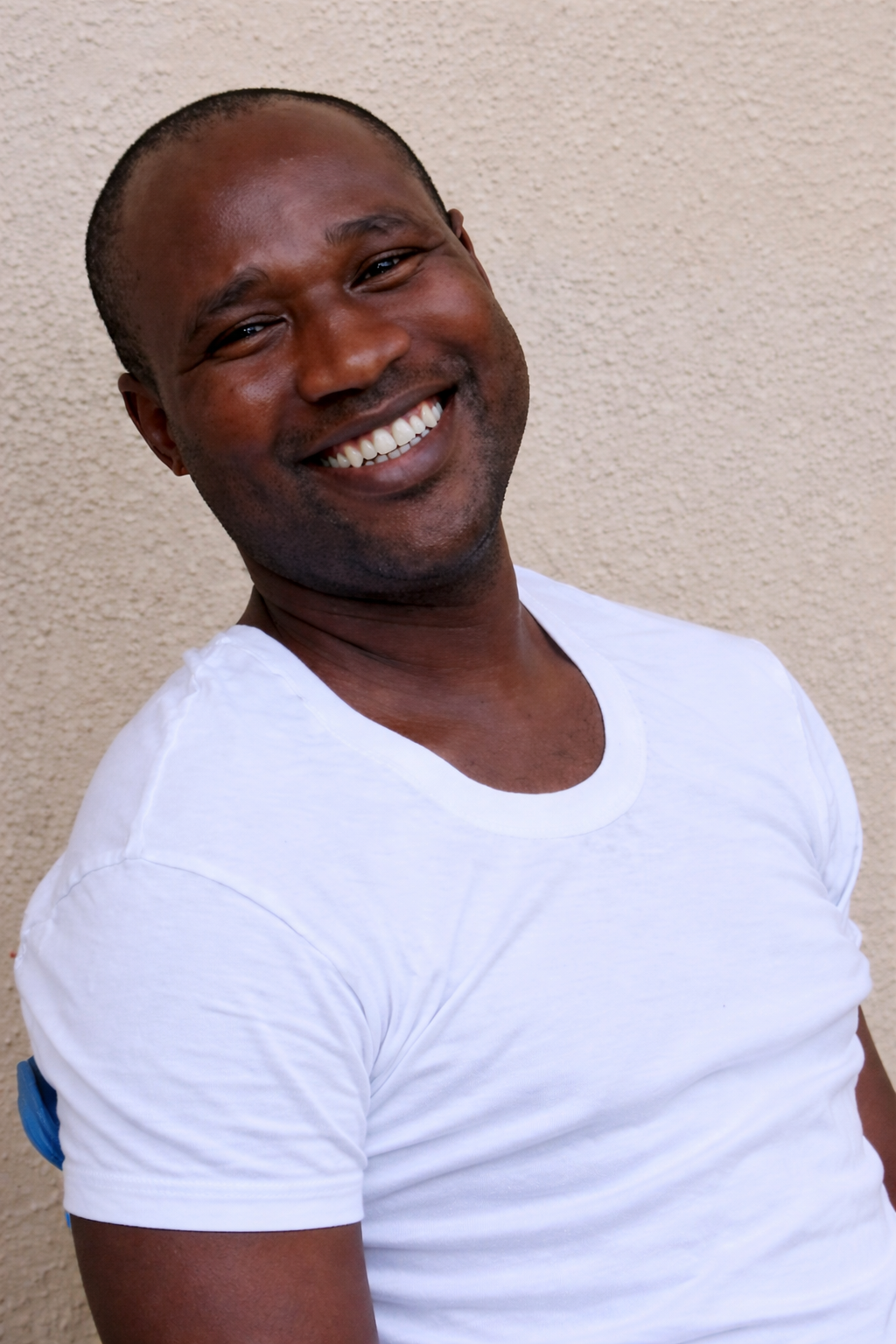
Mubarak Bala, exiling in Europe.