How Climate Affects African Skin: Hot, Humid, Harmattan & Sahel Conditions Explained
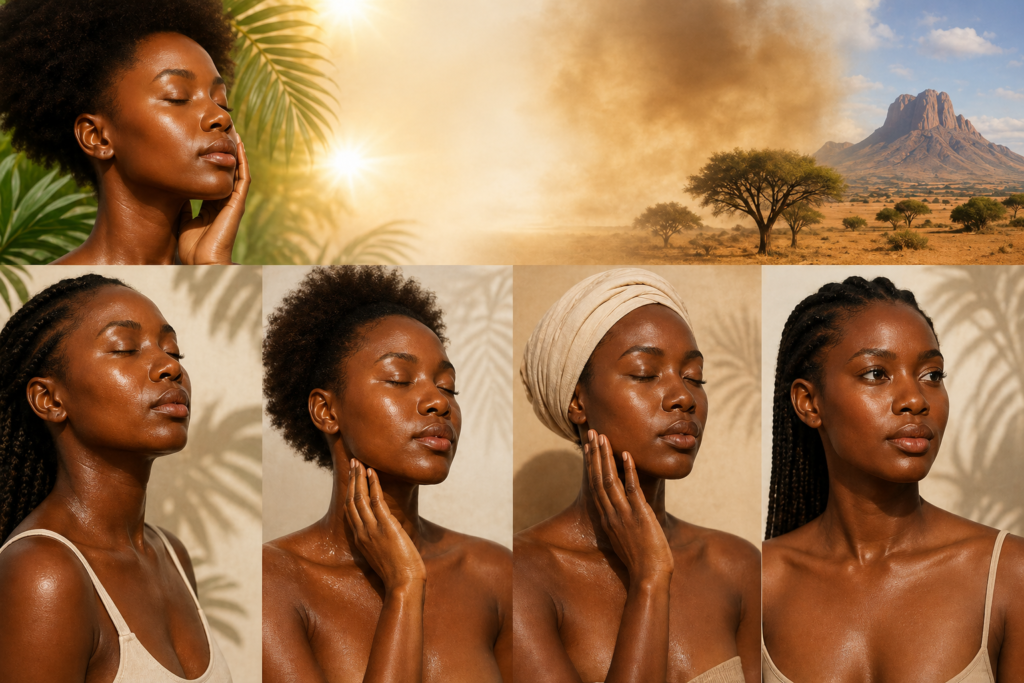
African skin is beautifully resilient, richly pigmented, and biologically designed to thrive in environments with intense sun, heat, and varying levels of humidity. But even with this natural advantage, climate still plays a powerful role in shaping how African skin behaves, reacts, and ages. Across the continent, weather patterns shift dramatically, from the dryness of harmattan to the humidity of coastal cities, from scorching Sahel heat to cooler highland regions and each climate places its own unique demands on melanin-rich skin. Understanding how these conditions impact the skin is the key to choosing routines that work not just in theory, but in everyday African reality.
Hot temperatures are the most common environmental factor people deal with across Africa. Heat increases the skin’s production of sebum, often leading to shininess, clogged pores, and acne flare-ups. For many people, the forehead and nose become especially oily during the day, while the rest of the face still feels dehydrated. This combination of oiliness and dryness is more common in melanin-rich skin than many realize. Heat also increases sweating, and sweat mixed with oil, dust, and makeup creates an ideal environment for breakouts. It is why some people notice tiny bumps or texture during extreme heat waves or after long hours outside. At the same time, heat can weaken the moisture barrier when hydration is low, leaving the skin feeling both oily and tight. Proper moisture, lighter routines, and breathable skincare textures become essential in this kind of climate.
Humidity adds another layer of complexity. In coastal cities like Lagos, Accra, and Mombasa, the air is dense with moisture, and this can make the skin feel sticky or constantly damp. While humidity helps prevent dehydration, it can also trap sweat on the skin’s surface, making pores more prone to congestion. Makeup oxidizes faster, sunscreen feels heavier, and the skin becomes more susceptible to fungal acne, heat rash, and flares around the hairline where sweat accumulates. For dark skin, this means a higher risk of inflammation and inflammation easily leads to dark spots. The solution is using lightweight, water-based products and avoiding overly occlusive creams that suffocate the skin in already humid weather. Cleansing becomes more important, not just nightly, but sometimes twice during the day to remove buildup caused by sweat and oil.
Harmattan, on the other hand, presents the complete opposite problem. When the winds blow from the Sahara, the air becomes extremely dry, dusty, and harsh. The humidity drops so low that the skin loses water much faster than usual, leading to Ashiness, flaking, tightness, and a weakened moisture barrier. Even people with naturally oily skin suddenly find themselves dealing with rough patches, sensitivity, or cracked lips. The dust in the air can clog pores when mixed with sweat or oil, leading to breakouts even in dryness. Harmattan is a time when African skin needs deep hydration, thicker moisturizers, nourishing oils, and a gentler approach to cleansing. The risk of hyperpigmentation increases because dry skin becomes more reactive, and even small irritation can lead to dark marks. Sunscreen is also crucial even though the weather feels dull because the UV rays remain strong even as the sky gets hazy.
The Sahel region brings another layer of skin complexity. The heat is scorching, the dryness is intense, and the sun exposure is constant. The skin works overtime to protect itself, increasing melanin production and thickening the top layer of the skin. This natural adaptation helps prevent sunburn but creates its own set of issues: dullness, uneven texture, rough patches, and occasionally sun-induced hyperpigmentation. It is not uncommon for people in these regions to develop discoloration around the cheeks, forehead, or jawline from years of sun exposure without SPF. Sweating in such dry heat does little to hydrate the skin because the sweat evaporates quickly. This leads to dehydration beneath the surface, making the skin feel tight even if it looks oily. The ideal routine in this climate focuses on barrier repair, UV protection, and gentle exfoliation to remove the buildup of dead skin caused by sun exposure.
One climate factor that affects African skin everywhere is sun intensity. The UV index is high throughout most of the continent, regardless of temperature. Even in cooler highlands or rainy seasons, the sun’s impact on melanin-rich skin is real. While darker skin has natural UV protection, it is not immune to damage. UV exposure deepens hyperpigmentation, darkens old acne scars, and accelerates uneven skin tone. Sunscreen remains one of the most important skincare steps especially in climates where the weather changes rapidly but the UV index remains consistently high.
The beauty of African skin lies not just in its melanin but in its adaptability. It adjusts, protects, and heals in ways that many global skincare conversations still do not fully acknowledge. By understanding the relationship between climate and skin behavior, African skin can thrive with routines that evolve along with the weather. Climate-aware skincare is not a trend; it is the reality of living on a continent with some of the world’s most dynamic conditions. Once your routine respects the climate, your glow becomes effortless.