African skin is powerful, complex, and deeply intelligent. It carries melanin, not just as a pigment, but as a biological shield, a storyteller of ancestry, and a protector designed by evolution. Understanding how melanin works is the first step to creating a skincare routine that truly honours African skin.
This is not just beauty. It is science, identity, and wellness.
Why Melanin Is a Skin Superpower
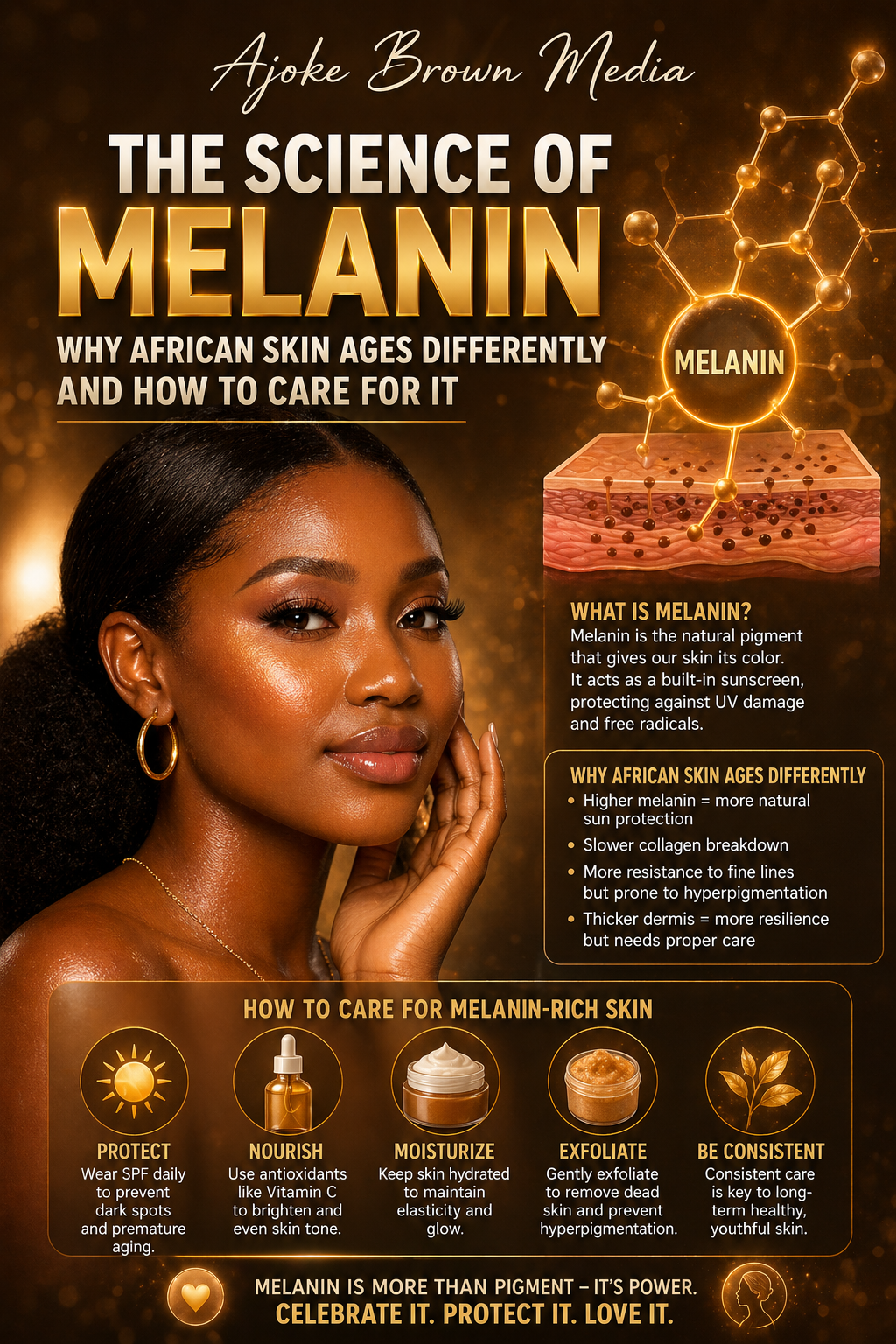
Melanin is produced by cells called melanocytes, and African skin naturally produces more of it. This gives deep and rich skin tones their signature glow but also changes how the skin behaves, ages, heals, and reacts to products.
Here’s what melanin does:
Shields the skin from UV damage better than lighter tones
Slows down visible aging, especially wrinkles and fine lines
Protects DNA from mutations
Gives elasticity and resilience
Maintains a smoother texture for longer
This is why African skin often appears youthful, firm, and radiant well into later years. It is biology at its finest.
But melanin is also sensitive.
When African skin is irritated, inflamed, scratched, burnt, or badly treated, it responds with more pigment — leading to dark spots, uneven tone, PIH, melasma, and stubborn hyperpigmentation.
Why African Skin Ages Differently
African skin has unique structural properties:
1. Thicker Dermis
The deeper layer of the skin (dermis) is thicker in melanin-rich skin. This allows African skin to:
Resist wrinkles
Stay firmer longer
Age more gracefully
This is why “Black don’t crack” has scientific truth behind it.
2. Stronger Protection From Sun Damage
Melanin provides natural SPF of about 13, which protects collagen and elastin — the proteins responsible for youthfulness.
While this protection is real, it is not enough to replace sunscreen.
3. Slower Collagen Breakdown
Collagen is what keeps the skin full, structured, and lifted. African skin loses collagen more slowly, which means aging shows up:
As uneven tone
As dullness
As hyperpigmentation
As texture changes
Rather than early wrinkles.
4. More Prone to Pigment Imbalances
Because melanocytes are more active, African skin easily develops:
Dark spots
Patches
Post-acne marks
Sun-induced pigmentation
Scarring
Discoloration
This means skincare must be gentle, strategic, and consistent.
How to Care for Melanin-Rich Skin (Scientifically)
1. Treat the Moisture Barrier Like Gold
African skin is often oily on the top, dehydrated underneath.
A healthy barrier prevents:
Dark marks
Dry patches
Acne flare-ups
Sensitivity
Ashiness
Key ingredients:
Hyaluronic acid
Ceramides
Glycerin
Niacinamide
Squalane
Moisturising should be daily and non-negotiable.
2. Use Sunscreen — Every Single Day
Yes, even with melanin.
Yes, even indoors.
Yes, even during harmattan.
Sunscreen prevents:
Dark spots
Aging
Sun damage
Uneven tone
Skin cancer
Choose broad-spectrum SPF 30+ that melts into dark skin without white cast (gel, fluid, or invisible formulas work best).
3. Be Gentle With the Skin
Harsh products make African skin overproduce melanin. Avoid:
Strong scrubs
Lemon juice
Toothpaste
High-fragrance products
Over-exfoliation
Gentle, consistent routines always win.
4. Target Pigmentation With Science-Backed Ingredients
African skin responds well to:
Vitamin C
Alpha arbutin
Kojic acid (low %, controlled use)
Retinol
Lactic acid
Niacinamide
Azelaic acid
These ingredients fade spots without bleaching or damaging the barrier.
5. Avoid Anything That Lightens the Skin
Bleaching weakens the barrier, thins the skin, and causes long-term damage.
Safe brightening is about:
Even tone
Glow
Clarity
Health
Not changing your complexion.
6. Stay Hydrated and Nourished
Water, fruits, omega-rich foods, and sleep all help maintain:
Elasticity
Texture
Glow
Skincare works from the inside out.
The Future of Melanin Skincare
The global beauty industry is finally acknowledging what African women have always known:
Our skin is unique. Our melanin is powerful. Our needs are different.
Brand after brand is now developing formulas specifically for:
Hyperpigmentation
Oil–dehydration imbalance
Melanin-safe exfoliation
Deep-toned sunscreens
Botanical-based moisturizers
But the real revolution begins with knowledge — with understanding how melanin works and honouring what makes African skin extraordinary.
Final Thoughts
Melanin is not a trend.
It is a science.
A strength.
A protector.
A legacy.
And when African skin is cared for correctly, it doesn’t just look good — it glows with identity, ancestry, and pride.