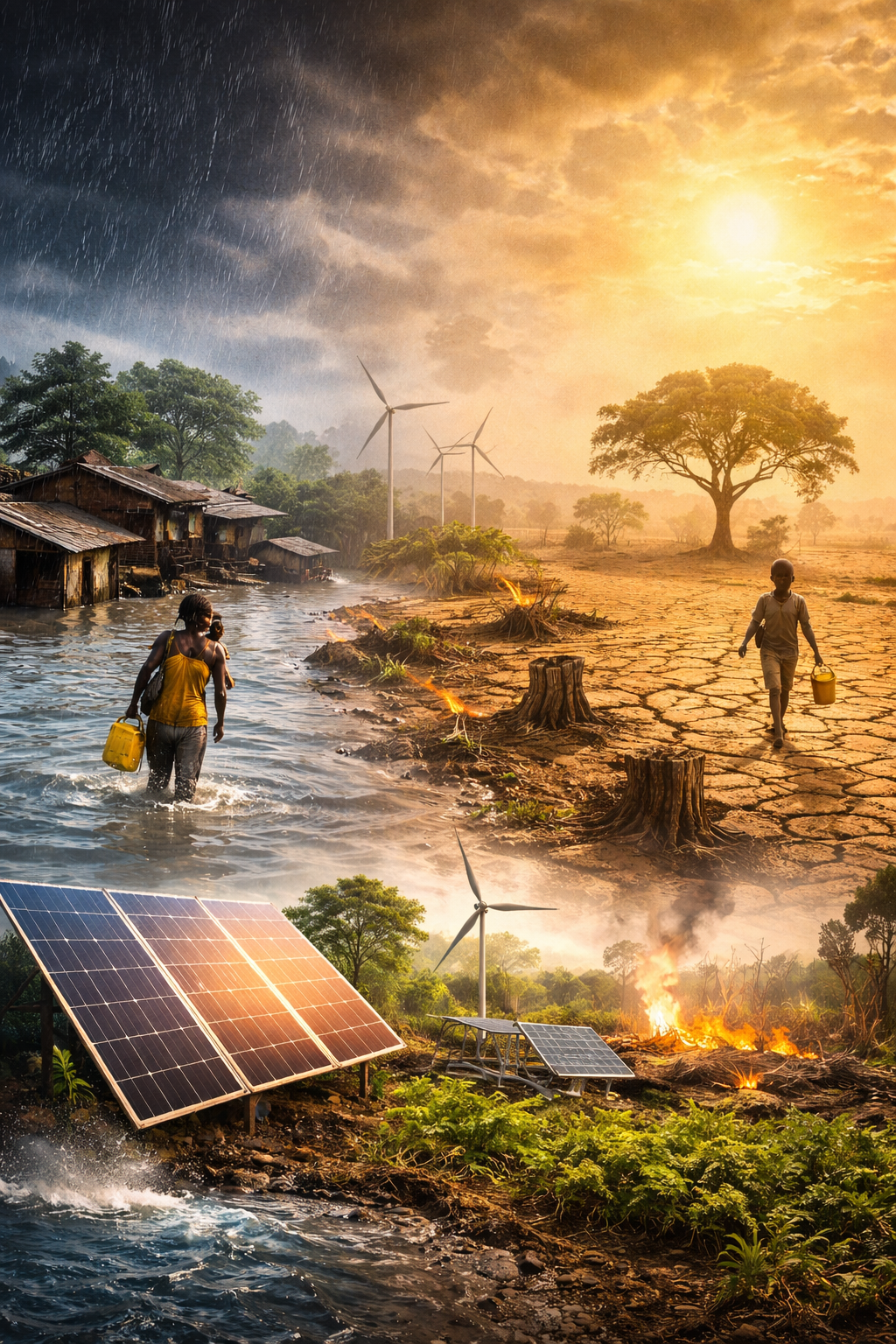
In recent years, Nigerians have begun to notice something unsettling: the seasons no longer behave the way they used to.
Heavy rainfall in February.
Extended heat waves in what should be moderate months.
Devastating floods followed by prolonged dry spells.
What once felt like isolated weather events are now part of a larger pattern. Climate change in Nigeria is no longer theoretical, it is lived experience.
For a long time, global warming sounded distant, like a problem reserved for melting glaciers and faraway nations. But today, it is shaping Nigerian markets, farms, cities, health systems, and livelihoods.
This is not just an environmental issue. It is an economic, social, and national security issue.
Understanding Global Warming in the Nigerian Context
Global warming refers to the long-term rise in Earth’s temperature caused largely by human activities such as burning fossil fuels, deforestation, industrial pollution, and unsustainable agricultural practices.
As greenhouse gases accumulate in the atmosphere, they trap heat. That extra heat disrupts natural systems, rainfall cycles, and ocean currents, wind patterns leading to the unpredictable and extreme weather we are now witnessing.
In Nigeria, the signs are clear:
Unseasonal rainfall in traditionally dry months
Intensified flooding across states
Rising temperatures in northern regions
Increasing desertification
Coastal erosion in southern communities
“Climate change does not always announce itself with a storm. Sometimes, it whispers through a season that no longer arrives on time.”
The Effects of Climate Change in Nigeria
If urgent action is not taken, the consequences will deepen across multiple sectors.
Food Insecurity and Rising Prices
Agriculture in Nigeria is heavily dependent on predictable rainfall. When planting seasons shift unexpectedly or floods destroy crops, farmers suffer immediate losses.
The ripple effect reaches everyone:
Reduced harvest yields
Scarcity of staple foods
Increased food prices
Greater hunger and poverty levels
Climate instability directly impacts what ends up in Nigerian markets.
Flooding and Infrastructure Damage
Sudden heavy rainfall overwhelms drainage systems in major cities like Lagos, Abuja, and Port Harcourt.
Floods destroy:
Homes
Roads
Businesses
Schools
Communities are displaced, and rebuilding costs strain both families and government budgets.
Drought and Desertification
Northern Nigeria continues to face advancing desertification. Reduced rainfall and extreme heat dry up water sources, damage farmland, and intensify migration pressures.
Competition over shrinking resources has been linked to increased community tensions and conflict.
Health Risks
Rising temperatures and irregular rainfall increase the spread of diseases such as malaria and cholera. Heat waves contribute to dehydration and heat-related illnesses, particularly among vulnerable populations.
Healthcare systems already under pressure face even greater strain.
Economic Instability
Climate change affects:
Agriculture
Fisheries
Energy supply
Transportation
Informal sector livelihoods
When weather becomes unpredictable, economic planning becomes difficult. Insurance risks rise. Investments become uncertain.
Mental and Social Impact
Beyond physical destruction, climate change creates psychological stress. Repeated flooding, displacement, and financial loss foster anxiety and uncertainty about the future.
“Climate change is not just altering the weather — it is altering stability.”
Why Nigeria Is Especially Vulnerable
Although Nigeria contributes far less to global carbon emissions compared to industrialized nations, it faces disproportionate risks due to:
Heavy reliance on rain-fed agriculture
Rapid urbanization without adequate planning
Limited climate-resilient infrastructure
Coastal exposure in densely populated areas
This imbalance highlights a harsh global reality: those who contribute least often suffer most.
Urgent Measures Nigeria Must Take
The future is not fixed. The severity of climate change impacts depends on how quickly and seriously action is taken.
Invest in Renewable Energy
Nigeria must accelerate investment in solar, wind, and other renewable energy sources. Transitioning away from fossil fuel dependence reduces emissions and improves energy stability.
Strengthen Infrastructure and Urban Planning
Improved drainage systems, flood control mechanisms, and climate-resilient housing can reduce damage from extreme weather events.
Urban development must integrate environmental risk assessments.
Protect Forests and Natural Ecosystems
Deforestation worsens climate vulnerability. Protecting forests and encouraging tree planting initiatives help absorb carbon dioxide and stabilize local ecosystems.
Support Climate-Smart Agriculture
Farmers need access to:
Drought-resistant crops
Improved irrigation systems
Climate forecasting tools
Agricultural adaptation is essential to national food security.
Public Awareness and Policy Accountability
Citizens play a role in holding leaders accountable for environmental policies. Climate education, responsible consumption, and advocacy contribute to broader change.
“Every delayed decision increases the cost of tomorrow.”
The Time to Act Is Now
Climate change in Nigeria is not a distant forecast. It is visible in flooded streets, rising market prices, advancing deserts, and unexpected rainfall.
The question is no longer whether global warming is real.
The question is whether we will respond with urgency equal to the threat.
Nigeria stands at a crossroads, with bold leadership, strategic investment, and collective responsibility, the country can build resilience and protect future generations.
Without action, instability will deepen.
The climate is already changing.
Now, it is our turn to decide how we respond.