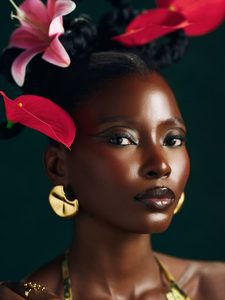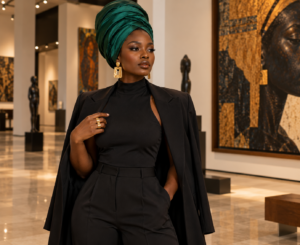
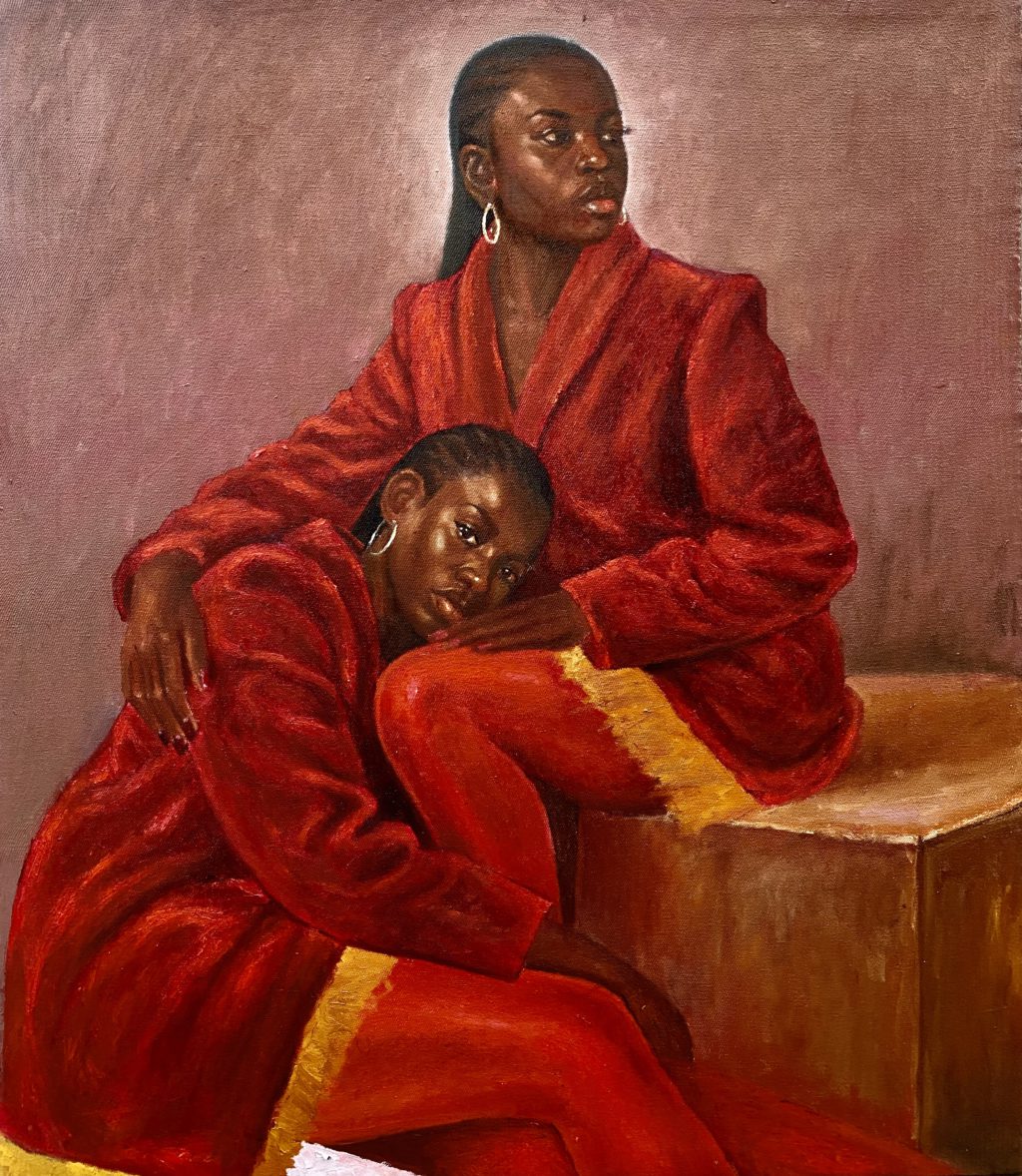
Art has a way of speaking when words fall short, and for Peter Idongesit Akinboye, painting becomes a language of emotion, identity, and quiet reflection. A contemporary painter whose work centers on portraiture and presence, Peter approaches the canvas with an intention that reaches beyond aesthetics, capturing the unseen, the felt, and the deeply human.
Working from Abuja, Nigeria, his artistic expression sits at the intersection of storytelling and emotion, where every face becomes more than a subject and every composition invites interpretation. In an era where visual culture moves at lightning speed, Peter’s work offers something slower, more intentional, a moment to sit with feeling, memory, and meaning.
As contemporary African artists continue to reshape global conversations around art and identity, Peter is building a body of work that feels both personal and expansive. In this exclusive conversation with Ajoke Brown Media, we explore creative inspiration, the emotional weight of portraiture, navigating the realities of the Nigerian art space, and the vision behind a practice grounded in authenticity.
As a contemporary painter specializing in portraiture, how do you define your signature style, and what specific techniques do you use to bring out the character of your subjects?
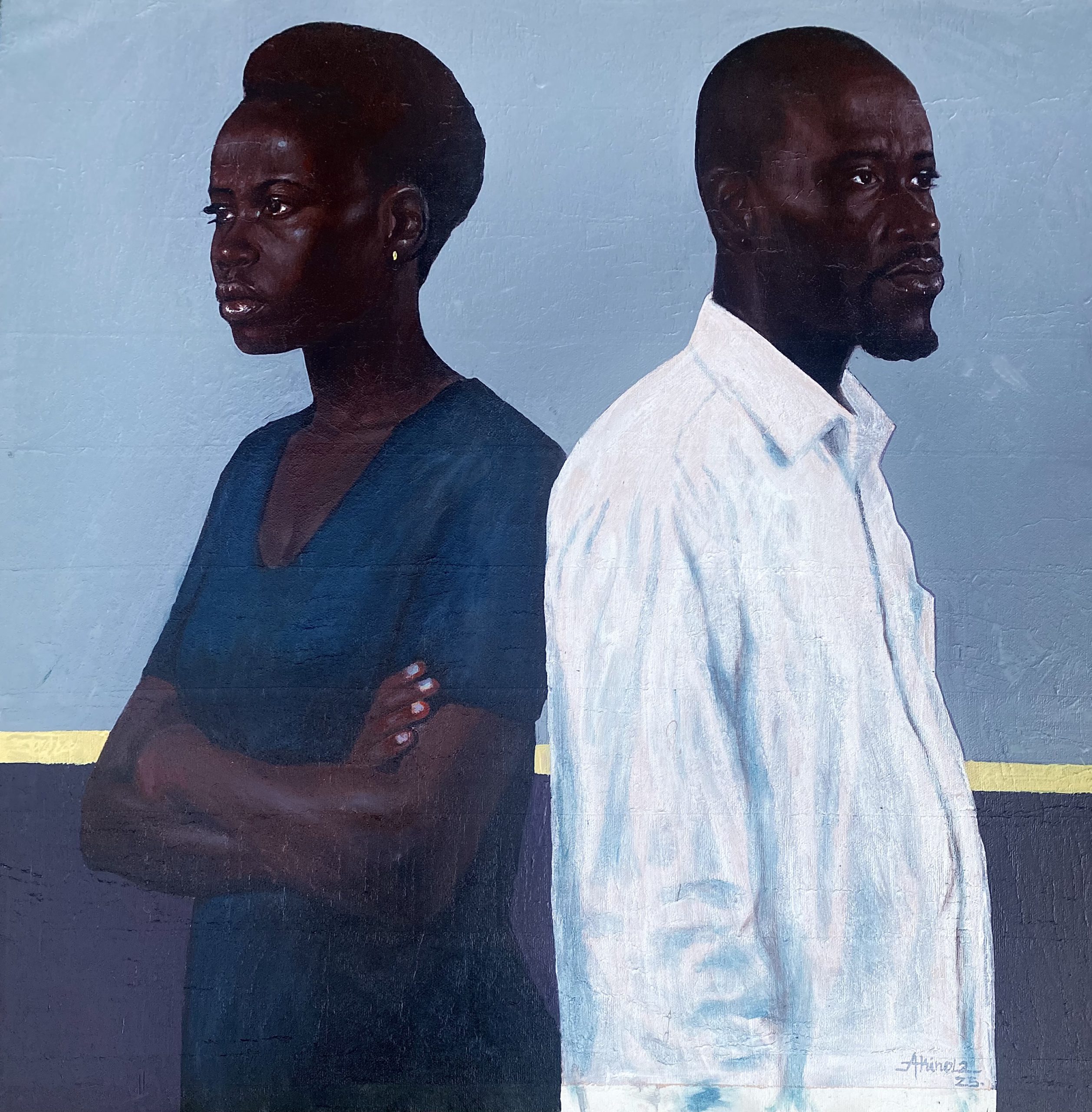
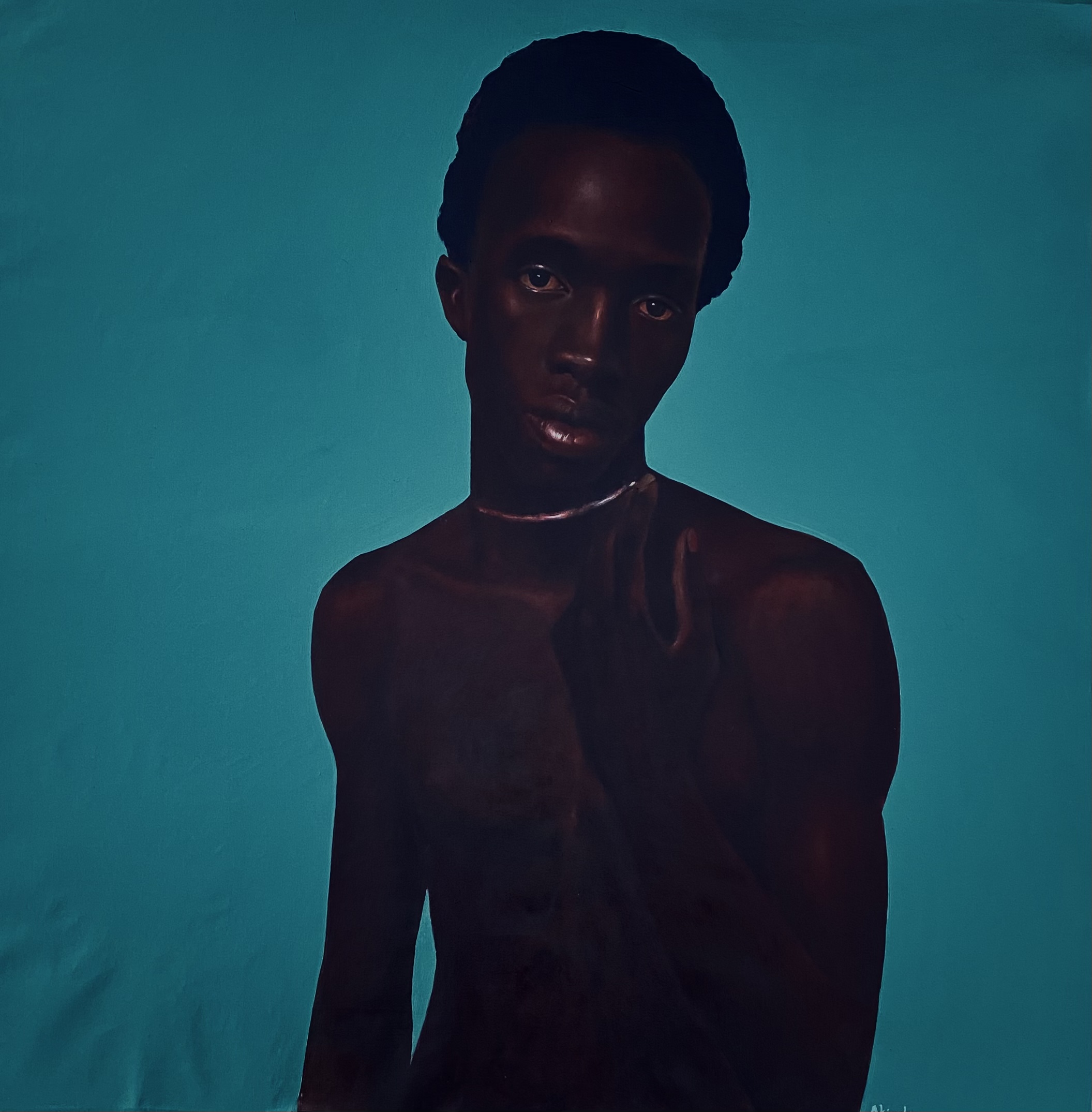
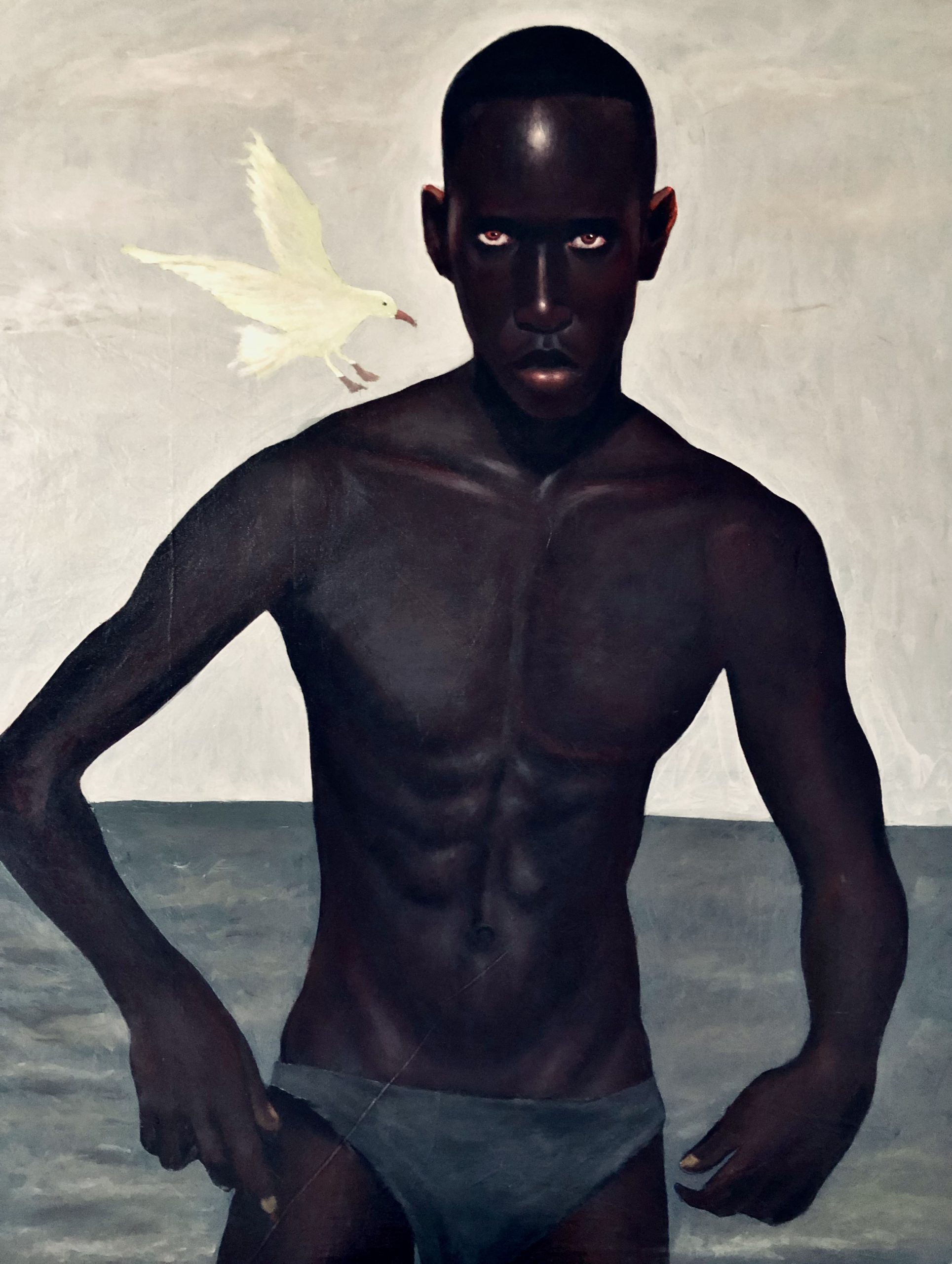
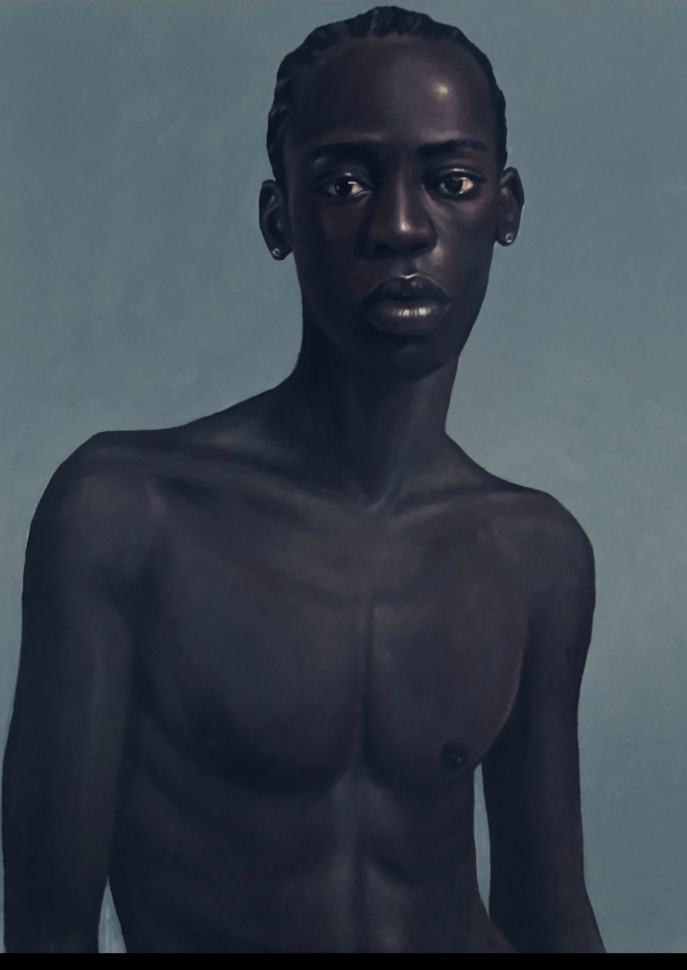
I would describe my work as emotionally driven figurative painting rather than traditional portraiture. My practice focuses more on psychological presence and internal tension than physical likeness alone. I explore themes surrounding identity, pressure, emotional restraint, desire, and inherited expectations within Nigerian and African society. I primarily work with acrylic and oil on canvas, sometimes incorporating textured surfaces and layered materials depending on the emotional atmosphere I intend to create. My visual approach is flexible, at times I use loose expressive brushwork, sometimes idealized representation, and at other times blended realism depending on the psychological mood or emotional tension within the piece. Technically, I use layering, texture, symbolism, negative space, expressive brushwork, and controlled color relationships to build psychological depth and emotional atmosphere. I often allow parts of the canvas to breathe or remain unresolved because human emotions themselves are rarely complete or fully understood. My figures become vessels for emotional and social narratives rather than simple representations of people.
Your bio highlights a deep focus on exploring both “portraiture and presence.” How do you translate the abstract concept of someone’s “presence” onto a two-dimensional canvas? Presence, to me, is the emotional energy a person carries beyond physical appearance. I try to capture silence, vulnerability, suppression, longing, tension, or emotional fatigue through posture, gaze, composition, symbolic objects, and spatial relationships within the painting. I focus on emotional atmosphere, body language, symbolism, texture, negative space, and spatial tension within the composition to communicate psychological presence and emotional weight. Sometimes I intentionally use flatter or quieter backgrounds to reduce visual noise and increase emotional focus on the subject or psychological tension within the work.
Many artists paint faces, but your work seems emotionally layered. What do you hope viewers feel when they stand before your paintings?
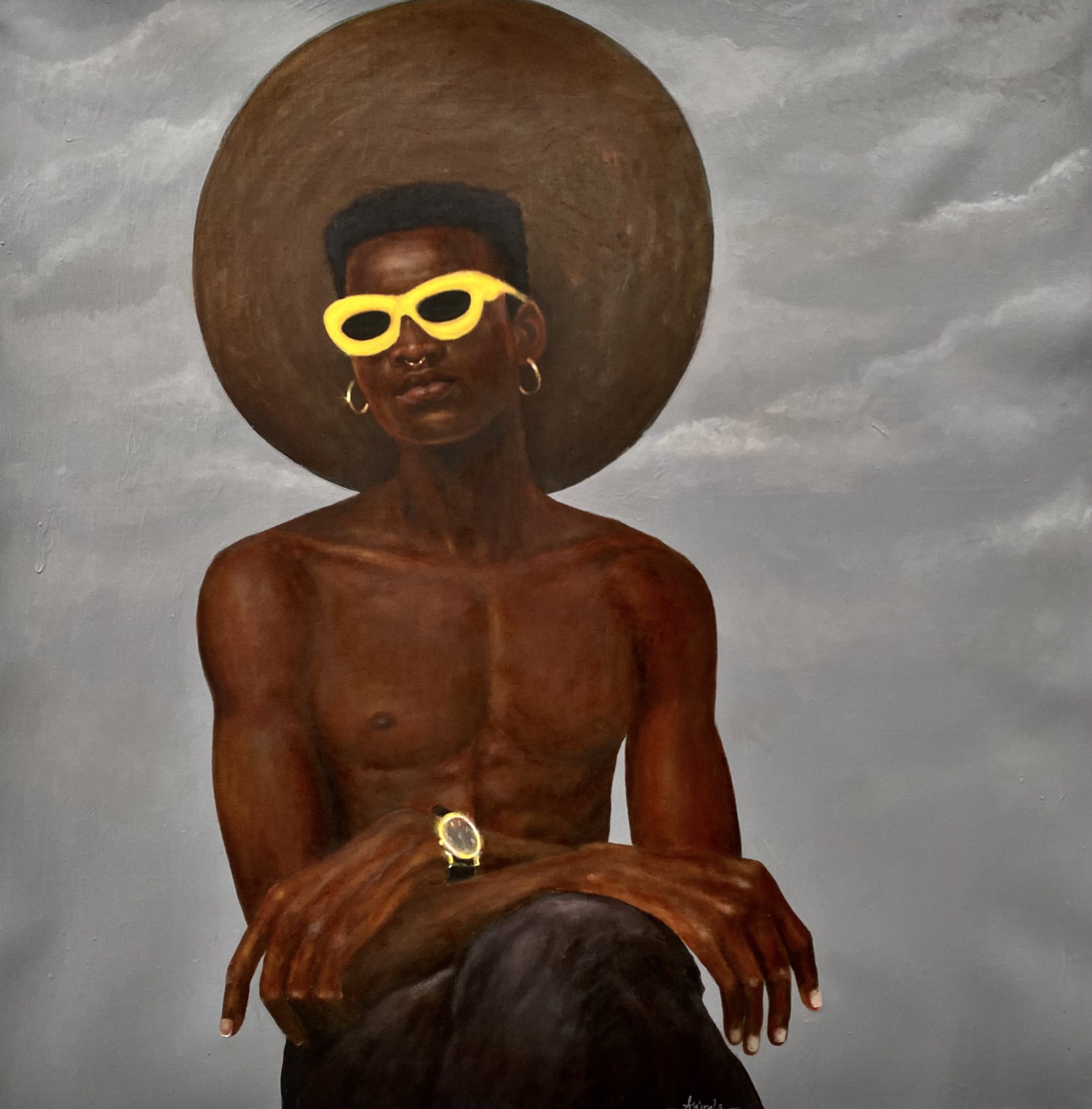
I want viewers to enter a psychological space rather than simply observe a painting visually. I want them to feel some of the emotional atmosphere I have experienced personally, the loneliness, silence, pressure, emotional distance, and the struggle to be seen or understood. My intention is not always to tell people exactly what to think, but to create emotional tension and reflection. Even if viewers do not fully understand the exact experience behind a work, I hope they can still emotionally connect to the feeling within it. A lot of my work exists in spaces that are emotionally heavy but often hidden in everyday life. Through my paintings, I try to give form to those invisible emotional realities and create moments where people can confront feelings they may normally suppress or overlook.
In a world driven by fast digital content, what role do you think fine art and portrait painting still play in preserving identity and memory?
Fine art remains important because it slows people down emotionally and psychologically. In a fast digital culture where images disappear quickly, painting still carries physical presence, labor, reflection, and emotional permanence. Portraiture and figurative work preserve more than appearances; they preserve emotional histories, social realities, and cultural memory. I believe contemporary painting allows us to document the invisible psychological conditions of our time. What personal experiences, spiritual influences, or cultural moments have most impacted your evolution as an artist?
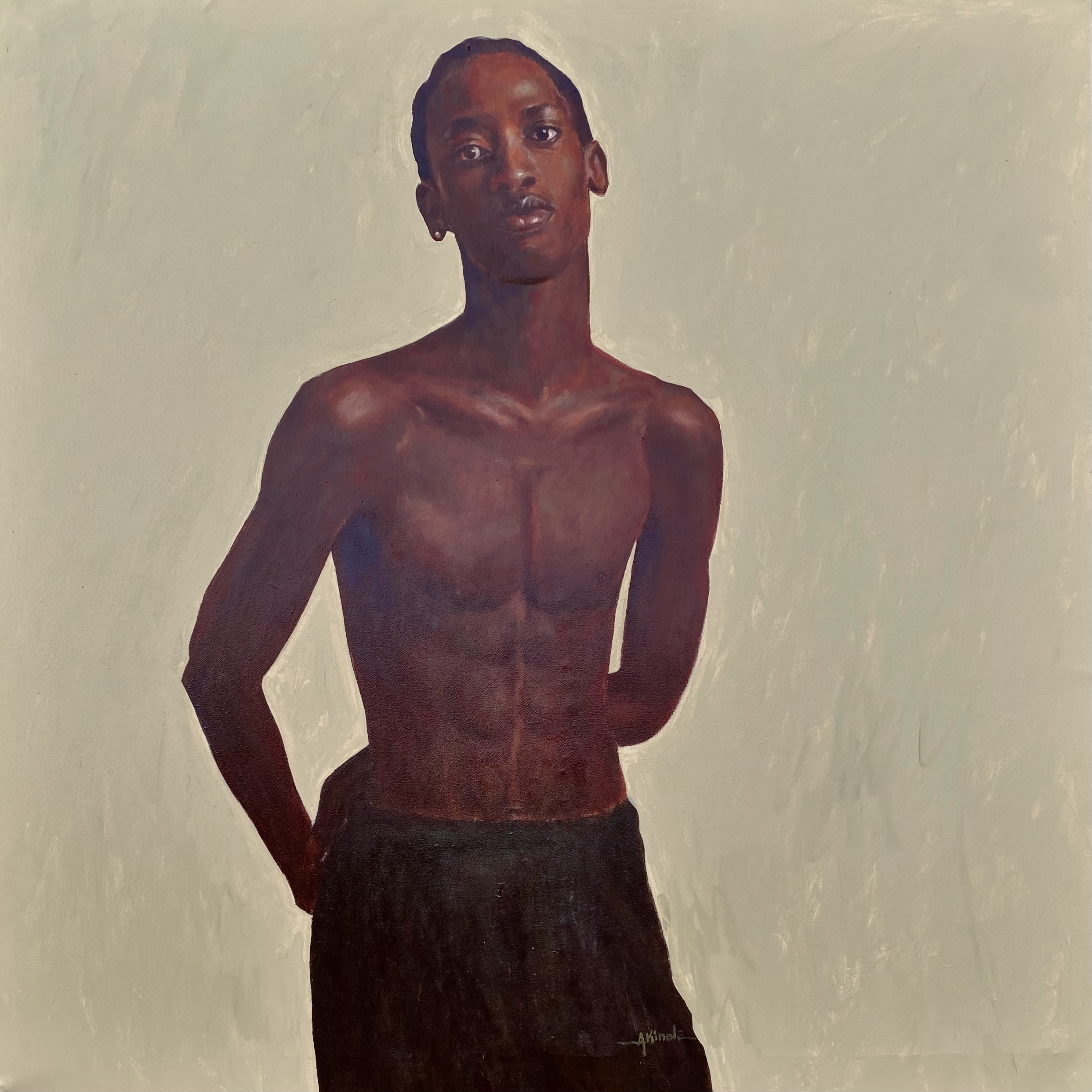
A lot of my work is influenced by personal experiences and emotional realities I have struggled to fully explain verbally. Growing up, my relationship with my parents shaped many of the emotional tensions I explore in my paintings. One experience that affected me deeply was the feeling of a present yet emotionally absent fatherhood. That silence and emotional distance influenced the way I began observing people, relationships, masculinity, and emotional suppression. I also grew up in environments where fear of judgment and emotional restraint were common, so many feelings were carried internally rather than expressed openly. Over time, I began using art as a way to communicate emotions and psychological experiences that are often difficult to explain with words alone. Navigating relationships, love, career pressure, societal expectation, and adulthood largely on my own has also shaped my perspective deeply. There is a certain loneliness that comes from having to learn life through mistakes without clear guidance, and I think that emotional weight appears repeatedly in my work. Spiritually and culturally, growing up within Nigerian society exposed me to strong structures surrounding masculinity, family, religion, survival, and identity. These influences continue to shape my interest in themes surrounding pressure, silence, emotional survival, desire, and the psychological realities many people quietly carry within themselves.
Which artists, movements, or creative disciplines inspire your work beyond painting itself, such as music, fashion, literature, photography, or film?
A lot of my inspiration comes from music because I connect deeply with honesty and emotional integrity in songwriting. I am inspired by Fela Kuti, Black Sherif, Omah Lay, Burna Boy, Chief Dr. Orlando Owoh, Sade Adu, and James Brown. What fascinates me about their music is the honesty and emotional depth in their lyrics. They speak about struggle, identity, pain, survival, desire, society, and human experience in ways that feel sincere and relatable to me. In visual art, I admire artists like Bruce Onobrakpeya, Njideka Akunyili Crosby, Jean-Michel Basquiat, Pablo Picasso, especially his Blue Period works, and Vincent van Gogh. What draws me to these artists is their emotional honesty and ability to communicate psychological depth through form, texture, distortion, symbolism, and color. I admire works that go beyond technical beauty and reveal vulnerability, struggle, tension, or emotional intensity. Beyond painting, I also love Afrocentric fashion and the growing global appreciation for African and Black culture. It is powerful seeing African identity, aesthetics, and storytelling receiving the recognition they deserve internationally while continuing to evolve in contemporary ways. In literature, one of the books that impacted me deeply is Things Fall Apart by Chinua Achebe. I admire the honesty and complexity with which it explores culture, masculinity, tradition, and societal change. Film also influences my work visually and emotionally. I enjoy African films rooted in cultural storytelling while still engaging contemporary realities. I admire filmmakers like Kunle Afolayan and Tunde Kelani because of the way they preserve African atmosphere, spirituality, symbolism, and social narratives through film. Overall, I am inspired by creative works that carry emotional truth, cultural depth, and honesty about the human condition.
How do you see the contemporary art scene in Abuja evolving compared to other major African art hubs like Lagos, Accra, or London?
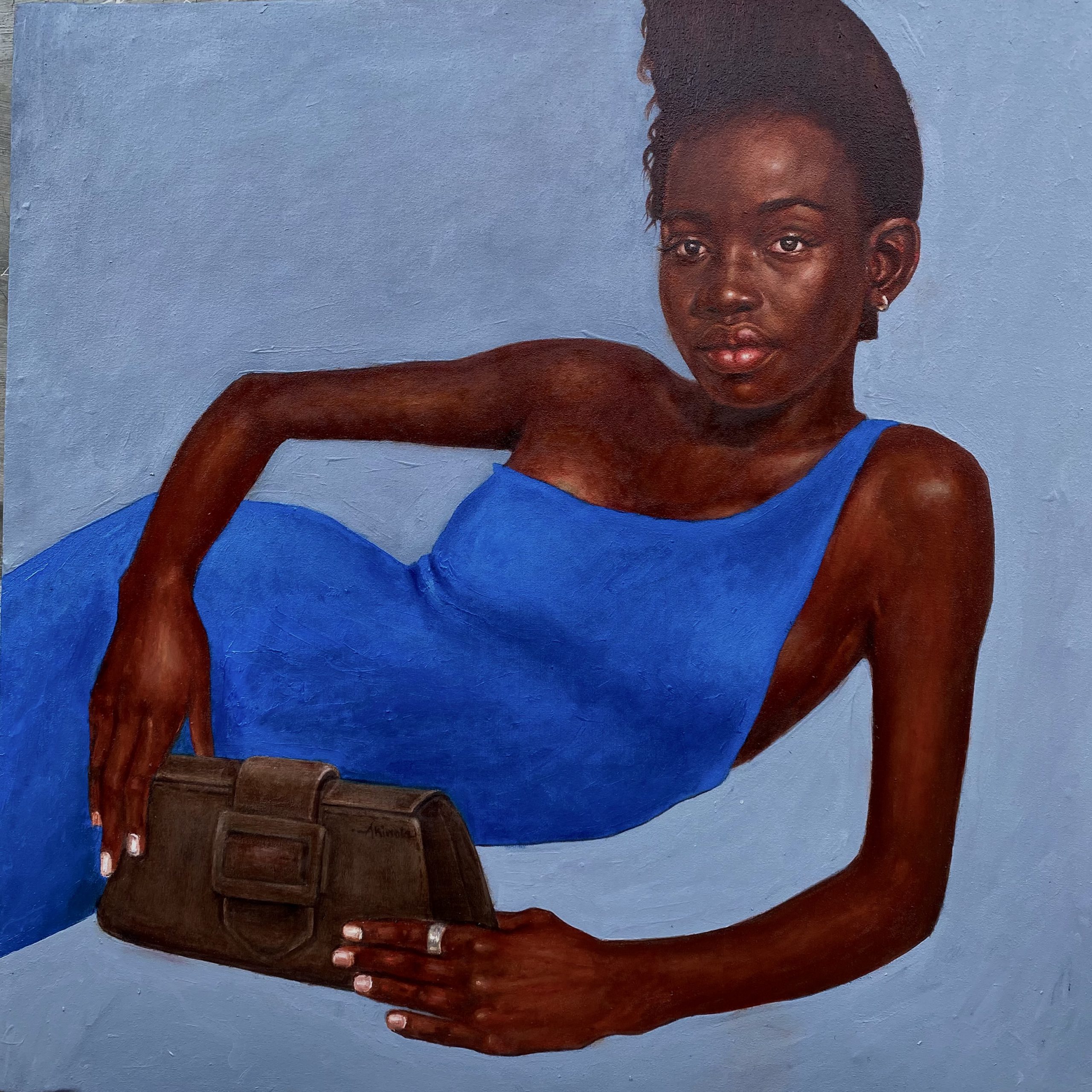
Abuja’s art scene is growing steadily and developing its own identity. Lagos may currently have stronger commercial visibility internationally, but Abuja offers a quieter environment for experimentation and reflection. I believe Abuja has immense potential because many emerging artists there are deeply thoughtful conceptually. There is growing interest in contemporary African narratives, and Abuja’s diversity creates meaningful creative dialogue that will continue evolving over time.
You balance titles as both a visual artist and a digital creator. How do you leverage social media platforms like Facebook and Instagram to share your studio workflow and connect with your audience?
Social media has become an important tool within my practice because it allows me to reach audiences far beyond my immediate environment. Through platforms like Instagram and Facebook, I share not only finished works but also studio processes, emotional concepts behind projects, textures, unfinished moments, and the evolution of my artistic voice over time. My works have also been featured on international platforms such as Artsy, 1stDibs, and Artsper. Pieces such as The Blackman Stereotype, The Double Six, The Alpha Male, and The Weight of Gen Z have been collected internationally by collectors who genuinely connected with the emotional and psychological themes explored within the works. For me, social media is not only about visibility but also about connection and conversation. I want audiences to engage honestly with the ideas behind my practice — themes surrounding pressure, identity, masculinity, emotional survival, and contemporary African experiences. These platforms have also opened opportunities for collector relationships, gallery representation, collaborations, and residency possibilities as I continue building my career internationally.
Your original works are available with worldwide shipping. What have been some of the most surprising rewards or logistical challenges of managing an international art business directly from Nigeria?
One of the most rewarding aspects has been realizing that emotional experiences explored in my work resonate beyond Nigeria. Themes surrounding pressure, identity, silence, desire, and emotional survival are globally relatable. At the same time, managing shipping, packaging, payment systems, and international logistics from Nigeria can be challenging. However, those experiences have strengthened my adaptability and professionalism as an artist navigating a global art space independently.
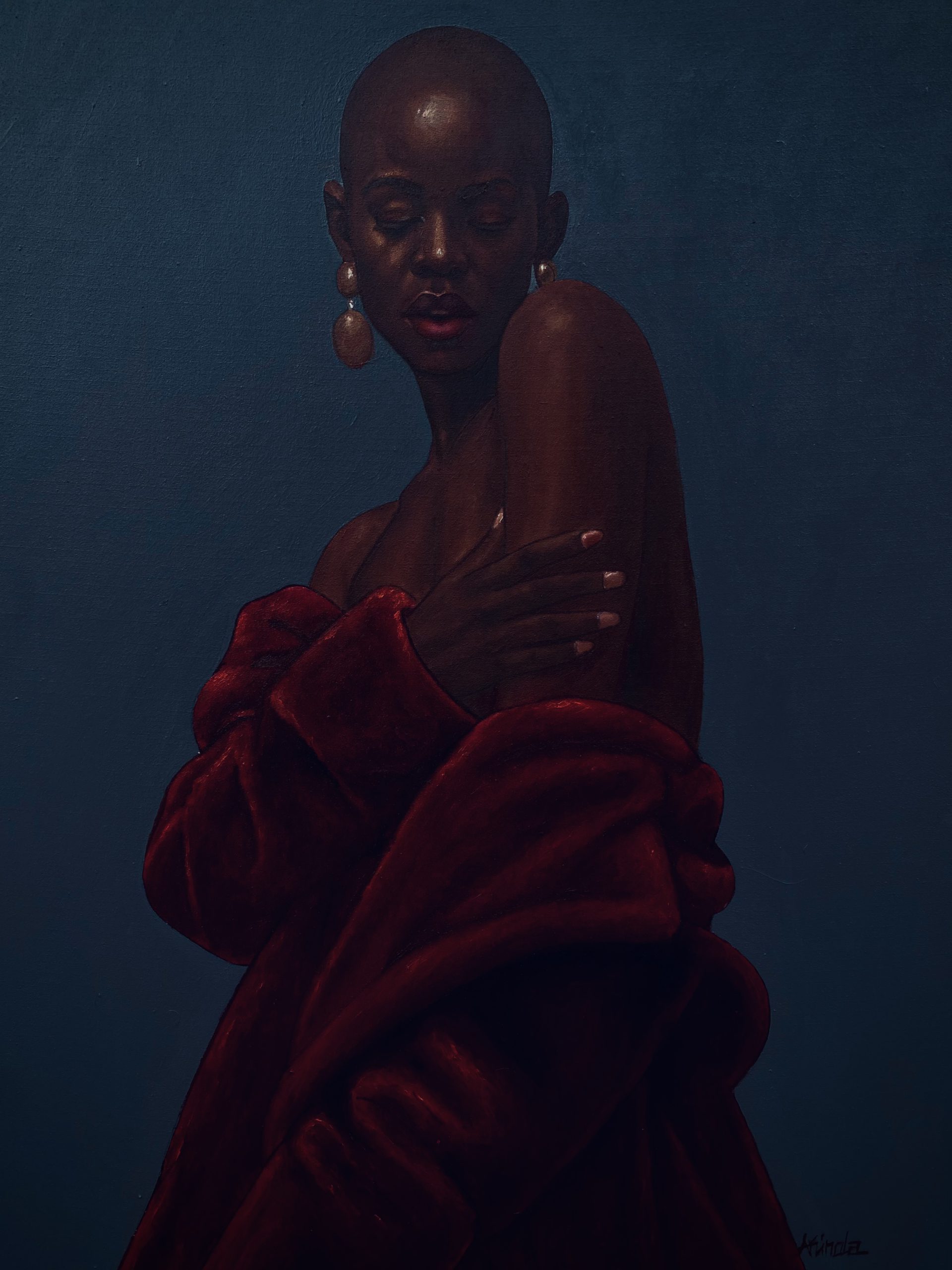
You are an active part of the thriving creative community in Abuja, Nigeria. How does living and working in the nation’s capital influence the themes, colors, and narratives in your paintings? At the moment, I am currently based in Lagos, although my experiences in Abuja still shaped parts of my artistic development and perspective. Over time, I have learned to embrace solitude and confinement not necessarily as punishment, but sometimes as a space for reflection and emotional awareness. That mindset has influenced both my lifestyle and my creative process deeply. I believe I can practice art anywhere as long as I am emotionally and mentally connected to the work. However, as an emerging artist, I also realized that environment matters professionally. Abuja gave me space for introspection and quiet observation, but at a certain point I began craving wider exposure, stronger artistic conversations, and a larger collector and client base, which influenced my decision to spend more time in Lagos. That contrast between solitude and visibility continues to affect my work. Many of my paintings explore emotional isolation beneath outward ambition — people trying to be seen, understood, or emotionally acknowledged within demanding social environments. Whether in Abuja or Lagos, I remain interested in the psychological atmosphere people carry internally while navigating modern African society.
You are a member of the “Black Artists Connected” community. How has being part of this collective shaped your artistic growth and your perspective on modern Black art globally?
Being part of a wider creative community reinforces the importance of authentic storytelling within contemporary Black art. It has exposed me to artists exploring similar themes surrounding identity, memory, spirituality, race, migration, and emotional survival from different perspectives globally. The experience has encouraged both artistic confidence and deeper reflection about how African and Black narratives are evolving within contemporary art spaces internationally.
For collectors looking to invest in contemporary portraiture, what makes acquiring an original Peter Idongesit Akinboye piece a unique addition to their collection, and how can your art be purchased?
I believe my work offers more than visual aesthetics. Each piece is rooted in emotional narrative, psychological depth, and social reflection. My paintings are designed to create lasting emotional engagement while documenting contemporary human experiences within African society. Collectors interested in acquiring works can contact me directly through my social media platforms or studio inquiries for available works, commissions, and international shipping arrangements.
Looking ahead at your career trajectory, what major milestones, upcoming exhibitions, or new artistic concepts are you most excited to explore next?
As I continue developing my practice, I am increasingly interested in exploring family dynamics within the African context, especially the emotional and psychological realities that are often concealed within homes and relationships. I believe family is the foundation of society, but it is also where many emotional struggles, silences, inherited pressures, and internal conflicts begin. I want to create deeper bodies of work around themes such as marital struggles, masculinity, emotional absence, generational pressure, loneliness within relationships, and the hidden psychological effects of cultural expectations on both men and women. These are lived experiences that many people quietly relate to but rarely discuss openly. I believe there is still a lot of emotional territory to explore within contemporary African life, and I hope my future works can contribute to more honest conversations around these realities. At the same time, I consider my practice an evolving conversation rather than a fixed conclusion. While my current work focuses heavily on psychological tension, emotional suppression, identity, family structures, and societal pressure, I remain open to growth and new directions as both an artist and individual. As I continue evolving emotionally, spiritually, and intellectually, I may incorporate new ideas, materials, and perspectives that feel necessary to my artistic identity and understanding of human experience. Beyond exhibitions and career milestones, I am most interested in continuing to grow emotionally, conceptually, and spiritually while creating work that people genuinely connect with on a human level.